
Garshasp: Garshasp is a legendary Persian hero famed for his role as a dragonslayer and the final Shah of the Pishdadian dynasty.
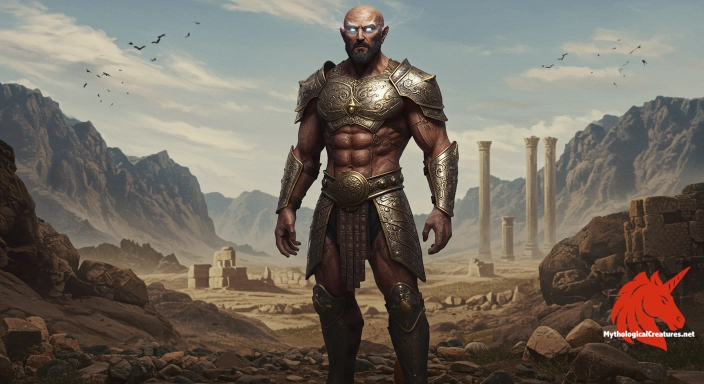
Garshasp
Garshasp - Embodies the triumph of good over evil and serves as a mythic paradigm for heroic resistance against monstrous forces
How old is the legend of Garshasp?
Garshasp emerges as a captivating figure within Persian mythology, celebrated for his dual identity as both a regal sovereign and a fearless dragonslayer.
His story first gained prominence through the Shahnameh, where his noble lineage as the descendant of Zaav and his status as the last Shah of the Pishdadian dynasty were vividly depicted.
This legendary persona is intricately woven into narratives that blend historical sovereignty with supernatural feats, thereby setting him apart from mere mortal rulers.
His brief reign, lasting around nine years, is portrayed as a period of intense transformation and cosmic balance.
The myth constructs his character as a bridge between the historic and the mythical, with his exploits resonating on both earthly and divine planes.
Embedded in early epic traditions, Garshasp’s narrative reflects themes of resurrection and heroic defiance that continue to capture the imagination.
His life story has come to represent the eternal struggle between order and chaos, making him a symbol of resilience and moral fortitude.
The enduring legacy of his tale continues to influence Persian cultural and literary traditions, marking him as a timeless icon of both leadership and bravery.
How did the story of Garshasp change over time?
The primary sources chronicling Garshasp’s exploits include the Shahnameh, where his role as a heroic monarch is richly narrated alongside his monstrous confrontations.
Ancient texts such as the Avesta present him in the capacity of a formidable dragonslayer, highlighting his supernatural combat against malevolent beings.
Middle Persian compositions further embellish his character by interlacing regal narratives with mythic symbolism.
Various story variants from oral traditions have emerged over time, each imbuing his legend with unique nuances that echo local interpretations.
In some tellings, his fabled resurrection in Zoroastrian eschatology is emphasised, adding layers of cosmic significance to his myth.
Other versions focus intently on his pivotal battle against the mythic monster Zahhak, thereby reinforcing his role as a divine avenger.
Manuscripts and folkloric renditions interweave, providing a rich tapestry of diverse perspectives on his identity and deeds.
This multiplicity of sources has sparked longstanding discussions among scholars regarding the blending of historical events with mythological narrative.
Each textual tradition contributes to a composite image of Garshasp, reflecting the complexities of a hero whose story spans centuries and cultural contexts.
Garshasp: Physical Form and Supernatural Powers
In the vivid tableaux of Persian art and literature, Garshasp is often envisioned as a figure of imposing physical presence and heroic stature.
He is depicted with a muscular build that signifies not only his physical strength but also his readiness to confront the feared creatures of myth.
His facial features typically reveal a stern determination, with eyes that seem to burn with an inner fire, symbolising his unwavering resolve in battle.
Artistic renditions frequently show him clad in intricately detailed armour, ornamented with celestial motifs that speak to his divine connections.
The texture of his hair and the carefully crafted style of his beard are presented in various depictions, each intended to underline the idealised martial elegance of his persona.
Some narratives even suggest that his stature verged on the superhuman, enabling him to stand head and shoulders above both foes and rivals.
This blend of vigorous physicality with an ethereal aura captures the crossroads of mortal strength and mythic brilliance.
Even where explicit descriptions are sparse in texts, artistic and literary interpretations continuously reaffirm his image as an archetypal hero forged in the crucible of both battle and legend.
How does the Garshasp legend change from place to place?
Across the diverse cultural landscapes of the Persian world, the legend of Garshasp has been adapted and reimagined to resonate with local sensibilities.
In Iran, his portrayal as a brave warrior-king is deeply embedded in national lore, celebrated in epic poetry as well as in traditional art forms.
Neighbouring regions, influenced by the expansive reach of Persian culture, often integrate elements from indigenous folklore to further embellish his myth.
Such regional narratives sometimes emphasise his supernatural origins, reinterpreting his battles with mythical beasts as metaphors for local struggles against chaos.
Artistic manifestations, ranging from detailed miniatures to dramatic oral recitals, display variations in the way his regalia and heroic stance are depicted.
Local communities have thus appropriated his legend to mirror their own historical and cultural identities, blending Persian heroism with native mythic traditions.
This synthesis has allowed Garshasp’s tale to evolve dynamically, making him a versatile symbol of both martial prowess and spiritual triumph across diverse territories.
The regional variations of his myth underscore how a universally resonant figure can be continually reshaped to align with the values and aspirations of different peoples.
What parallels exist to Garshasp in other traditions?
Garshasp’s mythological profile invites rich comparative analysis with similar heroic figures from other cultures, transcending geographical boundaries.
Like the celebrated heroes in Greek and Norse legends, his dual role as both monarch and monster-slayer illustrates a common archetype of the warrior who balances earthly authority with celestial combat.
His epic confrontation with the creature Zahhak resonates with the narratives of dragonslayer figures such as Saint George, highlighting the universal struggle against malevolent forces.
This duality of royal command and martial valor aligns Garshasp with other epic figures who undertake quests to restore cosmic balance and order.
The recurring motif of resurrection in his legend further parallels mythic themes found across Indo-European traditions, where heroes cyclically emerge to defeat chaos.
The symbolic interplay of life, death, and rebirth in his narrative serves as a cultural bridge that links diverse mythological frameworks.
Comparative studies reveal that while his story is rooted in the distinct landscape of Persian myth, it shares thematic similarities with the heroic epics of neighbouring cultures.
These parallels deepen our understanding of a shared human fascination with the ideals of sacrifice, power, and renewal.
Ultimately, Garshasp’s layered persona exemplifies how the essence of heroic myth transcends national and temporal boundaries.
Why does Garshasp still matter?
The legacy of Garshasp has evolved dramatically over the centuries, mirroring shifts in cultural, artistic, and religious paradigms.
Originally immortalised in the classic epics of Persian literature, his myth encapsulated the virtues of regal authority and martial prowess.
Early accounts celebrated his battles against monstrous foes as allegories for the eternal conflict between order and chaos.
Over time, his image absorbed new layers of meaning, transitioning from a mere king to a potent symbol of cosmic renewal and moral rectitude.
Medieval storytellers and later artists reinterpreted his extraordinary feats, casting him as a beacon of resilience in the face of overwhelming adversity.
In contemporary culture, Garshasp’s narrative finds fresh expression in literature, cinema, and visual arts, where his exploits are rediscovered as metaphors for modern struggles against tyranny.
His myth continues to inspire renewed interest in ancient traditions, with modern adaptations often highlighting his symbolic resurrection as a promise of hope and regeneration.
This historical evolution underscores how an ancient hero can consistently offer a mirror to the evolving values of society.
Thus, Garshasp endures not only as a relic of myth but as an ever-adaptive emblem of timeless heroism and cultural identity.
Interesting Fact
Garshasp’s depiction in Zoroastrian eschatology as a resurrected hero marks one of the earliest mythic motifs of a saviour returning to vanquish evil, a theme echoed in various cultural traditions worldwide.
For serious mythcraft
Your project belongs among the legends
If your work deepens how people understand, play with, or teach mythology, a sponsor placement here keeps it in front of the right readers all year.
Submit a sponsorship enquiryQuick Creature Info
Origin:
Features:
Associations:
Our Mythic Legendary Rating:

Also Sometimes Known As:
Habitat:
Supernatural Powers:
Physical Attributes:
Abilities:
Behavior:
Weaknesses:
Lore:
Related Creatures, Tales or Lore
- RRostam
- HHeracles
- SSiegfried
References
Discover Another Mythical Legend You May Not Have Heard Of?
Uncover the mysteries of ancient folklore and expand your knowledge of legendary beings from cultures around the world.
Dare to Meet the Plutus....
Curated by the Mythological Creatures Team
Series editor: Mythological Creatures Directory
Primary desk: Asian & Pacific Myth Cycles Desk
(rev. November 2025)