
Duke: Duke, also known as Great Duke or Grand Duke, is a prominent demonological rank among Hell's hierarchies.
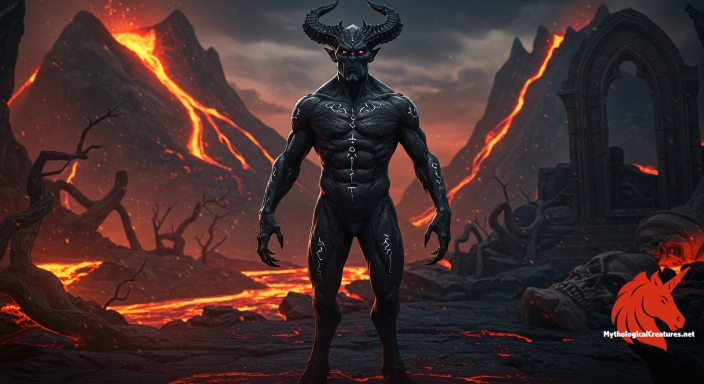
Duke
Duke - The title of Duke highlights a structured infernal hierarchy and mirrors earthly noble systems, underscoring the organized nature of demonic forces in Christian demonology.
Origins & First Encounters
The Great Duke emerges from the shadowed annals of demonological lore as a figure of dark regality and intricate authority. Born of medieval efforts to impose order on infernal chaos, he was conceived as a counterpart to the structured hierarchies of earthly monarchies. His first attestation can be traced back to early Christian demonological treatises that sought to categorise demons in a manner reminiscent of human aristocracy. His title, whether rendered as Great Duke or Grand Duke, underscores a deliberate borrowing from noble titles that resonated with contemporary society. Within these ancient texts, the Duke is depicted as both a symbolic and active force in the realm of Hell, embodying a blend of elegance and malevolence. The cultural context that shaped his image was deeply intertwined with the period’s preoccupation with order and authority amidst superstition. His presence provided a framework through which the chaos of the demonic world could be made intelligible. Ultimately, the myth of the Duke reflects an enduring human desire to mirror heavenly order in even the darkest corners of existence.
Source Texts & Tale Variants
The primary sources that mention the Great Duke are a mix of grimoires and demonological compendia that emerged during the Renaissance and early modern period. Texts such as demonological manuals and occult catalogues often provide a hierarchical enumeration of infernal beings where the Duke is positioned as a preeminent figure. Manuscripts, sometimes shrouded in allegory, give a series of variant accounts that ascribe to him an authority comparable to that of earthly nobility. Some ancient treatises detail his administrative role over lesser demons, emphasising his unique command within the infernal order. Different story variants incorporate subtle differences in his attributed powers and responsibilities, suggesting that his character evolved over time through oral and written traditions. The narrative threads found in these sources reveal a convergence of myth and social structure, as the Duke’s title mirrors the titles and ranks found in well-established courtly systems. While some accounts stress his strategic cunning and power, others highlight his ceremonial presence as an emblem of order in chaos. These pervasive narratives have ensured that the legend of the Duke endures across centuries, inspiring further reinterpretation and discussion.
Form & Powers
Descriptions of the Great Duke’s physical appearance are as varied and complex as the texts that recount his tale. Often depicted with an air of aristocratic grandeur, he is visualised as a towering figure cloaked in dark, sumptuous fabrics that shimmer with an almost otherworldly luster. His visage is portrayed with sharp, angular features that blend human nobility with infernal menace, marked by piercing eyes that seem to glow with inner fire. Prominently, horns are a recurrent motif in depictions of the Duke, curving elegantly from his brow like the spires of ancient fortresses. His skin, which fluctuates between a pallid ghostliness and a deep, shadowed tone, reinforces the duality of his nature—both alluring and terrifying. In many artistic renderings, his form is almost lithe yet imposing, suggesting a presence that defies the natural order of mortal stature. Elaborate adornments such as intricate chains and arcane insignia are often attributed to him, serving as symbols of his commanding position in the infernal hierarchy. Each detail in his portrayal, from elongated fingers ending in claw-like tips to an ever-shifting expression that hints at hidden depths, combines to create an image that is as enigmatic as it is formidable.
Regional Faces
Throughout various regions and cultural milieus, the portrayal of the Duke exhibits a fascinating array of local adaptations that reflect distinct traditions and societal values. In Western Europe, he is frequently shown as a mirror image of the aristocratic classes, his attributes echoing the grandeur and decadence of royal courts. In contrast, some Eastern European traditions imbue him with a more sombre and mystical presence, less focused on opulence and more on the arcane elements of forbidding power. In areas where folklore and demonology have intermingled, his depictions tend to merge traits of both human nobility and beastly savagery, creating a figure that is at once cultured and wild. The Duke’s image has also found resonance in Mediterranean occult traditions where subtle hints of Renaissance influence adjust his portrayal to one of refined elegance tempered by a dark undercurrent. His symbolic rank as a commander of legions is adapted differently: some cultures emphasise his administrative acumen while others stress his symbolic role as a counterbalance to celestial orders. Even in modern reinterpretations that arise in fringe occult circles, his character is reimagined through the lens of local myths and contemporary aesthetics. This regional variability ensures that the Duke is not a static character but one that continuously evolves to fit the cultural exigencies of each region it touches.
Cultural Parallels
The Great Duke shares a number of thematic and functional parallels with other infernal and mythological figures across various cultures. His noble yet dangerous aura can be compared to that of illustrious demons in the Lesser Key of Solomon, where rank and title serve as symbols of niche power. Similar to the angelic orders that occupy celestial hierarchies, the Duke’s existence in the demonic sphere reflects a mirrored complexity found across mythological traditions. This parallel is particularly evident in the way both demonic and angelic hierarchies employ stacked layers of command and influence. In certain traditions, figures like Belial or Asmodeus are seen as contemporaries or kindred spirits to the Duke, their roles overlapping in the dark theatre of supernatural politics. Cultural analogues can also be found in legendary chieftains or warlords from various ancient mythologies, each embodying both the sublime and the perilous. The portrayal of the Duke as a personification of order within chaos speaks to universal themes found in myth, where social structure is reflected in the cosmic battle between light and dark. These comparative analyses illuminate how the archetype of nobility, when transposed into the realm of demons, provides fertile ground for cross-cultural resonance and reinterpretation.
Legacy & Modern Evolution
Over the centuries, the depiction of the Duke has undergone substantial evolution in response to shifting cultural landscapes and interpretive frameworks. Initially emerging as a symbolic extension of European feudal systems in the early texts, his character gradually absorbed newer layers of meaning as occult and literary traditions began to diverge from their strict medieval roots. As the Renaissance ushered in fresher perspectives on both the divine and the infernal, the Duke was sometimes reimagined with refined, almost tragic dimensions that highlighted the burdens of power. In modern reinterpretations, his image frequently serves as an archetype for the corrupting influence of absolute authority—a theme that resonates in contemporary popular culture. He now appears in a variety of media, from role-playing games to graphic novels, where his infernal nobility is both celebrated and redefined. His symbolism has grown to represent a sophisticated interplay between order and chaos, serving as a cautionary emblem of pride and decadence. Even in academic and occult discussions, the Duke remains a potent reminder of how myth and hierarchy can coalesce into a single, enduring figure. His legacy, rich in transformative history, continues to captivate the imagination of those who explore the darker facets of human culture.
Interesting Fact
Despite its apparent regality and authoritative title, the concept of Duke in demonology primarily serves as an administrative categorisation rather than depicting a singular, individual persona.
For myth educators and toolmakers
Built a resource for mythology learners?
If you offer courses, teaching tools, or research platforms focused on myth and folklore, consider a discrete placement on our reference pages.
Introduce your resourceQuick Creature Info
Features:
Associations:
Our Mythic Legendary Rating:

Also Sometimes Known As:
Habitat:
Supernatural Powers:
Physical Attributes:
Abilities:
Behavior:
Lore:
Related Creatures, Tales or Lore
References
Discover Another Mythical Legend You May Not Have Heard Of?
Uncover the mysteries of ancient folklore and expand your knowledge of legendary beings from cultures around the world.
Dare to Meet the Meliboea....
Curated by the Mythological Creatures Team
Series editor: Mythological Creatures Directory
Primary desk: Hellenic & Ancient Mediterranean Desk
(rev. November 2025)