Meliboea: Meliboea is a multifaceted figure from Greek mythology whose name is attributed to several distinct individuals ranging from a divine Oceanid to a tragic Theban maiden.
Meliboea
Meliboea - Meliboea embodies the complex interweaving of divine and mortal affairs in Greek mythology, influencing local geography, familial myth, and cultural lore through her multifaceted narratives.
the legend in five swipes.
the legend in five swipes.
Meliboea Origins: The Earliest Accounts
Meliboea emerges from Greek mythology as a name borne by several legendary figures whose stories have woven themselves into the fabric of ancient narratives. Her origins are diverse, ranging from the lineage of the primordial Oceanids to connections with heroic ancestors and tragic events. In one tradition, she is noted as the daughter of the Titan Oceanus, possibly linked with the divine pair of Oceanus and Tethys, thus rooting her story in the vast, watery expanse of the ancient cosmos. Her narrative often intertwines with significant mythic events, such as the shaping of kingdoms and the tragic fates that befall heroic families. The multiplicity of her identity reflects the fluidity with which myth and history merge in the ancient world. Communities revered her in various locales, with some traditions attributing the foundation of places like the town of Meliboea in Thessaly to her influence. Her character embodies both the nurturing and destructive powers attributed to water deities, linking her to themes of fertility and poignant loss. This layered identity provides an enticing glimpse into the broader cultural context of classical Greek thought, where divine figures often took on many forms to explain natural phenomena and human experiences. Her early attestations reveal a dynamic blend of ancestral myth and local cult, marking her as a symbol of both continuity and transformation in mythic storytelling.
The Documented Accounts of Meliboea
The stories surrounding Meliboea are preserved in a mosaic of ancient texts, each offering distinct variants and layers of meaning. Early accounts, some attributed to Hesiod and other classical poets, introduce her as an Oceanid and a mother to notable figures like King Lycaon of Arcadia. Variations of her tale appear in local legends that recount her role as both a nurturer and a tragic figure, notably in narratives where she is known as Chloris from Thebes after surviving the calamity that befell her siblings. Additional sources recount her as a devoted mother in Thessaly and as a maiden of Ephesus, thereby linking her to both the divine and heroic domains. Literary fragments and mythographic compilations offer different accounts of her relationships with river gods, mortal lovers, and even as an alternate name for figures connected with Ajax the Great and Theseus. These textual sources, though fragmentary, reveal a rich tradition of oral storytelling that was later committed to writing by various authors. In many accounts, the interweaving of her identity with geographic locations and the naming of towns highlights how myth served to explain and sanctify the natural world and human settlements. While no single source can be deemed definitive, the cumulative narratives underscore the enduring allure of her myth, resonating with audiences across generations. The diversity of these sources reflects an enduring mythological tapestry where multiple layers and interpretations of Meliboea coexist harmoniously.
Meliboea: Form, Powers and Weaknesses
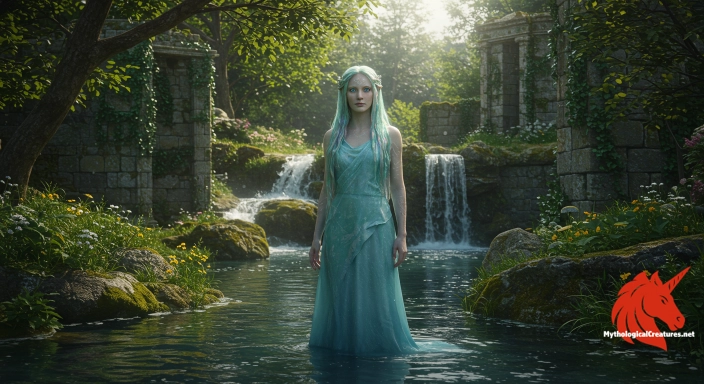
Descriptions of Meliboea vary across the different traditions, yet they consistently evoke an image of delicate yet formidable beauty. In some depictions, she is portrayed with the ethereal qualities of an Oceanid, possessing a luminous complexion that mirrors the shimmering surface of a tranquil sea. Her features are often described as graceful and refined, indicative of her divine heritage and the nurturing attributes associated with water deities. In the account where she is later known as Chloris, her appearance is marked by a haunting pallour, a physical manifestation of the profound grief that marked her existence following her siblings’ untimely death. This touch of greenish paleness not only set her apart from typical mortal depictions but also served as a symbolic reminder of nature’s ability to reflect human emotion. Some narratives suggest that her eyes held the reflective depth of rivers and seas, hinting at an inner reservoir of empathy and sorrow. The blend of mortal and divine features in her portrayals reinforces her intermediary role between the natural world and the realm of the gods. Even in less-detailed accounts where her appearance is not central, the allusions to soft, flowing forms and an upright bearing conjure a vision of elegance that has fascinated listeners for centuries. Her mythic beauty, laced with both the gentleness of water and the stark reality of loss, captures the intrinsic duality of many mythological figures.
How does Meliboea differ by region?
Local traditions throughout Greece have appropriated and modified the figure of Meliboea to reflect regional identities and local mythic landscapes. In Arcadia, she is entwined with the heritage of kingship as the mother of King Lycaon, connecting her story to the rugged, transcendent beauty of the Greek hinterlands. In northern Thessaly, her name was immortalised through the town of Meliboea, which grew into a kingdom and remains a geographical marker into modern times. The myth of her association with the river god Orontes, who halted his course for her love, further cements her connection to the flowing and unpredictable forces of nature typical of eastern Greek narratives. The variant known as Chloris in Theban lore links her to the sorrowful myth of the Niobids and ties her fate to the tragic consequences of divine retribution. In Ephesus, the narrative of a maiden swept away by divine intervention emphasises themes of love, destiny, and the capricious will of the gods. These regional adaptations not only illustrate the diversity within Greek mythology but also reveal how local communities embraced a shared mythological icon by imbuing her with characteristics reflective of their own cultural and environmental contexts. The overlapping regional narratives demonstrate an enriching dialogue between myth and place, where Meliboea becomes a vessel for expressing local values, historical identity, and the mysteries of the natural world.
How does the Meliboea legend compare worldwide?
Meliboea’s multifarious depictions invite comparisons with other figures in mythology who embody the themes of transformation, divine love, and tragic beauty. Much like the Naiads and other water nymphs, she represents the fertile and unpredictable aspects of nature, often linked with both creation and demise. Her dual role as both nurturer and mourner echoes motifs found in other traditions, where entities (such as Melusine in European folklore) are wrapped in stories of both grace and sorrow. She shares similarities with chthonic deities who bridge the gap between the natural order and the divine realm. In narratives where she takes on the guise of Chloris, the transformation of her identity to reflect her emotional state parallels metamorphosis stories seen in broader mythological traditions. The conflicting aspects of beauty and grief in her tale can be compared to other mythic mothers, whose narratives often incorporate themes of loss and redemption. Cross-cultural parallels are evident in how water deities in various mythologies, whether in Celtic or Near Eastern traditions, come to embody the dual nature of water as both life-giving and destructive. This comparative perspective enriches our understanding of Meliboea by situating her alongside universally resonant archetypes of femininity, transformation, and the elemental forces that shape human destiny.
How did Meliboea survive into the modern world?
Over the centuries, the legacy of Meliboea has evolved as her myth was reinterpreted in light of shifting cultural sensibilities and historical circumstances. In ancient times, her name was intrinsically linked to the founding of cities, the sanctity of rivers, and the moral lessons embedded in divine retribution and compassion. As Greek culture interfaced with later Hellenistic and Roman traditions, her story was seamlessly absorbed and recontextualised, inspiring local legends and ritual practices. The enduring imprint of her myth is visible in the continued usage of her name in geographical nomenclature, notably in regions such as Thessaly where the town bearing her name still persists. Modern interpretations have embraced her narrative as part of a larger tapestry that exemplifies the complex interplay between myth and identity in ancient societies. Contemporary scholars and enthusiasts appreciate the layered aspects of her character, recognising in her multiple forms a reflection of how myth can adapt to mirror the human condition. Artistic representations from the renaissance to modern media continue to explore her symbolic dualities—beauty intermingled with sorrow, power intertwined with vulnerability. Her story persists as a testament to the timeless allure of myth, proving that the ancient voices still echo within modern cultural expressions and thought.
Interesting Fact
An especially intriguing aspect of Meliboea is that her name spans a variety of mythic traditions—from a divine Oceanid to a tragic survivor—illustrating how mythological figures can embody vastly different roles and influence culture, geography, and identity in ancient Greece.
Mythological Treasures
Greek Myths: A field guide to the monsters of ancient Greece
Every monster here earned its place in legend, and each gets a full page of artwork and the story behind it.
Norse Sagas: A field guide to the beasts of the Viking world
Drawn from the saga accounts themselves, with the powers, weaknesses and doom of each being set out.
Egyptian Legends: A field guide to the gods and monsters of ancient Egypt
Guardians of the living and devourers of the dead, with the role each played in judgement.
the legend in five swipes.
For authors, artists, and makers
Created something from the realm of myth?
If your book, deck, game, or artwork draws from legendary creatures and lore, you can showcase it here in a tasteful, year-round placement.
Share your projectQuick Creature Info
Origin:
Associations:
Our Mythic Legendary Rating:

Also Sometimes Known As:
Habitat:
Supernatural Powers:
Physical Attributes:
Abilities:
Behavior:
Weaknesses:
Lore:
References
Discover Another Mythical Legend You May Not Have Heard Of?
Uncover the mysteries of ancient folklore and expand your knowledge of legendary beings from cultures around the world.
Dare to Meet the Vila....

The Mythological Creatures Book Series
Yōkai, Greek, Norse, Egyptian & Chinese. Five illustrated field guides to the creatures the old stories either warned or told you about.

Curated by the Mythological Creatures Team
Series editor: Mythological Creatures Directory
Primary desk: Hellenic & Ancient Mediterranean Desk
(rev. November 2025)