
Gullfaxi: Gullfaxi is a mythological horse from Norse mythology renowned for its golden mane and extraordinary speed across land, air, and water.
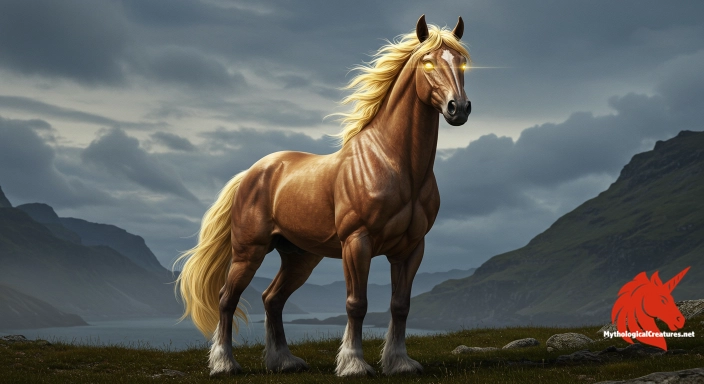
Gullfaxi
Gullfaxi - Gullfaxi is celebrated for its unparalleled speed and plays a pivotal role in the myth where Thor rewards Magni, highlighting the interplay between the divine and the giants.
Origins & First Encounters
Gullfaxi, celebrated in the ancient Norse mythos, is renowned as a majestic steed whose illustrious name translates to 'Golden Mane'. It emerges in the rich tapestry of Scandinavian legends with a presence that reflects both divine elegance and heroic might. The earliest attestation of Gullfaxi is found in the Skáldskaparmál, where his ownership transitions from the mighty Hrungnir to the thunderous Thor, and later to Thor’s son Magni. His tale is deeply interwoven with narratives of valor, divine favour, and the complex interplay between gods and giants. This mythic horse represents not only an embodiment of speed and grace but also the high esteem in which such powerful creatures were held in Norse society. The cultural context of Gullfaxi is further enriched by themes of rightful inheritance and the supernatural qualities attributed to divine steeds. His story resonates with the ideals of strength, loyalty, and the transcendental connection between the mortal and the divine. The enduring legacy of Gullfaxi in oral and written traditions has made him a symbol of both aesthetic brilliance and pragmatic might. His narrative continues to inspire and captivate, linking ancient sagas with modern interpretations of legendary power. Overall, Gullfaxi stands as an emblem of the mythic values that defined a warrior culture and continue to fascinate enthusiasts of Norse lore.
Source Texts & Tale Variants
The primary literary foundation for Gullfaxi’s legend is found in the Skáldskaparmál, a key source within the Prose Edda that highlights his transition from Hrungnir’s steed to a reward bestowed upon Magni. Ancient texts capture the pivotal moment when Thor, in a dramatic display of might, offers the illustrious horse to the son of a giantess. In these sources, the narrative is interlaced with moments of divine contention, most notably when Odin challenges Thor’s decision. Variants of the myth have emerged over the centuries, each lending subtle nuances to the circumstances under which Gullfaxi came to be associated with the gods. Oral traditions carried through Nordic cultures have amplified these details, embellishing the horse’s otherworldly speed and its celestial appearance. Some story variants place greater emphasis on the symbolic significance of his golden mane, interpreting it as an emblem of divine brilliance. Additional skaldic poetry hints at the broader context in which Gullfaxi operated, associating him with the heroic ethos of the era. Over time, manuscript traditions have subtly varied the recounting, sometimes highlighting the tension between divine justice and familial duty. These stories interweave the myth with broader themes of inheritance, honour, and the capricious nature of fate. Thus, the various sources together form a composite image that reflects the complexity and richness of Norse mythological tradition.
Form & Powers
Gullfaxi is depicted as a horse of unparalleled magnificence, with a coat that gleams like the light of a radiant dawn. His defining feature is a flowing mane of gold, each strand seemingly infused with the brilliance of heavenly fire. The physical form of Gullfaxi is both sturdy and sleek, combining muscular strength with graceful agility, ideal for traversing diverse terrains. His eyes are often imagined as deep pools of ancient wisdom, lit with a spark of divine energy. The horse possesses a robust build that allows him to move with effortless speed across land, water, and even air. His hooves are portrayed as finely crafted, leaving a transient glow in his wake, which hints at a magical origin. Some descriptions suggest he is slightly more imposing in stature than his divine peers, lending him an aura of untamed power. The interplay of light on his shimmering coat and the intricate flow of his mane metaphorically capture the splendour of the cosmos. His anatomy is celebrated not only for its aesthetic appeal but also for its embodiment of strength and endurance. Overall, Gullfaxi’s physical presence is a harmonious blend of beauty, might, and the ineffable qualities of the divine.
Regional Faces
Despite his firmly rooted identity in Norse myth, the legend of Gullfaxi has encountered various regional adaptations across the Scandinavian landscape. In Icelandic tradition, for instance, his radiant appearance is often accentuated, with storytellers embellishing the glow of his golden mane to invoke a sense of mysticism. In parts of Sweden and Norway, his tale becomes intertwined with local folktales, where natural landmarks and enchanted settings lend a vivid backdrop to his myth. Different communities have adapted his story to reflect local values; some emphasise his gentle, noble disposition while others highlight his untamed, dynamic nature. Variations in regional lore sometimes portray him not only as a symbol of divine favour but also as an omen of good fortune and change. In these narratives, Gullfaxi’s arrival is often associated with the turning of seasons or the dawning of new eras. The subtle differences in his depictions suggest that oral storytellers adapted his image to match regional artistic sensibilities and cultural aesthetics. Local art and literature have reimagined him as a benevolent force whose brilliance is woven into the fabric of the landscape. Such regional variations underscore the dynamic interplay between a central myth and its diverse retellings. Ultimately, the regional adaptations of Gullfaxi enrich his legacy, demonstrating the flexibility and enduring appeal of Norse myth in different cultural contexts.
Cultural Parallels
Gullfaxi’s story invites comparison with a range of mythological steeds that appear in diverse cultural traditions, each embodying distinctive aspects of heroic virtue and divine favour. His capacity to traverse land, air, and water calls to mind the otherworldly qualities of Odin’s well-known horse, Sleipnir, though Gullfaxi is celebrated in his own right. The vivid imagery of his golden mane is reminiscent of legendary creatures in various mythologies, including figures like Pegasus from Greek lore, whose winged flight represents the transcendence of human limitations. In a broader context, the motif of a radiant horse appears in ancient Near Eastern and Mesopotamian myths, where such creatures often symbolise the sun’s power and the dynamism of the cosmos. Gullfaxi, like these mythic equines, serves as an intermediary between the mortal and the divine, expressing themes of transcendence and celestial intervention. The interplay between his physical beauty and his supernatural abilities underscores a universal symbolic language that celebrates the virtues of speed, resilience, and nobility. Comparative analysis also reveals how these legendary mounts often reflect the cultural priorities of the societies that created them. While Gullfaxi and his counterparts may differ in specific attributes, all share a common role as harbingers of fortune and as metaphors for the heroic spirit. This synthesis of mythic imagery underscores the shared human fascination with extraordinary steeds that defy the limitations of nature. In this way, Gullfaxi stands shoulder to shoulder with other mythological horses, each contributing uniquely to the overarching narrative of divine myth and heroic mythology.
Legacy & Modern Evolution
Over time, Gullfaxi has evolved from a figure featured solely in medieval texts to a symbol that resonates strongly with modern interpretations of myth and folklore. His legacy has been carried forward into the realms of art, literature, and popular culture, where his image continues to evoke themes of brilliance and heroic momentum. During the medieval period, the depiction of Gullfaxi in battle sagas and poetic verses contributed to his transformation into an emblem of divine favour. In modern times, creative reinterpretations in digital media, fantasy novels, and visual arts have breathed new life into his tale. Contemporary artists often highlight the ethereal glow of his gleaming mane as a metaphor for enlightenment and transformation. The narrative of his transition—from a giant’s steed to a divine reward—mirrors modern ideas of redemption and the rewarding of valor. His depiction has also sparked discussions about the symbolic roles of animals in storytelling and their ability to bridge the gap between the earthly and the spiritual. As the Norse mythos experiences periodic revivals in popular culture, Gullfaxi remains a testament to the enduring power of myth. His story continues to inspire a sense of wonder and exploration into the realms of the fantastical and mysterious. In essence, the evolving portrayal of Gullfaxi reflects the timeless dialogue between ancient myth and modern creativity, ensuring that his legend thrives in the collective imagination.
Interesting Fact
An intriguing aspect of Gullfaxi is its ability to exhibit unparalleled speed across different realms, a rare trait that emphasizes the unique versatility valued in Norse mythological creatures.
Mythology-aligned partners
Showcase your myth-friendly brand here
Run a store, studio, or platform that lives in the world of myth and folklore? A curated sponsor panel on these pages may fit.
Explore partnership optionsQuick Creature Info
Origin:
Features:
Our Mythic Legendary Rating:

Also Sometimes Known As:
Habitat:
Supernatural Powers:
Physical Attributes:
Abilities:
Lore:
References
Discover Another Mythical Legend You May Not Have Heard Of?
Uncover the mysteries of ancient folklore and expand your knowledge of legendary beings from cultures around the world.
Dare to Meet the Ameonna....
Curated by the Mythological Creatures Team
Series editor: Mythological Creatures Directory
Primary desk: Northern & European Folklore Desk
(rev. November 2025)