
Gulon: The Gulon is a legendary Scandinavian creature that appears as a composite animal with the body of a dog, the head and claws of a cat, and the tail of a fox.
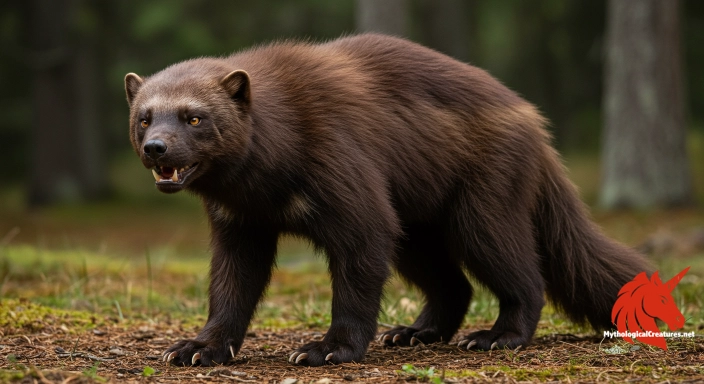
Gulon
Gulon - Serves as a cautionary emblem warning against the perils of overindulgence
Origins & First Encounters
The Gulon is a captivating figure from Scandinavian mythology, emerging as a unique embodiment of natural lore and human caution. Born from centuries of oral tradition and early written accounts, it first found a place in European consciousness through texts like Olaus Magnus’s Historia de gentibus septentrionalibus. Its dual identities—as the Gulon in broader Scandinavian tales and as Jerff in northern Sweden or Vielfraß in German folklore—attest to its widespread cultural influence. The creature’s origin is shrouded in mystery, woven into the fabric of myth where nature and morality intersect. Early narratives cast it as a symbol of unbridled appetite, warning communities against the perils of excess and gluttony. Its story likely grew from encounters with formidable arctic animals, lending a realistic edge to its fantastical features. Local storytellers elaborated on its bizarre habits, embedding it deeply in the moral and natural symbology of the region. The enduring legend of the Gulon continues to intrigue modern audiences, highlighting both the timeless fascination with the wild and the age-old human struggle with temptation. Its narrative remains a vivid example of how ancient myths can reflect societal values across generations.
Source Texts & Tale Variants
The primary literary record of the Gulon is found in medieval texts, with Olaus Magnus’s Historia de gentibus septentrionalibus being the most notable source. This early attestation provided a written foundation that later oral traditions would elaborate upon. Various regional accounts in Scandinavia and Germany enriched this initial depiction, offering their own distinctive twists on the creature’s habits and symbolism. In northern Sweden, the creature is referred to as the Jerff, where community lore emphasises its insatiable hunger and strange feeding ritual. Meanwhile, German variants under the name Vielfraß stress the grotesque and almost otherworldly methods of consumption. Over time, disparate manuscripts, travellers’ diaries, and folklore collections have all contributed to a multifaceted picture of the Gulon. These diverse narrative strands show an evolution where each region adapts the creature’s legend to its own cultural context. Community storytellers infused local colours, attributing supernatural elements and moral lessons to the creature. In this way, ancient sources continue to coexist with evolving oral traditions, enriching the myth with layers of historical and regional nuance.
Form & Powers
The physical form of the Gulon is an intriguing mosaic reminiscent of several well-known animals. It is described as having the size and shape of a medium-sized dog, yet its head, ears, and claws bear distinct feline resemblances that set it apart from any ordinary creature. The coat of shaggy brown fur gives it a wild and rugged appearance, suited to the harsh climates of the north. A fox-like tail, sleek and cunning, completes its animalistic portrait and hints at its agile nature. Observers note that its face carries an expression that is both feral and oddly anthropomorphic, a blend that stirs both fear and fascination. Some descriptions mention that its muscular body becomes comically distorted after overindulgence, contributing to its reputation for gluttony. There are even accounts of subtle humps or bulges that appear as it compacts itself in unnatural ways to continue feeding. Each physical detail—from its piercing eyes to its sharp, unsettling claws—contributes to a composite image that bridges the gap between realistic animal traits and the exaggerations typical in myth. This patchwork of features reinforces its status as a creature born of both the natural world and the fertile imaginations of storytellers.
Regional Faces
The tale of the Gulon varies considerably across different cultural and geographical landscapes. In Scandinavian lore, the creature is typically portrayed as a cautionary figure against the perils of overindulgence, a moral lesson articulated through its bizarre feeding habits. In northern Sweden, the local moniker Jerff carries with it specific regional motifs that stress its gluttonous nature as a reflection of societal warnings against excess. German renditions, where it is known as Vielfraß, often highlight its almost supernatural method of consuming prey, lending an eerie quality to its character. Some communities further adapt the myth to include seasonal phenomena, suggesting that the creature appears during particularly harsh winters or bountiful harvests. These narratives sometimes cast it in a sinister light, while in other tellings it becomes a figure of dark humour and irony. Local adaptations incorporate native wilderness elements, embedding the creature within the traditions of hunting and rural superstition. This multiplicity of versions demonstrates how the Gulon has been remoulded to fit various cultural contexts, each adding layers of meaning and symbolism that reinforce its emblematic connection to human vices.
Cultural Parallels
The Gulon finds interesting parallels with other mythological beings that underscore themes of excess and transgression. Its relentless appetite and grotesque feeding ritual echo the myths surrounding other creatures that have come to symbolise gluttony and moral decay. For instance, some Eastern European legends speak of monstrous beings whose fatal hunger causes chaos, a narrative tone that resonates with the Gulon’s story. Its composite nature also brings to mind chimeric creatures from bestiaries across medieval Europe, where the blending of animal traits symbolised the merging of natural and supernatural realms. This creature also shares thematic similarities with figures like the Wendigo, although the latter is more associated with starvation-induced madness and cannibalism rather than mere gluttony. In other traditions, hybrid beasts serve as cautionary symbols, warning of the dangers of unrestrained desire and insatiable consumption. The amalgamation of canine, feline, and vulpine features in the Gulon reinforces a cross-cultural archetype of the beast as a bearer of negative moral lessons. These conceptual and physical overlaps provide a rich field for comparative analysis, highlighting how different societies interpret the consequences of excess through myth. Such cross-cultural reflections not only deepen our understanding of the Gulon but also illustrate the universal human concerns that give rise to these enduring legends.
Legacy & Modern Evolution
Over the centuries, the depiction of the Gulon has undergone a significant transformation, evolving from a stark emblem of gluttony to a complex symbol adapted by modern storytellers. Traditional accounts painted it as a monstrous warning against overconsumption, yet today its image is often reinterpreted in more nuanced, sometimes even satirical terms. Modern artists have embraced its grotesque and exaggerated features as a metaphor for contemporary issues, notably the excesses of consumer society and environmental degradation. In graphic novels, animated films, and digital art installations, the creature is reimagined as both a cautionary figure and an emblem of modern ecological challenges. This evolution mirrors a broader trend in mythology, where ancient symbols are repurposed to critique and reflect on present-day societal issues. Contemporary representations often imbue the Gulon with layers of irony, highlighting the clash between natural limits and human desires. Its enduring presence in folklore festivals and pop culture discussions underscores a continual engagement with the themes of consumption and moral decay. Thus, the modern legacy of the Gulon is a testament to the dynamic nature of myth-making, where historical narratives adapt and resonate with the evolving concerns of each new generation.
Interesting Fact
One of the most startling aspects of the Gulon is its method of digestion, where it literally forces meat through its body by wedging itself between trees—a vivid, if grotesque, embodiment of gluttony in myth.
Mythology commerce, done carefully
Align your store with our global myth audience
If you sell myth-inspired jewellery, prints, decks, or collectibles, we can feature your brand without overwhelming the reading experience.
Partner with usQuick Creature Info
Origin:
Features:
Associations:
Our Mythic Legendary Rating:

Also Sometimes Known As:
Habitat:
Supernatural Powers:
Physical Attributes:
Abilities:
Behavior:
Weaknesses:
Lore:
Related Creatures, Tales or Lore
- WWolverine
- CChimera
- ZZhu Bajie
References
Discover Another Mythical Legend You May Not Have Heard Of?
Uncover the mysteries of ancient folklore and expand your knowledge of legendary beings from cultures around the world.
Dare to Meet the Lilaea....

Curated by the Mythological Creatures Team
Series editor: Mythological Creatures Directory
Primary desk: Northern & European Folklore Desk
(rev. November 2025)