
Lilaea: Lilaea is a water nymph (naiad) from Greek mythology, celebrated as the divine guardian of a spring in Phocis.
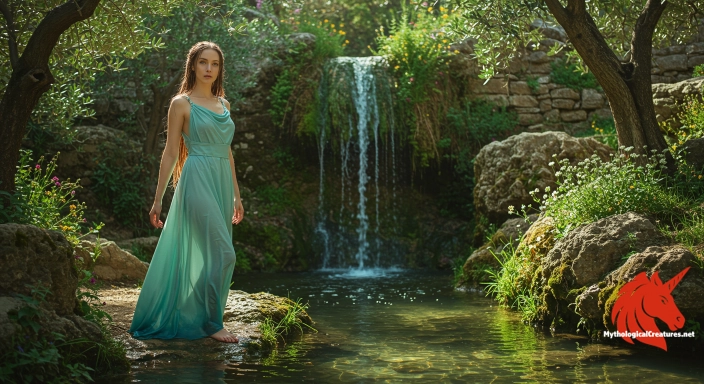
Lilaea
Lilaea - Lilaea embodies the vital and nurturing force of freshwater in Greek mythology. As the daughter of the river god Cephissus, she represents the divine connection between water and life. Her name has been commemorated in both ancient geography and in modern astronomy through the naming of an asteroid. Additionally, alternative depictions—such as a maenad seen in vase paintings—suggest a multifaceted mythological presence.
Origins & First Encounters
Lilaea occupies a unique space in Greek mythology, representing both the delicate beauty of a water spirit and the fierce energy of a wild maenad. Her origins are linked to the ancient natural forces of the region of Phocis, where a spring and later a city bore her name. Emerging from one of the fundamental narratives of nature worship, her character reflects the intimate relationship between the Greeks and the water deities that sustained their lands. Born as a Naiad, she was the daughter of the river god Cephissus, which situates her within a vast family of aquatic divinities celebrated for nurturing life. Over time, her identity appears to have diverged, as another figure bearing the name arises in artistic depictions of maenads. The duality of her representation encapsulates the dual aspects of water – both serene and tumultuous. Her myth is interlaced with local rituals centred on spring blooms and seasonal transitions, making her a symbol of both rejuvenation and wild abandon. The first attestations of her cult likely emerged during early local religious practices, resonating with communities in Phocis. Lilaea’s tale, though not as extensively documented as those of major deities, resonates with the subtle interplay of beauty and danger characteristic of nature itself. Her story continues to intrigue scholars who explore the intersections of cult practice, local geography, and myth-making in ancient Greece.
Source Texts & Tale Variants
The primary sources for Lilaea’s mythos are fragmentary and dispersed, reflecting the localized nature of her worship. Ancient texts provide mere references to her lineage as a Naiad born of Cephissus, while vase paintings offer the sole glimpse of a maenad under her name. Scholars have pieced together her narrative from inscriptions and the geographical naming of a city in Phocis. Early accounts, though limited, are intertwined with local cult practices that venerated the spring believed to be under her guardianship. Variants of her story emerge through minor literary mentions and art, suggesting that different communities revered her in distinct ways. Some texts hint at ceremonial rites being performed at the waters where her presence was invoked, thereby reinforcing her connection with the life-giving properties of water. While classical literature gives scant attention to her, regional mythographers preserved oral traditions that celebrated her dual aspects. Iconography from vase paintings reveals a dynamic interpretation, where the maenad element of Lilaea is captured in scenes of ecstatic frenzy. The diversity of these sources underscores the fluidity of her myth and the challenges inherent in reconstructing her complete narrative.
Form & Powers
In artistic representations, Lilaea is often portrayed as a figure of ethereal beauty, embodying the luminous qualities of fresh spring water. Her features are depicted as soft and graceful, with delicate, flowing hair that cascades like the gentle tributaries of a hidden stream. As a Naiad, she is frequently shown emerging from water, her skin glowing with an almost otherworldly translucence that hints at her divine origin. Intricate details such as water lilies and subtle wave patterns adorn her garments, symbolising her intimate connection with nature. In contrast, the maenad incarnation of Lilaea appears more fierce, with wild eyes and a dynamic posture that captures the essence of ecstatic dance. These images often include elements like a thyrsus or other ritualistic implements that emphasise her untamed character. Variations in her depiction may also show her accompanied by animals or water creatures, further reinforcing her dominion over aquatic realms. The juxtaposition of serene beauty and raw, frenetic vitality in her imagery encapsulates the duality inherent in her myth. Overall, her portrayals suggest a celebrated icon of transformation, straddling the boundary between gentle nurturing and passionate wildness.
Regional Faces
The portrayal of Lilaea shifts subtly across different regions of ancient Greece, reflecting local beliefs and environmental influences. In Phocis, where her name and a sacred spring are directly linked, she is celebrated as a nurturing water goddess whose presence ensured the fertility of the land. Local festivals likely featured rituals conducted at natural springs, and her imagery in regional art revealed a deep connection to the landscape’s aquatic elements. In contrast, in areas where the maenad aspect was emphasised, her representation grew more aligned with themes of ecstatic celebration and untamed nature. These communities infused her story with local colour, sometimes blending her identity with that of other nature deities. In some locales, her name became synonymous with natural beauty and the renewal of life, while in others she was revered as a spirit marking the wild, unpredictable forces of nature. The artistic and religious interpretations often varied, shaping her figure to best reflect the environmental and cultural priorities of each region. As myths travelled and rituals evolved, Lilaea's local cult practices absorbed influences from broader Hellenic traditions yet maintained distinct, regional characteristics. Such variations highlight the adaptability of mythic figures and underscore how local geography informs divine representation.
Cultural Parallels
When comparing Lilaea to other mythological figures, striking parallels emerge with widely acknowledged naiads and water deities such as Arethusa and Calypso. Like these figures, Lilaea embodies the essence of water, representing both its life-giving and transformative properties. Her water nymph aspect situates her within a tradition that honours the vital role rivers and springs play in sustaining communities, a theme that is echoed in the legends of other cultures as well. Similarly, her maenad portrayal shares affinities with the ecstatic Dionysian figures found in Greek lore, where the wild abandon of nature meets divine inspiration. Comparable mythological themes can also be found outside of Greek culture, where water spirits in Celtic and Slavic traditions serve as both beneficent and capricious guardians of natural waters. Through these cultural parallels, Lilaea can be understood as a multifaceted symbol of nature’s dual character—offering both nurture and chaos. The interplay of calm and frenzy in her representation bridges the conceptual gap between order and chaos, a common motif in ancient mythologies. Cross-cultural comparisons illuminate how various communities interpret similar natural phenomena through the lens of divine personification. Thus, Lilaea stands as a testament to the universal human engagement with the power and mystery of water.
Legacy & Modern Evolution
The myth of Lilaea has evolved remarkably over the centuries, maintaining a subtle yet enduring presence in both local and broader cultural contexts. In ancient times, her name celebrated the natural abundance of Phocis and echoed through the rituals of water worship. Over the millennia, even as classical texts gave way to new literary traditions, her legacy persisted in place names, art, and even modern astronomical nomenclature with the naming of asteroid 213 Lilaea. Her dual nature as both a benign Naiad and a wild maenad has inspired modern artists and writers to explore themes of nature, transformation, and the balance between order and chaos. Contemporary interpretations often focus on her role as a symbol of the cyclical renewal of nature and the coexistence of tranquil beauty and passionate wildness. Modern festivals in rural Greece, along with neo-pagan and environmental movements, occasionally invoke her name as a reminder of the intimate bond between humanity and the natural world. Academic interest continues as well, with Lilaea featuring in studies that seek to understand the evolution of regional cults and localized mythologies in ancient Greece. Her portrayal has been reimagined in quality art, theatre productions, and literature, reflecting updated perspectives while paying homage to her ancient roots. As discussions on ecology and environmental conservation grow, she has been reinterpreted as an emblem of sustainability and the enduring importance of natural resources. Lilaea’s legacy, though modest compared to the major Olympian deities, endures as a powerful reminder of the richness and diversity of mythological tradition.
Interesting Fact
An intriguing aspect of Lilaea's legacy is the dual appearance of her name in mythology—as both a naiads and a maenad—highlighting the layered and multifaceted roles that minor deities played in ancient Greek culture.
For authors, artists, and makers
Created something from the realm of myth?
If your book, deck, game, or artwork draws from legendary creatures and lore, you can showcase it here in a tasteful, year-round placement.
Share your projectQuick Creature Info
Origin:
Associations:
Our Mythic Legendary Rating:

Also Sometimes Known As:
Habitat:
Supernatural Powers:
Physical Attributes:
Abilities:
Behavior:
Lore:
Related Creatures, Tales or Lore
- AArethusa
- EEidothea
- NNaiads
References
Discover Another Mythical Legend You May Not Have Heard Of?
Uncover the mysteries of ancient folklore and expand your knowledge of legendary beings from cultures around the world.
Dare to Meet the Agadzagadza....
Curated by the Mythological Creatures Team
Series editor: Mythological Creatures Directory
Primary desk: Hellenic & Ancient Mediterranean Desk
(rev. November 2025)