
Hamskerpir and Garðrofa: Hamskerpir and Garðrofa are mythological horses from Norse mythology, recognized as the progenitors of Hófvarpnir, the steed of the goddess Gná.
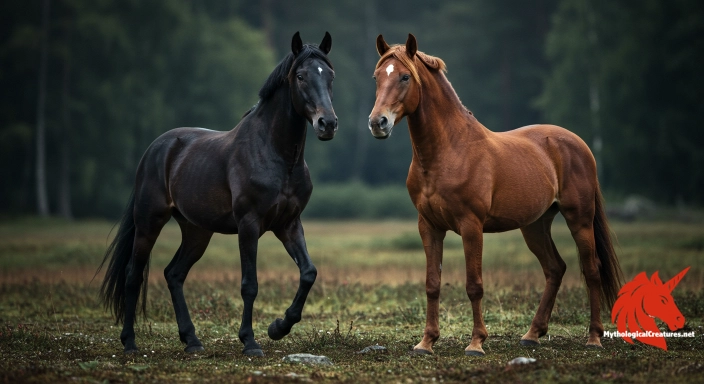
Hamskerpir and Garðrofa
Hamskerpir and Garðrofa - Their existence underscores the important role of horses in Norse mythological narratives and the divine ancestry of legendary steeds.
Origins & First Encounters
In Norse mythology, Hamskerpir and Garðrofa occupy a distinctive niche as the divine equine pair whose union produced Hófvarpnir, the steed of the goddess Gná. Their appearance in the Prose Edda hints at a role that, while subtle, is essential in linking the mortal and divine worlds through mythic genealogy. They are depicted not through extensive narrative but by the significance of their offspring, which connects them to the wider pantheon of gods and spirits. Their origins, though only briefly mentioned in medieval texts, suggest a longstanding tradition of venerating majestic horses in Norse lore. The pair is emblematic of how Norse myth often elevates natural creatures to celestial status with inherent cosmic qualities. They likely sprang from an oral tradition that celebrated the power and grace of the equine, imbuing them with a sacred aura. Their brief attestation in the Prose Edda does not diminish the rich interpretative potential that these mystical horses offer. The legacy of their myth invites further exploration into how equine figures symbolised both fertility and strength across the Nordic cosmos.
Source Texts & Tale Variants
The primary attestations of Hamskerpir and Garðrofa reside in the Prose Edda, composed in the 13th century by Snorri Sturluson. This text serves as the cornerstone of our understanding of many Norse mythic figures, including these remarkable horses. Although detailed narratives about them are sparse, their mention in this seminal work provides critical insights into the genealogical structures of divine horses. Other medieval manuscripts and skaldic poetry may have once contained fragments of their story, yet these have largely been lost over time. Oral traditions likely preserved additional variants and epithets for the pair, contributing to the broader mythic tapestry even if the exact details remain elusive. Variations in the storytelling over different geographical areas indicate that regional influences undoubtedly shaped their portrayal. The survival of even a few lines in a major work like the Prose Edda highlights their importance in the pantheon of mythological beings. Modern scholars often reconstruct these narratives by comparing the few surviving references with the broader, vibrant oral lore of ancient Scandinavia. The sparse yet intriguing references leave ample room for speculation and further academic inquiry, making them a subject of continuing fascination.
Form & Powers
While the surviving texts provide limited details, it is possible to infer that Hamskerpir and Garðrofa were envisioned as embodiments of strength and grace. One can imagine them as robust creatures, their forms both muscular and elegantly refined, reflecting the grandeur befitting beings of a divine lineage. The equine archetype in Norse mythology is often associated with a subtle luminescence or sheen that sets them apart from ordinary animals. It is likely that these horses were depicted with deep, intelligent eyes that seemed to mirror the cosmic mysteries of the realms they traversed. Their manes and tails may have been imagined as flowing streams of silk, catching the light in a manner that suggested both power and otherworldliness. The artistic impressions drawn from later interpretations hint at a creature adorned with delicate markings that symbolise their sacred purpose. Although precise dimensions are not recorded, scholars generally agree that their stature was impressive, commanding respect and awe. The combination of a well-built physique and an ethereal quality ensured that they stood out in the pantheon of mythic horses. This synthesis of physical might and graceful beauty placed them in a class of their own within the rich imagery of Norse legends.
Regional Faces
Regional interpretations of Hamskerpir and Garðrofa vary widely, reflecting the broader diversity found within Norse myth. In different parts of Scandinavia, local storytellers integrated these horses into regional lore where they symbolised the timeless cycle of nature and cosmic order. In southern regions, the pair have been associated with the rejuvenation of the land and the ushering in of bountiful seasons. In the northern highlands, where the stark beauty of the landscape matches the intensity of the myths, they are sometimes portrayed as harbingers of change and natural transformation. These adaptations allowed the horses to take on local significance, becoming more than just mythic figures but symbols of regional identity and natural power. In some oral traditions, they were even considered omens, with their appearance signalling shifts in fortune or the influence of the divine. The regional variations underscore the fluid nature of myth, where a single narrative can adopt diverse forms as it passes through different cultural contexts. Such localized embellishments enhance the original account, adding multiple layers of meaning that resonate with the people of each area. Despite these differences, a consistent theme persists – the celebration of equine magnificence as a bridge between the earthly and the celestial.
Cultural Parallels
The narrative of Hamskerpir and Garðrofa finds intriguing parallels with legendary horses from other mythologies, enriching our understanding of their symbolic significance. Much like Odin’s eight-legged steed Sleipnir, this pair is celebrated not only for its physical prowess but also for its mystical and genealogical importance. Across cultures, horses have long been revered as transports of the gods, weaving together narratives of mortal endeavour and divine inspiration. In Celtic myth, for instance, horses are often imbued with roles as guides and omens, echoing the function the Norse horses played within the divine family. Their mythic representation shares similarities with the chariots of the Hindu deities, where the animal form is an extension of noble power and spiritual dynamism. Comparative symbolism further reveals that while each culture’s equine myth manifests unique attributes, the underlying reverence for these animals as intermediaries between realms remains remarkably consistent. Such cross-cultural connections highlight universal themes of mobility, strength, and transcendence. The comparative study not only enhances our perception of Norse myths but also situates Hamskerpir and Garðrofa within a broader tapestry of global equine legends. This interplay of narrative elements underlines the enduring role of majestic horses as embodiment of both natural forces and divine will.
Legacy & Modern Evolution
The legacy of Hamskerpir and Garðrofa has evolved significantly since their brief mention in medieval manuscripts, blossoming into a subject of modern mythological reinterpretation. Over time, their depiction has expanded beyond the confines of the Prose Edda into various forms of artistic and literary expression. During the Romantic era, a revived fascination with Norse culture led to a reimagining of these figures, where they were celebrated as emblematic icons of ancient power and mystery. Contemporary artists and writers continue to draw on their sparse mythic presence to explore themes of transformation, divinity, and the interplay between nature and the supernatural. In the modern context, they are sometimes portrayed as guardians of sacred thresholds or symbols of a bygone era of cosmic order. Their evolution in popular culture reflects broader shifts in how societies interpret and value the ancient myths. Today, they appear in a range of creative media, from visual art and literature to digital storytelling, each echoing their storied past. The multifaceted reinterpretations have allowed new generations to connect with the enduring power of Norse mythology, ensuring that the legacy of these equine figures continues to captivate and inspire. Their narrative, though initially modest, endures as a testament to the imaginative breadth and transformative potential of myth.
Interesting Fact
An interesting observation is that their role as progenitors of Hófvarpnir subtly highlights how mythological narratives attribute divine qualities through lineage rather than direct display of supernatural abilities.
Sponsor this space
Tasteful, fixed-fee placements for myth projects
No bidding wars or flashing banners. We offer simple placements for a small set of creators and brands aligned with our readers.
Request further detailsQuick Creature Info
Origin:
Features:
Our Mythic Legendary Rating:

Lore:
Related Creatures, Tales or Lore
- SSleipnir
- SSvaðilfari
- HHrimfaxi
References
Discover Another Mythical Legend You May Not Have Heard Of?
Uncover the mysteries of ancient folklore and expand your knowledge of legendary beings from cultures around the world.
Dare to Meet the Anthousai....
Curated by the Mythological Creatures Team
Series editor: Mythological Creatures Directory
Primary desk: Northern & European Folklore Desk
(rev. November 2025)