
Anthousai: The Anthousai are Greek flower nymphs that embody the essence of blossoms and natural beauty.
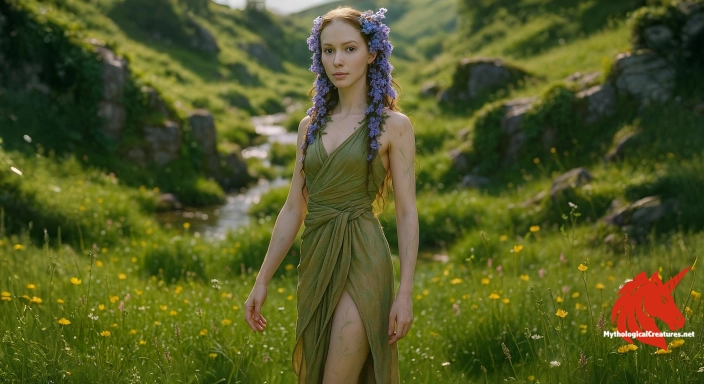
Anthousai
Anthousai - They represent the ephemeral beauty and nurturing aspect of nature's cycle through the blooming of flowers.
Origins & First Encounters
The Anthousai represent a unique facet of Greek mythology, embodying the delicate spirit of flowers and the ephemeral beauty of nature. Their origins are rooted in the very essence of spring, emerging from the Greek word for "flower," which highlights their intrinsic connection with blossoming life. Every mention of the Anthousai evokes an image of graceful nymphs whose presence heralds renewal and vibrant growth. Tales of these divine maidens have been woven into the tapestry of ancient Greek cultural narratives, appearing as symbols of fertility and the transient nature of beauty. Their first attestation can be traced back to early mythological fragments where nature and divinity merged in poetic form. Unlike many canonical figures, they occupy a specialised niche that emphasises the close bond between flora and the divine realm. Through the passage of time, the Anthousai have invited admiration and contemplation in both literary and artistic traditions. Their portrayal reflects a broader cultural reverence for the natural world's cyclical rhythms and the poetic imagery of blossoming life. This interconnectedness with nature continues to charm and influence the way ancient mythology is perceived today. Their myth serves as a gentle reminder of the inherent beauty that lies at the heart of nature's perpetual rebirth.
Source Texts & Tale Variants
Ancient texts, though scant, offer glimpses of the Anthousai through poetic references and symbolic allusions that emphasise their role as floral nymphs. While they do not feature prominently in extensive mythological treatises, brief mentions in scattered literary fragments afford a sense of their delicate and ephemeral nature. Various vase paintings and small-scale artistic depictions subtly include the Anthousai amidst other divine entities, highlighting their association with natural beauty. In these representations, they are often portrayed in company with other minor nymphs and deities linked to nature. The narratives that do exist tend to focus on their role in celebrations of spring and the renewal of life. In some traditions, the Anthousai are interwoven with the seasonal rituals of ancient Greece, offering a spiritual perspective on the interplay between flora and divinity. Their appearances in minor hymns and invocations reveal a layer of cultural reverence, despite the brevity of direct mythological accounts. Over time, multiple story variants and local retellings have enriched their character, introducing subtle differences in their attributed powers and associations. Such variations suggest that the Anthousai evolved in the collective consciousness rather than originating from a singular, authoritative source. Ultimately, the scattered literary references enhance our appreciation of these nymphs as emblematic of nature’s transient splendour.
Form & Powers
The Anthousai are often envisioned as embodiments of blooming elegance, with features as delicate and transient as the flowers they represent. Their hair is frequently described as resembling the intricate petals of hyacinth blooms, cascading in vibrant shades that mirror the colours of spring. Their features are typically delicate, with luminous skin that seems to capture the light of dawn and a softness that lends them an ethereal quality. They are said to possess an almost otherworldly grace, moving with the fluidity of a gentle breeze that coaxes buds into blossom. In artistic depictions, their attire is sometimes imagined as woven from petals and dew, further cementing their identity as nature’s own divas. The scale of these nymphs is often portrayed as slightly diminutive compared to mortal beings, reinforcing their transient and intimate connection with nature. Variations in descriptions also hint at a diversity in appearance, with some accounts giving them more robust features during peak blossoming phases. Their overall depiction encapsulates the juxtaposition of fragility and life, making them compelling symbols of natural beauty and rebirth. Every visual detail, from the soft luminescence of their skin to the vibrancy of their floral hair, contributes to a picture of divine femininity intimately linked with the cycles of nature. Such rich imagery has inspired countless artists and poets to explore the delicate interplay between form, colour, and the transient beauty of life.
Regional Faces
Throughout ancient Greece, the portrayal of the Anthousai has been subtly tailored to reflect regional sensibilities and local interpretations of nature’s bounty. In some urban centres of the ancient world, they were celebrated in local festivals dedicated to the spring, embodying the rejuvenating energy of the season. Rural areas, steeped in agricultural traditions, often saw these nymphs as protectors of blossoming fields and the fertility of the earth. In regions with a rich tradition of botanical lore, the Anthousai were sometimes associated with specific native flowers, each nymph being a personification of local flora. This regional adaptation highlights the flexible nature of myth, where local environments informed the aesthetic and functional details of these divine beings. Along the Ionian coast and in other Mediterranean locales, slight variations in their iconography can be noted, particularly in the hues and textures of their floral hair. Such localised interpretations allowed the Anthousai to resonate closely with the customs and natural landscapes of diverse communities. Their depictions served not only as mythological symbols but also as tangible representations of a community’s connection to its local environment. This interplay between regional identity and mythological embodiment underscores a broader tradition in ancient Greek myth-making. The adaptive nature of their portrayals reveals how seamlessly mythology could merge with local cultural and environmental narratives.
Cultural Parallels
In many respects, the Anthousai share attributes with other nature-infused deities and nymphs found across various mythological traditions. Their close relationship with flowers and the ephemeral beauty of seasonal blooms invites comparison with the Roman goddess Flora, who similarly symbolises the renewal and vibrancy of nature. Comparable figures appear in Eastern mythologies as well, where personifications of natural elements, such as blossoms and seasonal changes, play important spiritual roles. These cultural parallels illustrate a universal admiration for the transient beauty of nature, transcending geographical boundaries and historical eras. In both Greek and Roman traditions, the graceful demeanour and natural inclusions associated with these beings serve to express the delicate balance of life and growth. When set against the backdrop of broader mythological contexts, the Anthousai highlight a recurring motif of nature’s cyclical vibrancy and vulnerability. Like their counterparts in other cultures, they embody the ephemeral qualities of seasons and the intrinsic connection between the divine and the natural. This comparative analysis underscores an enduring cross-cultural fascination with the beauty that arises from life’s impermanence. Their mythological counterparts, each emerging from distinctive cultural settings, collectively affirm the universal celebration of nature’s transient yet resplendent moments. Such resonances across cultures offer a rich field of study in comparative mythology and the shared human experience of nature’s wonder.
Legacy & Modern Evolution
The myth of the Anthousai has continued to inspire artistic and cultural expressions well beyond the realms of ancient oral and written traditions. Over the centuries, their image has evolved, blending with broader interpretations of nature worship and the mystique of the divine feminine. Modern literature and art often invoke their essence to symbolise the fleeting beauty and inherent fragility of life. In contemporary interpretations, the Anthousai are sometimes reimagined as guardians of biodiversity, embodying an ecological message that resonates with today’s environmental narratives. Their enduring allure can be seen in the recurrent use of floral iconography in visual arts and design, echoing the timeless appeal of nature’s cycles. As symbolic intermediaries between the terrestrial and the divine, they have also found a place in modern spiritual practices that celebrate the natural world. Their evolution from classical myth to modern muse reflects a broader cultural shift towards re-integrating nature into our collective identity. Myth enthusiasts and scholars alike continue to explore these figures as emblematic of the eternal dance between growth, decay, and renewal. The Anthousai now stand as a bridge between ancient myth and contemporary ecological consciousness, serving both as a tribute to their storied past and a call to protect the beauty of the natural world. Their legacy is a testament to how myth can adapt and thrive, echoing the perennial cycle of nature itself.
Interesting Fact
Anthousai uniquely embody floral beauty, with their hyacinth-like hair serving as a striking symbol of nature's ephemeral charm and perpetual renewal.
For indie creators
Give your myth project a permanent home
Indie authors, artists, small studios, and makers can secure an annual, non-intrusive sponsor slot that meets readers where they explore.
Obtain more informationQuick Creature Info
Origin:
Features:
Associations:
Our Mythic Legendary Rating:

Habitat:
Supernatural Powers:
Physical Attributes:
Abilities:
Behavior:
Lore:
Related Creatures, Tales or Lore
- NNaiads
- DDryads
- OOreads
References
Discover Another Mythical Legend You May Not Have Heard Of?
Uncover the mysteries of ancient folklore and expand your knowledge of legendary beings from cultures around the world.
Dare to Meet the Eubuleus....

Curated by the Mythological Creatures Team
Series editor: Mythological Creatures Directory
Primary desk: Hellenic & Ancient Mediterranean Desk
(rev. November 2025)