
Haniel: Haniel is an archangel renowned in Jewish lore for embodying divine grace, charm, and favour.
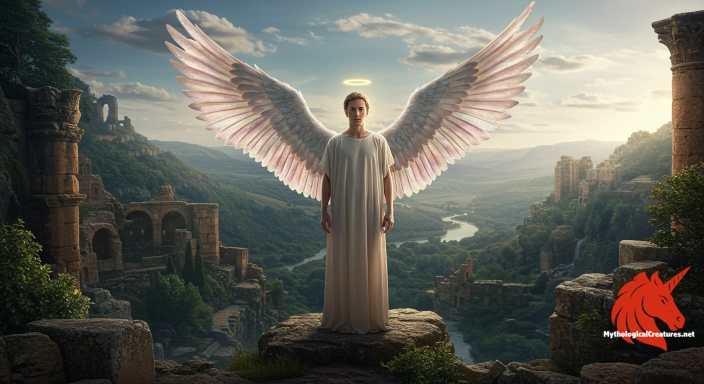
Haniel
Haniel - Haniel is revered for her embodiment of divine grace, favour, and beauty, and she governs the sephirah Netzach in Kabbalistic tradition.
the legend in five swipes.
the legend in five swipes.
Haniel: Origins and First Sightings
Haniel is an archangel whose origins are deeply embedded in ancient Jewish mysticism, with a name that signifies 'God is my grace', reflecting qualities of divine favour. Her earliest appearances are found in early liturgical and mystical texts, where she is celebrated for her association with beauty and the luminous essence of Venus. Emerging from a rich cultural tapestry, Haniel occupies a unique space among the seven archangels revered in both Jewish lore and later Christian traditions. Her traditional role as the guardian of the sephirah Netzach further establishes her as a mediator between celestial energies and earthly matters. Over time, Haniel has come to symbolise the melding of divine beauty and human aspiration, a theme that resonates across various spiritual narratives. Depicted as possessing both might and benevolence, her image reflects the integration of grace, charm, and celestial power. The evolution of her myth highlights a continuous thread of divine inspiration that has persisted from antiquity to modern esoteric traditions. Her cultural significance is underscored by the diverse interpretations and iconographies that have grown around her character, ensuring her enduring presence in spiritual discourse.
Which texts first mention Haniel?
Ancient manuscripts and mystical treatises provide the foundational sources that mention Haniel, with several early texts listing her among the seven archangels. The Sigillum Dei Aemeth, an influential work compiled by Dr John Dee and Edward Kelly, encodes her image as part of a broader celestial hierarchy. Jewish mystical literature, including elements of the Kabbalah, further enriches her narrative with layers of symbolic meaning and spiritual instruction. Variants of her story also appear in later Christian and Renaissance occult writings, where her role adapts to the needs of different theological frameworks. Numerous story variants depict her as a delicate yet powerful figure, often associated with divine mercy and the transformative energies of Venus. In some traditions, Haniel is portrayed as a luminous guide who oversees not only beauty but also the intricate balance of cosmic forces. The textual record shows subtle differences in the details of her character, reflecting the fluid nature of angelic lore across centuries. As a result, Haniel occupies a central place in a complex mosaic of spiritual narratives, with each source contributing unique insights to her multifaceted persona.
What was Haniel believed to be capable of?
Traditional iconography often presents Haniel as an entity of unsurpassed radiance, with a visage that appears both ethereal and compassionate. Descriptions from mystical texts suggest that her presence is marked by a soft, inner glow that mirrors the gentle light of Venus. Artists have long depicted her with an air of divine serenity, featuring expressive eyes that seem to capture the totality of celestial wisdom. Flowing robes in hues of shimmering gold and pastel tones are frequently associated with her, symbolising the graceful eminence and beauty she embodies. Her wings, portrayed with delicate yet expansive feathers, seem to refract the light, creating an interplay of colours as they move. In many artistic renditions, Haniel is shown with a harmonious balance of strength and tenderness, reflecting the dual nature of her celestial mission. Intricate details, such as subtle engravings on her attire, further connect her to the symbolic language of ancient mysticism and cosmic order. The overall portrayal is one of magnificent splendour, where every facet of her appearance reinforces her role as a celestial emblem of beauty and divine grace. Such visual depictions have evolved over time, yet continue to emphasise the timeless allure and magnetic charm of this revered archangel.
What regional forms of Haniel exist?
Across various cultural landscapes, Haniel is portrayed with distinct regional nuances that enrich her mythos. In Jewish mysticism, she is primarily revered for her associations with compassion and divine grace, reflecting the profound spiritual concerns of the ancient communities. Meanwhile, in Christian angelology, her image has often been interwoven with themes of healing and mediation, bridging the divine with the mortal realm. Coptic traditions have adopted her narrative with unique iconographic embellishments that highlight her celestial splendour and her ties to the luminous qualities of Venus. In regions influenced by Islamic thought, aspects of her character blend with broader angelic hierarchies, creating interpretations that stress both continuity and local spiritual aesthetics. European artistic endeavours often imbue her with a colour palette that echoes the natural beauty of the Mediterranean, reinforcing her connection with the planet Venus. Eastern traditions, on the other hand, have sometimes recast her role as a facilitator of cosmic balance, emphasising subtle spiritual energies. These diverse portrayals underscore the adaptability of Haniel’s legend, as each cultural context enhances her narrative with locally significant themes and symbols. Collectively, these regional variations contribute to a rich tapestry that celebrates her universal appeal while honouring distinctive local traditions.
Which myths echo the story of Haniel?
Haniel’s mythological character finds compelling parallels in a range of cultural narratives where beauty, grace, and divine influence converge. Much like the Greco-Roman deities associated with Venus, her symbolic connection with love and aesthetic allure mirrors that of the classical figures such as Aphrodite and Venus. These cross-cultural intersections highlight a common human fascination with celestial beauty, where both mythic and celestial entities encapsulate the ideals of charm and attraction. Her gentle yet powerful presence also invites comparisons to other archangelic figures who embody specific virtues within a structured heavenly hierarchy. In many traditions, the integration of astrological elements with spiritual narratives positions Haniel alongside other beings whose roles are defined by cosmic influences. Her portrayal, often amplified by luminous iconography and delicate symbolism, resonates with the visual and thematic elements found in various indigenous and classical mythologies. The recurring emphasis on beauty, grace, and benevolence provides a natural bridge to comparative beings across cultures. Moreover, the subtle interplay between divine order and aesthetic harmony in her narrative underscores a universal theme that transcends geographical and temporal boundaries. This comparative perspective enriches our understanding of her character as both a distinctly individual and universally recognisable figure of spiritual light and guidance.
Why does Haniel still matter?
Over the centuries, Haniel’s depiction has undergone a dynamic evolution that mirrors broader shifts in spiritual thought and cultural expression. Once primarily a fixture in esoteric and mystical texts, she has emerged in modern contexts as a symbol of beauty, healing, and inner guidance. The Renaissance period saw a flourishing of her image through occult studies and artistic representations that emphasised her luminous attributes and celestial associations. In contemporary spirituality and New Age practices, Haniel is often invoked as an inspirational guide, whose energy is said to assist in artistic creativity and personal transformation. Modern artistic expressions, including literature, visual arts, and even digital media, continue to explore her archetypal qualities, blending traditional iconography with innovative stylistic elements. This transformation reflects an ongoing endeavour to reconcile ancient mythic themes with current cultural sensibilities and spiritual needs. As a result, her legacy now extends into broader spheres of popular culture, where she is celebrated not only as a divine messenger but also as an emblem of universal beauty and human aspiration. Her enduring significance speaks to the timeless appeal of mythological figures who bridge the realms of the sacred and the everyday. Through evolving interpretations and reimagined representations, Haniel remains a vibrant symbol of the quest for grace, balance, and transcendent understanding.
Interesting Fact
Haniel is uniquely tied to the sephirah Netzach and the planet Venus, merging celestial symbolism with themes of grace and victory.
Mythological Treasures
Greek Myths: A field guide to the monsters of ancient Greece
Every monster here earned its place in legend, and each gets a full page of artwork and the story behind it.
Norse Sagas: A field guide to the beasts of the Viking world
Drawn from the saga accounts themselves, with the powers, weaknesses and doom of each being set out.
Egyptian Legends: A field guide to the gods and monsters of ancient Egypt
Guardians of the living and devourers of the dead, with the role each played in judgement.
the legend in five swipes.
For serious myth projects
Feature your work alongside the legends
From academic works to story-rich games, we highlight projects that respect world mythologies. Talk to us about a measured, long-term placement.
Start a conversationQuick Creature Info
Features:
Associations:
Our Mythic Legendary Rating:

Also Sometimes Known As:
Habitat:
Supernatural Powers:
Physical Attributes:
Abilities:
Behavior:
Lore:
Related Creatures, Tales or Lore
- MMichael
- GGabriel
- UUriel
References
Discover Another Mythical Legend You May Not Have Heard Of?
Uncover the mysteries of ancient folklore and expand your knowledge of legendary beings from cultures around the world.
Dare to Meet the Pirene....
-16c2e76c-213e-4f50-98c4-1a3969db8e2a_small.webp "Depiction of Pirene")
The Mythological Creatures Book Series
Yokai, Greek, Norse, Egyptian & Chinese. Five illustrated field guides to the creatures the old stories either warned or told you about.


Curated by the Mythological Creatures Team
Series editor: Mythological Creatures Directory
Primary desk: Hellenic & Ancient Mediterranean Desk
(rev. November 2025)