
Hatsadiling: Hatsadiling is a mythological composite bird from Northern Thai art, renowned for its immense, house-sized form and unique blend of animal features including those of a lion, elephant, rooster, and bird.
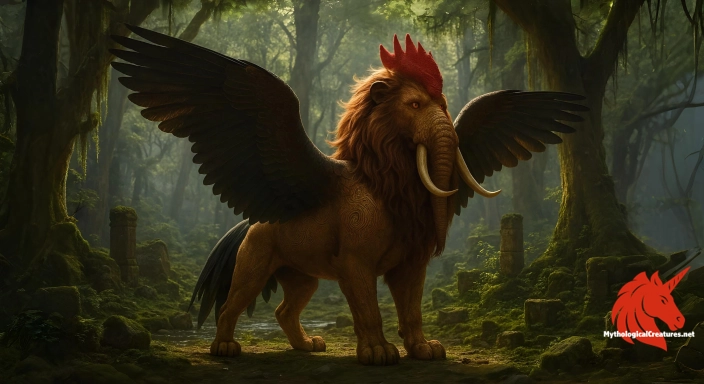
Hatsadiling
Hatsadiling - Instrumental in founding Hariphunchai and revered in funerary art as a symbol of strength and cultural heritage.
Origins & First Encounters
Hatsadiling is a captivating mythical bird woven into the cultural fabric of Northern Thailand. Its origins stretch back into ancient traditions where myth and ritual merged in evocative narratives. The creature is renowned for its amalgamation of the lion’s majestic head and body, the elephant’s imposing trunk and tusks, the cock’s flamboyant comb, and the graceful wings of a bird. Legends place it in the fabled forest of Himavanta, a realm imbued with mystery and the promise of divine wonder. The sheer size of the Hatsadiling, often described as being comparable to a house, amplifies its presence in myth and art. This creature has come to epitomise strength and nobility, merging terrestrial might with celestial symbolism. Its depiction in art, ornamenting temple facades and ceremonial artefacts, underscores a deep-seated cultural reverence. As a bridge between the natural and the supernatural, the Hatsadiling continues to inspire both awe and scholarly interest in its multifaceted heritage.
Source Texts & Tale Variants
Ancient chronicles and enduring oral traditions form the backbone of what is known about the Hatsadiling. It is celebrated in the renowned Pali chronicle Cāmadevivaṃsa, which links the creature to the founding of the Hariphunchai kingdom by the esteemed Queen Camadevi. Within this narrative, the bird is not merely a fantastical being but a symbol of royal auspices. Additional texts, such as the Dhammapada-aṃdhakathā, offer glimpses into its legendary prowess, while Buddhaghoṣa’s accounts elaborate on its strength by equating it to five elephants. Beyond these written records, vibrant oral expressions have kept the myth alive through recitations and ritual storytelling. Variants of the tale appear in local lore, with nuances shifting to accommodate regional spiritual beliefs and ceremonial practices. These diverse sources attest to the creature’s role in both historical documentation and living cultural memory. The intertwining of literary and oral histories highlights the adaptability and enduring allure of the Hatsadiling in the mythic traditions of Southeast Asia.
Form & Powers
The physical manifestation of Hatsadiling is a striking tapestry of animal features that captivates the imagination. Its primary form is defined by the regal head and body of a lion, which lends it an aura of majesty and courage. A long, sinuous elephantine trunk, complete with prominent tusks, flows gracefully from its face, reinforcing its formidable aspect. Crowning its head is a vivid comb reminiscent of that seen in a rooster, which adds a dynamic flash of colour and elegance. The expansive wings, borrowed from the avian realm, suggest its ability to traverse the skies and inhabit the space between earth and heaven. Descriptions often highlight its extraordinary size, with some accounts likening it to the dimensions of a house. The creature’s form is an intricate blend of textures—smooth, powerful musculature interlaced with detailed ornamental features that celebrate both strength and beauty. As such, the Hatsadiling represents an impeccable synthesis of natural power and mythic artistry, manifesting in a form that is both awe-inspiring and deeply symbolic.
Regional Faces
Regional interpretations of the Hatsadiling reveal a rich diversity within the myth itself, as its depiction adapts to the cultural nuances of various communities. In Northern Thailand, the bird is intricately portrayed in art and architecture, where its image is closely tied to religious ceremonies and funerary practices. Burmese narratives also embrace the creature, often accentuating its mythic strength with elements characteristic of local artistic traditions. The Marma people, for instance, have adopted the Hatsadiling as a central motif in the design of funerary hearses, imbuing the myth with a unique spiritual significance. In each cultural context, the creature’s composite features are highlighted differently, with variations in size and artistic rendering reflective of local stylistic preferences. These regional adaptations serve to reinforce the Hatsadiling’s role as both a public emblem and a private talisman for divine protection. The interplay of local interpretations not only enriches its mythos but also ensures that the creature remains a living part of communal heritage. This geographical diversity ultimately contributes to a layered and multifaceted identity, where the core symbolism of the Hatsadiling is robust yet flexible enough to accommodate varied cultural expressions.
Cultural Parallels
The Hatsadiling’s hybrid form invites intriguing comparisons with mythological beings found across disparate cultures. Its striking blend of a lion’s power, an elephant’s might, and the delicate grace of avian wings echoes the composite creatures seen in ancient legends from Greece to India. Similar to the revered Garuda in Hindu tradition, Hatsadiling occupies a liminal space between the earthly and the divine, symbolising both vitality and transcendence. The creature’s fusion of disparate animal attributes also mirrors the design of the Chinese Qilin, which is celebrated for its auspicious presence and ability to bridge the natural with the supernatural. These comparative insights underscore a universal fascination with hybrid forms that encapsulate a spectrum of natural forces and moral virtues. In many mythologies, such composite creatures are imbued with roles as guardians, heralds, or omens, a theme that resonates strongly with the Hatsadiling’s depiction in funerary and royal contexts. The analogue between these mythic beings highlights the broader human impulse to encapsulate nature’s diverse powers within singular, symbolic entities. Through comparative analysis, the Hatsadiling emerges as part of a cross-cultural dialogue on the intersections of art, nature, and spirituality.
Legacy & Modern Evolution
The legacy of the Hatsadiling has evolved remarkably over the centuries, reflecting shifting cultural values and artistic trends. Initially embedded in ancient chronicles and ritual practices, it has steadily transitioned into a broader emblem of national and spiritual identity. Its prominent role in funerary rites, particularly during the cremation ceremonies of eminent Buddhist monks, underscored its significance as a symbol of divine protection and the cyclical nature of life and death. As time passed, the creature’s image found new expressions in modern art forms, ranging from traditional temple carvings to contemporary sculptures and digital illustrations. Even today, its majestic form continues to inspire artists who reinterpret its storied past with a blend of reverence and creative innovation. The Hatsadiling is frequently honoured in festivals and cultural exhibitions, reaffirming its status in the modern collective imagination. Cultural revitalisation movements have embraced the bird as an icon of heritage, utilising its imagery to foster a sense of continuity with the past. Consequently, the evolution of the Hatsadiling not only charts the transformation of artistic and religious expression in Southeast Asia but also encapsulates the timeless appeal of myth as a reservoir of communal identity and spiritual symbolism.
Interesting Fact
Hatsadiling’s composite anatomy and its dual role as both a funerary motif and a foundational myth underscore its unique position in blending art, religion, and legendary history in Northern Thailand.
For indie creators
Give your myth project a permanent home
Indie authors, artists, small studios, and makers can secure an annual, non-intrusive sponsor slot that meets readers where they explore.
Obtain more informationQuick Creature Info
Origin:
Features:
Associations:
Our Mythic Legendary Rating:

Also Sometimes Known As:
Habitat:
Supernatural Powers:
Physical Attributes:
Abilities:
Behavior:
Lore:
References
Discover Another Mythical Legend You May Not Have Heard Of?
Uncover the mysteries of ancient folklore and expand your knowledge of legendary beings from cultures around the world.
Dare to Meet the Bakunawa....
Curated by the Mythological Creatures Team
Series editor: Mythological Creatures Directory
Primary desk: Asian & Pacific Myth Cycles Desk
(rev. November 2025)