
Hatuibwari: Hatuibwari, also known as Agunua, is a legendary dragon from the Solomon Islands in Melanesia.
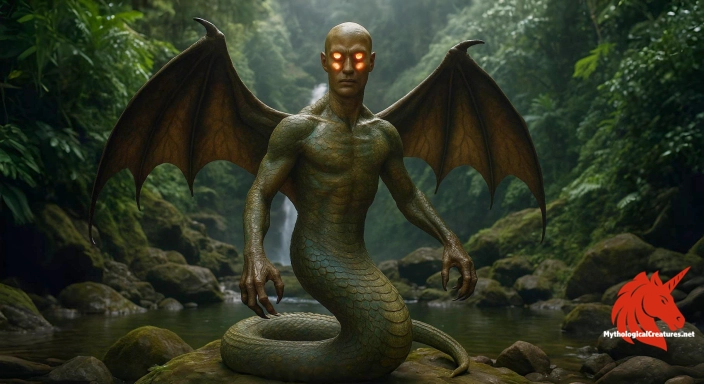
Hatuibwari
Hatuibwari - Hatuibwari is revered as the creator of all living things and embodies the male counterpart to Mother Earth, symbolizing the life-giving force of nature.
Origins & First Encounters
Hatuibwari is a majestic mythic figure from the Solomon Islands whose legend infuses the natural and spiritual realms with wonder. Its origin is deeply rooted in the traditions of Makira, an island known for its rich cultural tapestry, where this dragon has long been revered as a life-giving power. The deity’s emergence within oral traditions marks one of the earliest attestations of creation myths in Melanesia. Its unique portrayal as the male counterbalance to a nurturing Earth spirit sets it apart in a pantheon of indigenous deities. This creature is celebrated not only as a dragon but also as the embodiment of life itself, believed to have created and sustained all living things. The fusion of a human head with serpent-like dynamism symbolises the union of intellect and instinct within nature. Over time, Hatuibwari has become an essential part of communal beliefs, representing both protection and the mystery of natural forces. Its narrative is interwoven with social practices and ceremonial rites that highlight respect for life in its many forms. The enduring myth serves as a bridge between ancient creation rituals and contemporary expressions of cultural identity. In essence, Hatuibwari remains a powerful symbol of cosmic balance and the eternal cycle of life.
Source Texts & Tale Variants
Stories of Hatuibwari have been preserved through a diverse array of sources that span the spectrum from ancient oral recitations to modern published accounts. Local elders have long shared its tale around communal gatherings, ensuring that the dragon’s legend is passed down through generations. Early mentions of this formidable creature appear in traditional chants and ritual narratives that celebrate its role as a creator. Later, its story found a place in written compilations of myth and folklore, notably featuring in works like Dragons, Fearsome Monsters from Myth and Fiction. Variants of the legend emphasize different aspects of its divine nature, underscoring its role as both nurturer and guardian. Some versions highlight its profound connection with the land and seasonal cycles, while others focus on its protective qualities. The narrative has steadily evolved as scribes and storytellers expanded upon the original motifs with each retelling. Even in modern times, the legend endures, enriched by scholarly compilations that strive to capture the spirit of Melanesian heritage. Each source, whether ancient or contemporary, contributes to a multifaceted portrayal of Hatuibwari, ensuring the creature’s legacy remains vibrant and influential.
Form & Powers
Visually, Hatuibwari is an awe-inspiring fusion of both human and otherworldly features that capture the imagination. The creature boasts a human head which suggests wisdom and emotional depth, complemented by a pair of extra eyes that seem to peer into realms beyond mortal sight. Its four eyes, in particular, add a mysterious quality, implying a heightened awareness that bridges the physical and spiritual worlds. The arms are equipped with formidable claws, hinting at both dexterity and a capacity for protection. Bat-like wings sprout from its form, emphasising a supernatural ability to traverse both sky and land. The sinuous, serpentine body is a testament to its ancient, chthonic origins, winding in a manner that evokes both grace and latent danger. Some depictions suggest that its scales shimmer with a spectrum of colours, symbolising the multifaceted aspects of life and nature. The integration of these elements into a single entity underscores a deliberate blending of human ingenuity with primeval, animalistic power. Varied renditions in art and lore sometimes adjust the creature's overall size, presenting it as either an overwhelming force of nature or a more measured guardian of life. Overall, Hatuibwari’s physical form is a compelling representation of the mystic forces that govern the natural world.
Regional Faces
Regional interpretations of Hatuibwari display a fascinating range of attributes that reflect the local cultural and environmental influences. In its birthplace of Makira, the creature is portrayed with intricate detail, often linked to specific seasonal rituals and celebrations. Coastal communities sometimes envision it as a benevolent protector whose presence ensures plentiful catches and fertile lands. Conversely, in more inland or isolated areas, the dragon adopts an aura of mysticism and reclusiveness, emphasising its role as an ancient spirit of the wilderness. Local adaptations of the myth have led to variations in its iconography, such as differences in the depiction of its wings or the symbolism attached to its additional eyes. Some neighbouring islands have even incorporated aspects of local faerie legends, integrating Hatuibwari into a broader narrative of nature deities. Despite these differences, the core attributes of creation and life support remain constant across the region. These varied interpretations have allowed communities to connect with the myth in ways that affirm regional identities while preserving a shared cultural heritage. The regional tapestry of the legend underscores the adaptability of the myth as it is woven into the everyday lives of its custodians.
Cultural Parallels
Hatuibwari shares intriguing similarities with mythic creatures from diverse cultures, revealing a common human desire to codify nature’s mysteries into tangible forms. The blend of human intelligence and serpentine might is reminiscent of other hybrid deities, drawing parallels with dragons in East Asian lore that symbolise wisdom and cosmic power. Like the benevolent Chinese dragon, this creature is seen as a mediator between the celestial and the terrestrial realms. Comparisons can also be drawn with the Mesoamerican deity Quetzalcoatl, whose feathered serpent form embodies both creative and destructive forces. Furthermore, its dual nature as both a life-giver and a formidable guardian resonates with legends such as the Rainbow Serpent from Aboriginal traditions. Cross-cultural narratives often feature beings that combine human and animal traits, suggesting a universal symbolic language of duality and balance. This motif, whereby divine intervention nurtures the earthly domain, appears consistently in mythologies around the world. The convergence of these diverse mythological elements in Hatuibwari’s story highlights the interconnectedness of human cultures in their quest to understand and celebrate life. Such parallels enrich the dragon’s legend, making it a potent symbol that transcends regional boundaries. In drawing these connections, Hatuibwari emerges as part of a broader tapestry of myth that continues to inspire wonder across continents.
Legacy & Modern Evolution
The legacy of Hatuibwari has evolved gracefully over the centuries, transforming from an oral myth into a revered cultural symbol. In earlier times, the dragon’s image was integral to ritual ceremonies that celebrated nature’s bounty and the cycles of life. As the influence of modernity grew, depictions of Hatuibwari began to blend traditional motifs with contemporary artistic expressions. Today, the creature is not only a subject of folklore but also a potent emblem in art, literature, and cultural festivals across Melanesia. Creative reinterpretations in paintings, sculptures, and digital media have given Hatuibwari a renewed visibility in global mythological discussions. Its narrative now serves as a bridge between ancient wisdom and modern environmental consciousness, symbolising the enduring connection between humanity and nature. Communities continue to honour its legacy through festivals and educational initiatives that underscore its historical importance. The evolution of the dragon’s image mirrors broader cultural shifts, reflecting both reverence for the past and a proactive engagement with the present. Contemporary storytellers often portray Hatuibwari as a guardian in an era of ecological uncertainty, reinforcing its role as a protector of life. In this way, the myth of Hatuibwari remains as dynamic and relevant today as it was in the ancient traditions from which it originated.
Interesting Fact
Hatuibwari is one of the few mythological beings that combines distinctly human and dragon elements, symbolizing both creation and the fusion of intellect with primal, natural power.
Curated sponsor space
One subtle banner. Thousands of myth lovers.
We offer a small number of curated sponsor spots for relevant books, courses, games, and art. No clutter, just well-matched partners.
Partner with usQuick Creature Info
Origin:
Associations:
Our Mythic Legendary Rating:

Also Sometimes Known As:
Habitat:
Supernatural Powers:
Physical Attributes:
Abilities:
Behavior:
Lore:
Related Creatures, Tales or Lore
- QQuetzalcoatl
- TTiamat
- YY Ddraig Goch
References
Discover Another Mythical Legend You May Not Have Heard Of?
Uncover the mysteries of ancient folklore and expand your knowledge of legendary beings from cultures around the world.
Dare to Meet the Šumugan....
Curated by the Mythological Creatures Team
Series editor: Mythological Creatures Directory
Primary desk: Asian & Pacific Myth Cycles Desk
(rev. November 2025)