
Heh: Heh is the ancient Egyptian personification of infinity and eternity, central to the Ogdoad cosmogony.
-b2072ced-d8f2-4a9e-a260-beb17b89694e_small.webp "Heh - Represents the limitless nature of time and the primordial flood; a key aspect of the Ogdoad that underscores the eternal cycle of creation and regeneration.")
Heh
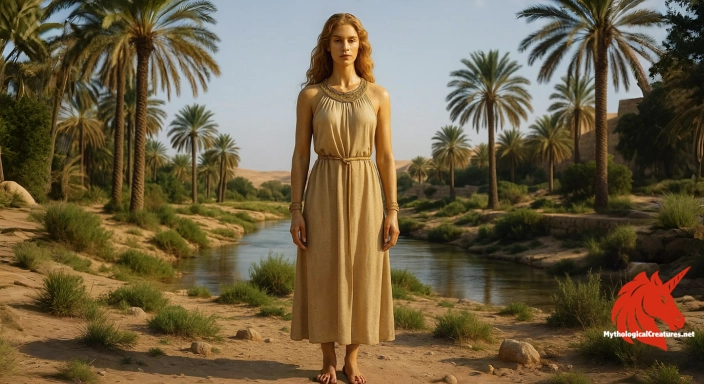
Heh - Represents the limitless nature of time and the primordial flood; a key aspect of the Ogdoad that underscores the eternal cycle of creation and regeneration.
Origins & First Encounters
Heh stands as a remarkable embodiment of infinity within the rich tapestry of ancient Egyptian cosmology, symbolising the boundless nature of the primordial waters. His origins lie in the conception of the watery chaos known as Nu, an elemental force that existed before the creation of the ordered world. In this early mythic framework, Heh was not only a personification of the infinite but also a reflection of the eternal cyclicality of creation and renewal. His name, originally meaning 'flood', underscores the inexhaustible and all-encompassing force that underpins the natural order. As a key component of the Ogdoad, he was integrated into a broader pantheon that sought to explain the cosmos through symmetry and duality. Early depictions and inscriptions reveal his close association with themes of regeneration, life, and endless duration. The deity’s dual representation, with a male form that adopted amphibian traits and a feminine counterpart in Hauhet, illustrated the inherent balance in the forces of nature. His presence resonated deeply with the Egyptian worldview, reflecting both the physical reality of the annual Nile inundation and the metaphysical idea of timeless persistence. Heh quickly became an integral symbol in rituals, art, and hieroglyphic lexicons, where he signified not just a divine personification but an abstract measure of eternity. This consolidated vision of infinity in Heh has left an enduring mark on Egyptian religious thought and cultural identity.
Source Texts & Tale Variants
Ancient texts and temple inscriptions provide glimpses into the enigmatic narrative of Heh, revealing him as an essential component of the primordial mythos of Egypt. While not as prolifically mentioned as some other deities, his presence is keenly inferred from fragmented sources such as the Pyramid Texts and a range of funerary artefacts. Visual depictions in tombs and on temple walls have offered rich but varied illustrations of his character, each contributing to our understanding of his role in the cosmic order. A number of story variants exist, where some representations emphasise his frog-headed iconography, while others draw attention to his symbolic gesture of holding palm stems. This multiplicity in narrative underlines an evolving tradition in which art and ritual alternately capture and reframe the concept of endless time. Differences across these sources highlight the fluidity of myth, as Heh’s imagery adapted to the needs of diverse religious contexts and local cult practices. In some accounts, the focus is placed on his function as a cosmic measure, while in others his association with the fertile, regenerative forces of water is underlined. Although many details remain open to interpretation, each source contributes to a composite view of Heh as a conduit to the eternal and infinite. Over time, his portrayals have acquired layers of meaning that continue to intrigue modern scholars and enthusiasts of mythology. This collection of variants ultimately reflects the enduring human fascination with the vast unknown, encapsulated in the form of Heh.
Form & Powers
Artistic representations of Heh are both intricate and symbolically potent, often merging human and animalistic features to evoke a sense of divine mystery. Frequently depicted with the head of a frog, his visage is crafted to highlight the life-giving and regenerative properties associated with water. The frog motif, with its large, soulful eyes and unmistakable form, underscores his connection to the primordial flood and the cyclical nature of life. In alternate iconographic traditions, he appears as a humanoid figure in a crouched stance, often seen clasping one or more palm stems. These palm stems, sometimes adorned with shen rings at their base, serve as a visual measure of endless time, each notch symbolising an uncountable year. His physical form not only bridges the gap between the tangible and the abstract but also reinforces the essential duality present in Egyptian cosmology. Details such as his posture, the contour of his limbs, and even the subtle hieroglyphic ornaments integrated into his figure provide insights into his mythological significance. The melding of amphibian traits with the confident bearing of a deity further accentuates his role in guiding the transitions between chaos and order. Variations in his form, whether rendered with a more pronounced animal quality or a stylised human appearance, reflect a deliberate effort to encapsulate the vastness of infinity in pictorial language. Through these deliberate artistic choices, Heh’s physical depictions continue to evoke a profound sense of timelessness and unfathomable mystery.
Regional Faces
Across different regions of ancient Egypt, the visual and thematic representation of Heh took on distinctive local flavours while maintaining his core symbolism. In the fertile landscapes of the Nile Delta, depictions of Heh often emphasised his connection with the inundation and renewal brought about by the annual flood. Artists in these regions tended to highlight the amphibious traits of his iconography, linking him closely with the life-sustaining properties of water. Meanwhile, in Upper Egypt, the focus shifted towards the abstract elements of eternity, with greater emphasis on the shen rings and the ceremonial palm stems that symbolised endless life. These regional adaptations allowed local artisans to infuse their own cultural interpretations into the broader mythic framework of the Ogdoad. Localised rituals and temple designs would incorporate variations of Heh’s imagery to better reflect the immediate natural environment and societal needs. As such, his visage could range from a vibrant amphibian embodiment of fertility to a more measured representation of cosmic order. The interplay between regional artistic conventions and pan-Egyptian theological themes highlights a highly dynamic exchange of ideas and motifs. Such regional variations not only enriched the mythos but also ensured that Heh’s symbolism remained accessible to a diverse populace. Ultimately, despite these stylistic differences, the underlying message of eternal continuity and regeneration remained a unifying thread throughout his diverse depictions.
Cultural Parallels
The figure of Heh finds intriguing echoes in other mythological traditions that also grapple with the concept of infinity and existential continuity. In Mesopotamian narratives, for instance, the primordial chaos, embodied by figures such as Tiamat, offers a parallel in the interpretation of the unformed, limitless potential of creation. Similar themes can be detected in the cyclical time theories prevalent in Hindu cosmology, where the endless cycles of creation, dissolution, and rebirth reflect a perspective not unlike that symbolised by Heh. Greek contemplations of time and the eternal have their own mythic representations, in which abstract deities encapsulate notions of vast temporal scales. The use of water and animal symbolism, such as the amphibian imagery of Heh, resonates with similar regenerative icons across diverse cultures. Comparative mythology often highlights this cross-cultural fascination with unfathomable, cyclical time as societies sought to understand both the natural world and their place within it. The duality of creation and destruction, which is central to Heh’s character, is a recurring motif found globally, suggesting a universal preoccupation with the infinite. Artistic and symbolic parallels, such as those seen in the recurring use of serpentine and amphibian forms, serve to bridge Egyptian mythology and broader mythic traditions. These common threads reveal a shared human endeavour to encapsulate the ineffable nature of time and existence. Consequently, Heh stands as a vivid example of how ancient mythologies can intersect, offering a glimpse into the universal quest for meaning beyond finite existence.
Legacy & Modern Evolution
The evolution of Heh’s imagery over millennia reflects a profound interplay between tradition and reinterpretation. As religious practices in Egypt gradually shifted through various cultural and political phases, Heh’s symbol of infinity continued to inspire reinterpretations among subsequent generations. His depiction as the 'god of millions of years' not only reinforced his mythological role but also found new resonance in later philosophical and numerological treatises. In modern times, artists and writers have revived his image, adapting his timeless essence to comment on issues of transience and permanence in contemporary society. Museums around the world display artefacts and inscriptions that testify to his enduring legacy, providing tangible connections to the ancient imagination. His role as a metaphor for endless time has also found a place in popular culture, from graphic novels to cinematic representations that explore themes of eternity and cosmic balance. Scholars examining ancient symbolism have frequently revisited Heh’s iconography to unlock new interpretative layers in the context of modern theoretical frameworks. The continuous dialogue between past and present highlights how ancient conceptions of infinity can inform and enrich modern discourse. Through artistic reinterpretation and academic inquiry, Heh remains a powerful emblem of the eternal and the unbounded. His legacy endures as a reminder that the mysteries of the cosmos continue to ignite the imagination, transcending the passage of time and the boundaries of traditional understanding.
Interesting Fact
An interesting observation is that the frog head not only signifies fertility and rebirth but also connects Heh to a broader group of Ogdoad deities, emphasizing a cyclic theme of regeneration present throughout ancient Egyptian mythology.
Reach myth fans
Connect your myth-driven brand with this audience
Our readers are writers, educators, gamers, and collectors who care about mythology. Enquire about a limited sponsor placement on creature pages.
Enquire about sponsorshipQuick Creature Info
Origin:
Associations:
Our Mythic Legendary Rating:

Also Sometimes Known As:
Habitat:
Supernatural Powers:
Physical Attributes:
Abilities:
Behavior:
Lore:
Related Creatures, Tales or Lore
- KKek
- AAmun
- NNun
References
Discover Another Mythical Legend You May Not Have Heard Of?
Uncover the mysteries of ancient folklore and expand your knowledge of legendary beings from cultures around the world.
Dare to Meet the Meskilak....
Curated by the Mythological Creatures Team
Series editor: Mythological Creatures Directory
Primary desk: Hellenic & Ancient Mediterranean Desk
(rev. November 2025)