
Heimdall: Heimdall is a Norse god renowned for his unwavering vigilance as the guardian of the Bifröst.
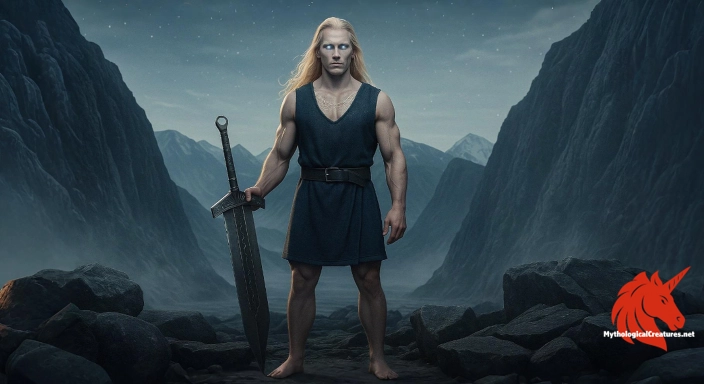
Heimdall
Heimdall - Heimdall's vigilant guardianship and prophetic abilities make him a central figure in Norse eschatology and mythology, especially in the events of Ragnarök.
Origins & First Encounters
Heimdall stands as one of the most intriguing figures in Norse mythology, renowned for his vigilance and role as guardian of the divine realms. Born of Odin and nine mothers, his origins are steeped in the mystery and complexity that characterises many ancient mythic narratives. His dwelling at Himinbjörg, where the gleaming Bifröst meets the sky, underlines his indispensable function as the watchman at the threshold between the gods and the mortal world. His unique birth and multifaceted nature have made him a symbol of both cosmic order and the inexorable approach of Ragnarök. The traditions surrounding Heimdall also highlight his prescient abilities and heightened sensory perceptions, such as unmatched eyesight and acute hearing. His attributes, ranging from golden teeth to his radiant, almost ethereal appearance, set him apart in the pantheon of Norse deities. Through his actions and symbolic possessions, he is also credited with establishing social distinctions among humanity. Over time, the lore of Heimdall has woven together elements of fate, transformation, and protection, creating a persona that strides across both myth and moral order. His various epithets further emphasise the diverse facets of his divine persona, underscoring his central role in the ancient cosmological landscape. In essence, Heimdall continues to embody the delicate balance between cosmic vigilance and the unfolding of destiny.
Source Texts & Tale Variants
The rich tapestry of Heimdall’s myth is primarily derived from seminal texts such as the Poetic Edda, the Prose Edda, and Heimskringla, which serve as key windows into the lore of the Norse gods. These sources, compiled during the 13th century, preserve earlier oral traditions that capture his enigmatic character and canonical deeds. In addition to these literary texts, skaldic poetry contributes further layers of symbolism and allegory to his myth, adding depth to his portrayal as a guardian and seer. The fragmented remnants of the lost poem Heimdalargaldr only serve to heighten the intrigue surrounding his narrative. A rare runic inscription on a Saltfleetby spindle-whorl hints at a broader geographical reach, suggesting that the veneration of Heimdall extended beyond Scandinavia. Each source offers subtle differences—whether through descriptions of his keen senses or the mystical quality of his possessions—thereby inviting multiple interpretations. The linguistic nuances and epithets found across these texts reflect the shifting cultural attitudes towards the god over time. While the poetic verses often imbue him with an aura of inevitability regarding Ragnarök, the sagas characterise him as a proactive sentinel. This multiplicity of narratives underscores the dynamic interaction between oral tradition and written record. Collectively, these sources afford us a multifaceted view of a deity whose myth continues to inspire debate and admiration.
Form & Powers
Heimdall is depicted with a remarkable physical presence that combines both celestial radiance and martial symbolism. His golden teeth, an attribute that immediately distinguishes him from other deities, have sparked much discussion over their symbolic meaning. Accounts also portray him as having a strikingly luminous complexion, often described as the whitest among the gods, which reinforces his connection to purity and watchfulness. The description that ‘the head is called his sword’ hints at an almost inseparable blending of intellect and physical might in his form. His extraordinary sensory capabilities are often portrayed as literal extensions of his body, with descriptions of his piercing eyes and acute hearing that elevate him above mere mortal perception. Adorned with mystical items such as the resounding horn Gjallarhorn and the golden-maned steed Gulltoppr, his appearance is punctuated by objects that further signify his divine purpose. Variations in the physical portrayals across sources sometimes imbue him with a commanding, muscular build, emblematic of readiness and strength. His visual depiction is often suffused with an ethereal glow, a testament to his role as the harbinger of destiny. The amalgamation of physical beauty with an almost otherworldly quality solidifies his standing as a deity whose form is both awe-inspiring and emblematic of cosmic order. This detailed, albeit enigmatic, imagery ensures that Heimdall remains one of the most visually arresting figures in Norse lore.
Regional Faces
Throughout Scandinavia, the figure of Heimdall has been adapted and reinterpreted to reflect regional nuances and local cultural values. In Icelandic traditions, his role as the initiator of social classes and the guardian at the edge of the divine realm is particularly emphasised, aligning with the island’s own historical narratives of order and community. Mainland Scandinavian accounts often highlight his vigilant watch over the Bifröst, a metaphor that resonates with the natural phenomenon of the shimmering northern lights. The variations in his nomenclature—from names like Rig and Vindhlér to others—mirror the diversity of local dialects and emphasize different facets of his character. In some areas, folklore has woven his persona into stories that link him with natural elements, such as the interplay of light and sound found in the Arctic night. Local adaptations have also incorporated his martial attributes, presenting him not only as a guardian but as a symbol of resilience in the face of imminent chaos. Such regional reinterpretations underscore his dynamic and multi-dimensional character, which can shift to align with differing conceptions of divine order. The continual transformation of his myth through regional storytelling exemplifies how ancient deities can acquire layers of local identity over time. By resonating with both the natural and social landscapes of various communities, Heimdall’s image remains both timeless and adaptable.
Cultural Parallels
When considering Heimdall in a broader mythological framework, his role as the vigilant sentinel finds resonances in a variety of cultural traditions across the ancient world. His function as the guardian of critical thresholds compares intriguingly with figures like the Roman god Janus, who also presides over transitions and thresholds in a symbolic manner. The emphasis on foresight and acute sensory perception creates a parallel with other mythic warriors and seers who are tasked with protecting cosmic order. Similar to guardian deities in other Indo-European traditions, Heimdall encapsulates the archetype of the watchman who stands at the frontier between chaos and civilisation. His golden features and radiant appearance echo the universal symbolism of light as a protector against darkness, a theme not uncommon in global mythologies. The multifaceted portrayal of Heimdall invites comparisons with shamanic practices, where the merging of physical strength and spiritual insight is paramount. The cultural parallels extend to the idea of a divine mediator who not only alerts but also facilitates the transition between different states of existence. This broader comparative analysis highlights how themes of vigilance, transformation, and cosmic duty traverse myriad cultures, even as Heimdall’s specific attributes remain distinct. The enduring appeal of such guardian figures speaks to a shared human yearning for the reassurance of order and protection amid the uncertainties of life. Thus, Heimdall’s myth resonates well beyond the confines of Norse lore, embodying a universal archetype found in many ancient traditions.
Legacy & Modern Evolution
Over the centuries, Heimdall’s image has evolved from the shadowy strands of medieval sagas to a dynamic symbol in modern culture. Early Norse texts meticulously detail his role as the ever-watchful guardian, a function that has continued to captivate audiences through successive generations. In more recent times, his narrative has been reimagined in a myriad of artistic, literary, and even cinematic works, bridging the ancient with the contemporary. Modern interpretations often highlight his qualities of vigilance, foreknowledge, and resilience—traits that resonate with contemporary societal ideals. As a figure who straddles the boundary between realms, Heimdall has found a natural place in discussions around heritage, identity, and the preservation of tradition. His myth is also embraced within modern Norse neopagan and cultural revival movements as a reminder of the depth and continuity of ancient wisdom. In various forms of popular media, his unique attributes—ranging from his golden features to his resounding Gjallarhorn—are celebrated as symbols of both divine duty and the eternal struggle between order and chaos. The evolution of his portrayal reflects a broader shift in how ancient deities can be recontextualised to address contemporary issues, including leadership, security, and communal identity. Today, Heimdall remains an enduring emblem of protective strength and foresight, illustrating the continued influence of Norse mythology on modern imagination and cultural expression.
Interesting Fact
A unique facet of Heimdall's myth is his prophesied mutual slaying with Loki at Ragnarök, symbolizing the inevitable cycle of destruction and rebirth in Norse cosmology.
For authors, artists, and makers
Created something from the realm of myth?
If your book, deck, game, or artwork draws from legendary creatures and lore, you can showcase it here in a tasteful, year-round placement.
Share your projectQuick Creature Info
Origin:
Features:
Associations:
Our Mythic Legendary Rating:

Also Sometimes Known As:
Habitat:
Supernatural Powers:
Physical Attributes:
Abilities:
Behavior:
Lore:
Related Creatures, Tales or Lore
- TTyr
- AArgus
- JJanus
References
Discover Another Mythical Legend You May Not Have Heard Of?
Uncover the mysteries of ancient folklore and expand your knowledge of legendary beings from cultures around the world.
Dare to Meet the Longma....
Curated by the Mythological Creatures Team
Series editor: Mythological Creatures Directory
Primary desk: Northern & European Folklore Desk
(rev. November 2025)