
Longma: The longma is a legendary Chinese creature that combines the attributes of a horse and a dragon, featuring majestic wings and shimmering dragon scales.
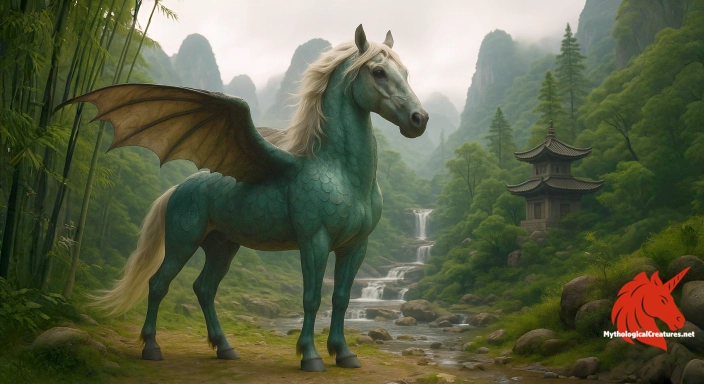
Longma
Longma - The longma is revered as a sign of impending great leadership and divine approval, bridging the celestial and earthly realms.
Origins & First Encounters
The longma is a majestic hybrid creature from Chinese mythology, blending the noble form of a horse and the mystique of a dragon. It is renowned for its distinctive wings and shimmering dragon scales, which have captivated imaginations across generations. Throughout the ancient texts and artistic traditions, the longma is depicted as an omen heralding the rise of illustrious sage-rulers. This creature emerged from early mythic narratives, gradually evolving into a symbol of divine favour and sovereign mandate. Its origins appear to trace back to shamanistic rituals where the fusion of earthly and celestial powers was celebrated. Early narratives recount that witnessing the longma foretold the advent of transformative leadership during critical periods of history. The blending of equine and draconic attributes speaks to a deep symbolic interplay between strength, grace, and mysticism. Over time, the longma has been embraced not only as a legendary beast but also as an emblem of auspicious beginnings and cosmic balance. Its storied legacy remains interwoven with the mythos of the Three Sovereigns and Five Emperors. The creature continues to represent both the tangible and the transcendent, inspiring awe among those who delve into its rich cultural tapestry.
Source Texts & Tale Variants
Ancient records and folklore intermittently mention the longma, with some texts alluding to its presence during legendary eras. Early documents, though fragmentary, hint at this creature's role in heralding the rise of great rulers, linking it with the mythic sagas of Chinese antiquity. In several classical anthologies and compilations of myth, references to a winged horse with draconic features evoke the symbolism attributed to the longma. Diverse narrative traditions—ranging from imperial chronicles to oral folklores—offer unique takes on its character and significance. Some accounts describe the longma as a celestial messenger, while others embed it deeply within the rites and rituals of early dynastic courts. Variants of its myth appear in ancient scrolls and bronze inscriptions, each emphasising aspects of glory, magic, and providence. Local legends underscore the creature’s ephemeral appearances during times of political or natural transition. Often, its presence is celebrated in allegorical poetry and ancestral worship, highlighting its enduring cultural resonance. The multilayered portrayals found in these sources illustrate the dynamic evolution of the longma myth. This rich tapestry of stories underscores the longma’s importance as both a historical symbol and a timeless narrative device.
Form & Powers
The longma is visually striking, characterised by a seamless fusion of equine elegance and draconic mystique. Its robust yet graceful body is draped in scales that glimmer with hues of jade, sapphire, and sometimes gold, evoking an otherworldly radiance. Horns, gracefully curved and reminiscent of ancient dragons, crown its head, adding to its regal appearance. The creature’s eyes are often described as deep and expressive, capable of conveying both wisdom and an enigmatic foreknowledge. Large, powerful wings extend from its shoulders, each feather or scale shimmering with an ethereal quality that suggests the ability to traverse both earthly and celestial realms. Its limbs are strong and lithe, designed for both swift terrestrial movement and majestic flight. Delicate details such as a flowing, almost luminescent mane and a sinuous tail contribute to its overall aura of divine beauty. The longma’s anatomy seamlessly merges the best qualities of a horse’s agility with the mythical attributes of a dragon, creating a figure that is both formidable and graceful. This composite form serves as a visual testament to the intricate balance between natural force and supernatural elegance. Every aspect of its physicality is imbued with symbolic significance, reinforcing its role as a harbinger of fortune and sage wisdom.
Regional Faces
The portrayal of the longma varies significantly across different regions of China and the broader East Asian cultural sphere. In northern regions, artistic depictions tend to emphasise its robust, almost muscular physique, reflective of the local ethos that prizes strength and endurance. In contrast, southern traditions often illustrate the longma with a more streamlined and elegant form, mirroring the graceful flow of riverine landscapes and subtler cultural nuances. Rural folklore in certain provinces imbues the creature with additional magical attributes, such as an aura of light or a mystic presence that foretells changes in fortune. In some border areas, the longma has been blended with indigenous dragon legends, resulting in a hybrid imagery that embodies local interpretations of power and divinity. Temple murals and regional festivals frequently celebrate variant designs, highlighting differences in scale patterns, wing structure, and overall bodily form. In neighbouring cultures, adaptations of the longma concept can be found, subtly altered to resonate with local mythological traditions. These regional variations not only reflect diverse artistic styles but also underscore the universal appeal of a creature that bridges the earthly and the divine. The multiplicity of its interpretations accentuates the longma’s adaptability to local storytelling customs. Such dynamic regional adaptations ensure that the myth remains vibrant and relevant across different cultural landscapes.
Cultural Parallels
The longma finds interesting cultural parallels with several legendary creatures from global mythologies, underscoring its universal appeal. Like the Greek Pegasus, it serves as a symbol of transcendent beauty and the potential for noble transformation. While Pegasus commonly represents artistic inspiration and freedom, the longma is more closely associated with the auspicious rise of enlightened rulers and sovereign destiny. Comparable to the European hippogriff, the longma is a blend of two contrasting creatures, embodying the balance between terrestrial might and celestial grace. In East Asian traditions, it shares thematic elements with figures such as the qilin and tianma, which also blend characteristics of various animals to evoke notions of prosperity and divine protection. This melding of traits highlights a shared human fascination with the idea of hybridity in myth. Both Eastern and Western portrayals utilise these creatures to symbolise a bridge between different realms of existence. The comparative analysis of these beings reveals recurring motifs of balance, transformation, and an intrinsic link between the natural world and mystical forces. These shared symbols serve to reinforce the importance of myth in interpreting and connecting the disparate elements of cultural narratives. Through such parallels, the longma emerges as a truly cosmopolitan emblem of the enduring human quest for meaning and transcendence.
Legacy & Modern Evolution
The myth of the longma has undergone a fascinating evolution from its early mythological roots to its contemporary status as a cultural icon. Historically, the creature was revered as a portent of noble leadership and was intricately linked with the celestial order and state ideology during ancient dynasties. Over the centuries, the longma has been reinvented across various artistic mediums, from traditional scroll paintings and temple carvings to modern digital illustrations and cinematic portrayals. Its depiction has continually adapted to reflect evolving cultural ideals, from the grand narratives of imperial power to contemporary symbols of hope and renewal. In modern times, the longma appears frequently in fantasy literature, video games, and pop culture, where it is often portrayed as a magical steed or a mystical guardian. This continued presence in modern media has helped maintain its relevance, inviting new generations to explore its rich symbolic heritage. Present-day artists and designers frequently reinterpret its image, infusing traditional attributes with innovative aesthetics and narrative depth. The longma remains a potent metaphor for balance, transformation, and the harmonious convergence of the earthly with the divine. This enduring legacy underlines the timeless appeal of myth and the universal human fascination with creatures that traverse the boundaries between myth and reality. As a result, the longma continues to inspire both scholarly discourse and creative expression, securing its place in the modern mythological lexicon.
Interesting Fact
An interesting fact about the longma is that its rare appearance was traditionally seen as a direct mandate from heaven, foretelling the rise of illustrious leaders and the advent of a harmonious era in ancient China.
Partner with us
Sponsor this space
Reach thousands of mythology enthusiasts with a curated placement on our creature pages.
Learn about sponsorshipQuick Creature Info
Associations:
Our Mythic Legendary Rating:

Also Sometimes Known As:
Habitat:
Supernatural Powers:
Physical Attributes:
Abilities:
Behavior:
Lore:
References
Discover Another Mythical Legend You May Not Have Heard Of?
Uncover the mysteries of ancient folklore and expand your knowledge of legendary beings from cultures around the world.
Dare to Meet the Tinjis....
Curated by the Mythological Creatures Team
Series editor: Mythological Creatures Directory
Primary desk: Asian & Pacific Myth Cycles Desk
(rev. November 2025)