
Tinjis: Tinjis, also known as Tinga or Tingis, was a Libyan queen and deified figure in Berber and Greek mythology.
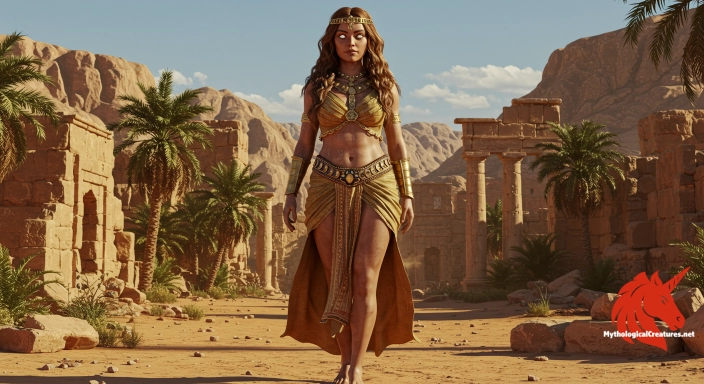
Tinjis
Tinjis - Tinjis represents the intersection of Berber and Greek myth, embodying divine femininity and royal power in ancient Libyan lore.
the legend in five swipes.
the legend in five swipes.
The Origin Story of Tinjis
Tinjis, celebrated in both Berber and Greek mythologies, emerges as a complex figure embodying strength, wisdom, and divine feminine power. She is traditionally revered as a Libyan queen whose life interweaves the earthy traditions of North Africa with the heroic narratives of the Mediterranean. As the consort of the mighty King Antaeus, her story has been transmitted through generations as both a symbol of royalty and an emblem of the mysterious divine. Her early references appear in a blend of fragmented oral traditions and ancient inscriptions, each echoing the spirit of her multifaceted identity. The convergence of Berber cultural values with Greek mythic elements adds a layer of richness and profundity to her legend. Variously known as Tinja, Tinga, or Tingis, her multiple appellations signify her widespread veneration and adaptability. The lore surrounding her is imbued with symbolic imagery that reflects both fertility and sovereign authority. Over time, Tinjis has evolved from a mythic consort into a potent icon representing the unity of diverse cultural traditions. Her enduring presence in the mythic imagination continues to inspire retellings that highlight the seamless interplay between history, myth, and identity.
How did the story of Tinjis change over time?
The narrative of Tinjis is rooted in a tapestry of ancient texts, oral lore, and symbolic artefacts, each contributing to the complexity of her myth. Greek sources weave her story into the epic saga of King Antaeus, lending her a dignified role in the classical hero tradition. In parallel, Berber oral traditions enrich her character by emphasising her divine qualities and her significance as a nurturer of cultural identity. These multiple strands of tradition illustrate how her myth transcends conventional boundaries between mortal and divine, offering varied perspectives on her persona. Some ancient inscriptions and rock carvings hint at ritual celebrations dedicated to her, suggesting that Tinjis was once central to local religious practices. Later medieval scribes and historians further adapted her tale, incorporating local beliefs and embellishing elements of her character. Despite the variations, core themes of regal authority, maternal care, and mystic power consistently manifest in each version of her story. The diverse sources collectively underscore Tinjis's role as a bridge between different cultural and religious paradigms. This multiplicity of narratives contributes to a richer, more layered understanding of her enduring myth.
Tinjis: Size, Shape and Strange Features
Tinjis is often depicted as a figure of graceful elegance and formidable presence, her appearance mirroring the stark beauty of the Libyan landscape. In artistic renditions, she is adorned with a luminous, sun-kissed complexion that speaks to the radiant warmth of the desert sun. Her deep, expressive eyes are said to convey wisdom and an almost otherworldly insight, drawing observers into her mythic aura. She is typically portrayed in elaborate robes rich with intricate Berber motifs, each pattern resonating with her royal and sacred significance. A distinctive crown, fashioned from elements reminiscent of ancient metalwork and desert flora, crowns her head and symbolises her divine lineage. Flowing hair, likened to the ever-shifting sands, adds to the impression of timeless elegance and enigmatic allure. Her physical stature, at times depicted as larger than life, elevates her presence to that of a celestial being rather than a mere mortal ruler. The harmony of strength and softness in her features reflects the delicate balance of sovereignty and nurturing grace. Through such detailed portrayals, Tinjis is rendered not only as a queen but as a living embodiment of the poetic beauty of her native land.
How does the Tinjis legend change from place to place?
The portrayal of Tinjis varies notably across different cultural and geographical landscapes, each adaptation underscoring unique local sensibilities. In the North African tradition, she is most often embraced as a maternal guardian deeply entwined with the rhythms of nature and the rugged desert environment. Local Berber communities celebrate her as not only a queen, but also as a benevolent deity whose presence ensures the fertility of the land. In contrast, the Greek adaptations tend to emphasise her role as a regal consort within the heroic framework of King Antaeus, casting her influence in terms of royal legitimacy and mythic intrigue. Regional narrative variations also infuse her story with symbols drawn from the natural world, such as the sun, sand, and seasonal cycles. Certain traditions even elevate her to the status of a healing goddess, invoking her in rituals designed to bring relief during periods of environmental hardship. The interplay of local customs and wider mythic themes results in a tapestry rich in symbolic nuance and cultural idiosyncrasy. Despite the regional differences, a consistent portrayal of Tinjis as a figure of nurturing strength and divine authority threads through all versions of her story. These regional adaptations serve to highlight the dynamic evolution of her myth, echoing the diversity of the cultures that honour her legacy.
What figures resemble Tinjis?
Comparative analysis reveals that Tinjis occupies a unique position among mythological figures, her narrative resonating with themes common to goddesses across ancient cultures. Her dual role as both consort and sovereign draws immediate parallels with deities such as Isis, whose influence extends through both political and natural realms. In the tapestry of classical myth, her relationship with King Antaeus positions her alongside figures who bolster the heroic narrative, much like other revered consorts who validate and empower legendary rulers. Similarities can also be discerned with certain Amazonian figures, where the fusion of martial prowess and nurturing care is a recurrent hallmark. Her iconography intermingles with motifs of the land and fertility, echoing the attributes of goddesses who symbolise the cyclical nature of the earth. The integration of indigenous Berber elements with elements of Hellenistic myth underscores a deliberate cultural synthesis that enriches her character. This amalgamation of influences makes her a liminal figure, bridging the realms of traditional spirituality and classical heroism. Throughout various cultural narratives, Tinjis exemplifies a synthesis of power and compassion, a duality that is also celebrated in other ancient female divinities. Through these cultural parallels, her myth offers valuable insights into the shared human endeavour to articulate the dimensions of feminine divinity, authority, and mystery.
Tinjis: Then and Now
The legacy of Tinjis unfolds as an evolving narrative that has traversed the corridors of time and absorbed countless cultural influences. Her myth, originally rooted in ancient Libyan and Greek traditions, has grown to become a symbol of female empowerment and the enduring strength of cultural memory. Over the centuries, reinterpretations of her story have reimagined her as a beacon of resilience, bridging past and present with a timeless appeal. Modern literature, art, and cinema have reignited interest in her myth, often recontextualising her attributes to resonate with contemporary themes of identity and social transformation. Her image has come to represent the harmonious blend of mortality and divinity, inspiring works that celebrate both her historical significance and her mythic power. New archaeological insights and renewed academic focus on indigenous Berber narratives have further enriched our understanding of her role within ancient society. In festivals and cultural events, Tinjis is often invoked as a symbol of national pride and ancestral heritage. Her myth continues to serve as fertile ground for creative reinterpretation, informing debates on gender, power, and cultural identity. Ultimately, the legacy of Tinjis illustrates the dynamic evolution of myth, affirming that ancient stories can persist as vital sources of inspiration in a modern, interconnected world.
Interesting Fact
An intriguing aspect of Tinjis is the linguistic diversity of her name, reflecting the rich Berber heritage and her myth’s influence across different cultures.
Mythological Treasures
Greek Myths: A field guide to the monsters of ancient Greece
Every monster here earned its place in legend, and each gets a full page of artwork and the story behind it.
Egyptian Legends: A field guide to the gods and monsters of ancient Egypt
Guardians of the living and devourers of the dead, with the role each played in judgement.
Chinese Beasts: A field guide to the dragons and demon kings of Chinese myth
From river dragons to demon kings, with the legends that shaped five thousand years of storytelling.
the legend in five swipes.
For serious myth projects
Feature your work alongside the legends
From academic works to story-rich games, we highlight projects that respect world mythologies. Talk to us about a measured, long-term placement.
Start a conversationQuick Creature Info
Our Mythic Legendary Rating:

Also Sometimes Known As:
Habitat:
Supernatural Powers:
Abilities:
Lore:
Related Creatures, Tales or Lore
- TTanit
- CCybele
- AAtargatis
References
Discover Another Mythical Legend You May Not Have Heard Of?
Uncover the mysteries of ancient folklore and expand your knowledge of legendary beings from cultures around the world.
Dare to Meet the Azrael....

The Mythological Creatures Book Series
Yokai, Greek, Norse, Egyptian & Chinese. Five illustrated field guides to the creatures the old stories either warned or told you about.



Curated by the Mythological Creatures Team
Series editor: Mythological Creatures Directory
Primary desk: African & Diaspora Traditions Desk
(rev. November 2025)