
Heka: Heka is the ancient Egyptian god and deification of magic.
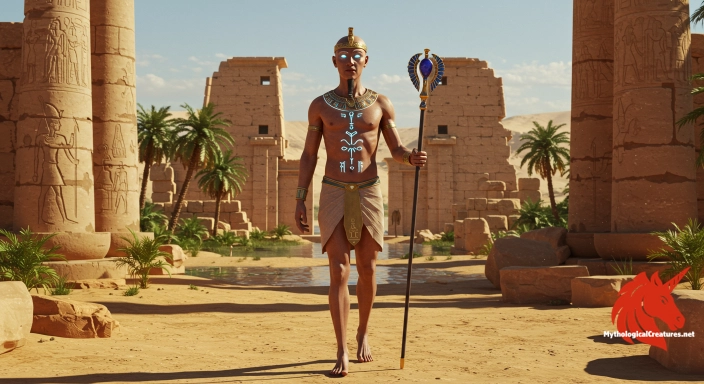
Heka
Heka - Heka represents the intrinsic magical energy that was believed to sustain the cosmos and empower rituals in ancient Egypt.
Origins & First Encounters
Heka emerges as the embodiment of magic within ancient Egyptian belief, a divine force that was intrinsic to the cosmic order and everyday life. Born from an era when magic infused every aspect of existence, Heka was celebrated as both the catalyst for creation and the protector of the natural world. His earliest attestations can be traced back to the dawn of Egyptian civilisation, where inscriptions and hieroglyphic texts evoke his pervasive presence. Revered as a vital, animating spirit, he symbolised the mysterious energies that bridged the human and divine realms. Over time, Heka became synonymous with the power of transformation, healing, and the manipulation of the unseen. His veneration underpinned the notion that magic was not merely an art but a sacred language that connected mortals with the gods. The cultural context of his worship reflects a sophisticated understanding of the interplay between chaos and order. In short, Heka’s enduring legacy in Egyptian thought is a testament to the intrinsic human fascination with the mystical and the unknowable.
Source Texts & Tale Variants
Ancient texts and temple inscriptions provide a fragmented yet intriguing glimpse into the role Heka played in Egyptian spirituality. Papyri, temple reliefs and funerary chants reference his divine essence as the personification of magical power. Textual evidence from the Pyramid Texts and Coffin Texts reveals that Heka was interwoven with ritual incantations and healing spells. Different layers of Egyptian society contributed to his mythos, with priestly recitations and public ceremonial rites framing his narrative. In some versions of the myth, Heka is portrayed as an elemental force present even before the creation of the world. Variants of his story emphasise his indispensable role in mediating between the mortal realm and the divine. Diverse literary sources reiterate his omnipresence throughout the Egyptian pantheon, albeit in varying degrees of prominence. Although the primary sources present only glimpses of his mythology, they uniformly testify to his essential role in the magical and spiritual endeavours of ancient Egypt.
Form & Powers
Representations of Heka in ancient Egyptian art are as dynamic and enigmatic as the magic he symbolised. Depictions of him vary, ranging from anthropomorphic figures adorned with divine regalia to abstract signs that evoke his elusive nature. Often, Heka is rendered holding ritual items and symbols such as the ankh or scepter, which underscore his status as the divine keeper of magical power. His iconography frequently incorporates elements like the uraeus, signifying sovereignty and protection, blended with motifs drawn from nature. The fluidity of his artistic portrayals allowed for both human-like and more symbolic, non-corporeal manifestations to coexist in religious iconography. Flourishing in both monumental temple reliefs and smaller amuletic designs, his visual depictions resonate with the layered complexity of Egyptian religious thought. Variations in his artistic size, ornamentation, and posture reflect the changing tides of interpretation over time. Each artwork, whether grand or intimate in scale, offers a window into the reverence with which ancient Egyptians regarded the elusive power of magic embodied in Heka.
Regional Faces
Throughout Egypt, regional interpretations of Heka’s divine nature display intriguing diversity and local colour. In different communities, his attributes merged with those of local deities or took on nuances unique to the spiritual practices of the region. Some local cults in Upper and Lower Egypt integrated his magical essence with their healing rites, thereby accentuating the protective aspects of his persona. In rural communities, Heka was often seen as a benevolent spirit whose presence ensured the continuity of nature’s cycles and agricultural prosperity. Urban centres, meanwhile, celebrated his abstract form through public rituals and festive celebrations that underscored his enigmatic influence. Regional texts and local iconography occasionally highlight an emphasis on his transformative capabilities, often where daily life depended on the successful harnessing of mystical forces. These regional variants contribute to a layered narrative that underscores magic not as a monolith, but as a dynamic interplay of local traditions and cosmic mysticism. Such variations reinforce the idea that the experience of magic—and consequently the divine, magical power of Heka—was as multifaceted as the people who revered him.
Cultural Parallels
The personification of magic in Heka finds fascinating parallels across global mythologies, inviting comparisons with deities who embody similar mystical powers. In ancient Greece, for instance, Hecate served as a goddess of witchcraft, crossroads, and the night, and while her narrative differs, both deities encapsulate the dual nature of magic as constructive and destructive. Similar threads can be seen in Mesopotamian traditions where magic was revered as a primordial force, though it was not always personified in a single deity as distinctly as Heka. Across cultures, such supernatural manifestations often symbolised the same human need to understand and control the unpredictable forces of the cosmos. The interplay between creation and destruction, order and chaos, is a recurring theme in many mythologies, and Heka’s role richly contributes to this collective tapestry. His abstract character contrasts with more humanised deities, making him a unique figure whose essence transcends local anthropology. Comparative studies reveal that these diverse portrayals, though culturally distinct, share an underlying reverence for the indomitable power of magic. This cross-cultural analysis underscores a universal admiration for the mysteries that govern life and the natural world.
Legacy & Modern Evolution
Over the millennia, perceptions of Heka have evolved in tandem with shifts in religious and cultural landscapes. In antiquity, his powers were integrally woven into the fabric of daily life and the cosmic order, with rituals and spells paying homage to his divine energy. As Egyptian civilisation encountered new cultural influences during the Greco-Roman era, Heka’s narrative adapted and sometimes merged with local deities and magical traditions. In modern times, the ancient figure of Heka has transcended his historical context, finding new life in literature, visual art, and contemporary occult practices. His symbolism frequently inspires modern magicians and spiritual practitioners seeking to reconnect with a time when magic was revered as both a sacred art and an essential cosmic force. Artistic reinterpretations and scholarly re-evaluations continue to reshuffle his myth, aligning his image with the perennial human quest for enlightenment and mystery. The resurgence of interest in ancient mysticism, often set against a backdrop of modern scepticism, has allowed Heka’s legacy to be reimagined in innovative and thought-provoking ways. As a timeless icon of the supernatural, his myth endures as a powerful reminder of the human longing for connection with the unseen. Reinterpreted through the prisms of modern philosophy and creative expression, Heka’s story remains as vibrant and enigmatic as ever.
Interesting Fact
An interesting fact about Heka is that his name has become synonymous with magic in several modern languages, reflecting the lasting impact of Egyptian belief in magical forces.
Reach myth fans
Connect your myth-driven brand with this audience
Our readers are writers, educators, gamers, and collectors who care about mythology. Enquire about a limited sponsor placement on creature pages.
Enquire about sponsorshipQuick Creature Info
Origin:
Associations:
Our Mythic Legendary Rating:

Habitat:
Supernatural Powers:
Physical Attributes:
Abilities:
Behavior:
Lore:
References
Discover Another Mythical Legend You May Not Have Heard Of?
Uncover the mysteries of ancient folklore and expand your knowledge of legendary beings from cultures around the world.
Dare to Meet the Artemis....

Curated by the Mythological Creatures Team
Series editor: Mythological Creatures Directory
Primary desk: Hellenic & Ancient Mediterranean Desk
(rev. November 2025)