
Helblindi: Helblindi is a jötunn from Norse mythology known primarily as the brother of Loki and Býleistr.

Helblindi
Helblindi - Helblindi is an obscure figure whose mention highlights the complex and intertwined familial relationships among mythological beings in Norse legends.
the legend in five swipes.
the legend in five swipes.
What are the origins of Helblindi?
Helblindi occupies a shadowy corner in Norse mythology, emerging as one of the lesser-known jötnar whose origins are as enigmatic as they are intriguing. Born into a world of chaos and primordial forces, his existence itself is a testament to the complex interplay between order and disorder in ancient Scandinavian thought. Recorded in the 13th-century texts of Snorri Sturluson, his name appears briefly yet memorably alongside those of his more famous brothers, Loki and Býleistr. This early mention, though scant, hints at familial ties that entwine the divine with the chaotic energies of nature. The sparse attestations suggest that Helblindi may have played a symbolic role, representing obscured or hidden forces within the Norse cosmological framework. His nomenclature, which translates roughly to “Helblind,” intrigues scholars by suggesting themes of obscuration and mystery. Within the cultural context of the Norse world, where the divine often mixed with the untamed wilderness, his presence speaks to the blurred boundaries between gods and giants. Thus, Helblindi serves as a subtle reminder of the myriad forces that shaped the ancient Nordic understanding of the cosmos.
The Source Texts Behind Helblindi
The primary literary reference to Helblindi is found in the works of Snorri Sturluson, whose account in the Prose Edda presents him as a jötunn connected to the chaotic forces personified by his relatives. The limited detail provided by Snorri leaves ample room for modern interpretations and imaginative reconstructions. Aside from this seminal account, later medieval sources offer only fleeting mentions that do little more than reaffirm his lineage. The tradition of oral storytelling in Scandinavia might well have preserved additional lore surrounding his character, yet these narratives have largely been lost to time. There are subtle hints in various genealogical compilations that reinforce his connection to disruptive and transformative forces. While he does not feature prominently in any major mythic cycle, the echo of his name in later texts suggests an enduring, if enigmatic, presence within the mythological landscape. The scarcity of primary sources challenges historians to piece together his significance indirectly through the broader tapestry of Norse cosmology. As such, Helblindi remains an intriguing puzzle, his elusive character inviting further scholarly reflection on the nature of myth and memory.
What abilities did Helblindi have?
Descriptions of Helblindi in ancient sources are notably sparse, yet later artistic and literary traditions have attempted to fill the gap with evocative imagery. He is often envisioned as a towering and robust figure, emblematic of the untamed and often brutal nature of the jötnar. The very sound of his name, suggesting a form of blindness or perhaps an inability to see the ordinary, has inspired portrayals that emphasise a spectral or mysterious quality. Some depict him with rugged, weather-beaten features that hint at an existence forged in the harsh elements of a primordial world. His eyes, whether literally blind or metaphorically so, are imagined as deep and inscrutable, conveying a sense of otherworldly wisdom and latent ferocity. Modern reinterpretations sometimes lavish attention on his physical form, imbuing him with exaggerated traits that symbolise the chaotic potential inherent in his lineage. Variations in size and robustness are not uncommon in these depictions, reflecting the mutable nature of myth where physical form is as symbolic as it is literal. The overall portrayal of Helblindi reinforces the idea of a being both part of and apart from the conventional order, embodying the transformative powers of nature and fate.
Where is the legend of Helblindi strongest?
Across the Scandinavian regions, the figure of Helblindi has been subject to subtle reinterpretations that reflect local cultural nuances. In Icelandic traditions, for example, his identity is often interwoven with the enigmatic qualities of other jötnar, contributing to a broader narrative of unpredictability and raw natural power. While the central myth remains anchored in the familial ties to figures like Loki, regional adaptations sometimes recast him as a symbol of concealed mystery in a land where nature and the supernatural are deeply intertwined. In some local folklore, his name and character are used metaphorically to represent the unseen forces that govern wild landscapes. The variations are not drastic, yet they underscore a common theme of ambiguity and duality. Scandinavians have, over the centuries, absorbed his image into a broader cultural tapestry where giants represent both the peril and the beauty of untamed nature. The local adaptations occasionally imbue him with attributes drawn from regional environmental and societal experiences, lending his myth a localized resonance. These regional colourations ensure that even an obscure figure like Helblindi continues to echo in the cultural memory of the Norse world.
How does Helblindi compare to figures in other traditions?
When examined in the context of global mythologies, Helblindi shares qualities with various figures of the chaotic and often ambiguous giant archetype. Similar to the Titans of Greek lore or the wild spirits found in Celtic myths, he represents a force that defies neat categorisation and embodies both disruption and elemental power. His association with Loki, one of the most universally recognised tricksters, further cements his role as a mediator between order and chaos. The motif of a semi-obscured or enigmatic giant reappears across cultures, highlighting a shared human fascination with the primordial forces that underpin existence. In these cross-cultural comparisons, Helblindi’s obscurity is itself a defining feature, contrasting with the often vivid portrayals of his adversaries. His dual capacity to instil both fear and wonder parallels the ambiguous figures that populate diverse mythic traditions, from the mischievous spirits of Eastern folklore to the ancient demigods of Indo-European myths. Such comparisons enrich our understanding of the symbolic landscape in which he resides, situating him within a wider dialogue about the nature of power and chaos. Ultimately, his mythic resonance illustrates how seemingly minor figures can mirror the broader existential themes common to many world cultures.
Helblindi in Books, Film and Games
Helblindi’s journey from a scant mention in medieval texts to an object of modern mythopoeic fascination illustrates the dynamic evolution of myth over time. Initially, his character was confined to a brief note in Snorri Sturluson’s writings, yet subsequent reinterpretations have expanded his mythic portfolio significantly. In modern literature and visual media, he is often reimagined as a symbolic figure embodying the complexities of chaos and the inexorable pull of nature. Contemporary retellings have repositioned him as a mysterious counterpoint to more well-known entities like Loki, inviting audiences to explore the less-trodden paths of Norse legend. His ambiguous traits—both in morality and in physical form—have been fertile ground for reinterpretation in contexts ranging from graphic novels to role-playing games. The reinterpretation of Helblindi in recent decades underscores the enduring appeal of obscure mythic figures who permit diverse interpretations. As scholars and creators continue to excavate and reassemble the fragments of Norse lore, his legacy remains a subtle but persistent reminder of the complexities inherent in ancient narratives. Thus, the evolution of Helblindi’s depiction not only reflects changing tastes and cultural sensitivities but also affirms the timeless allure of myth as a medium through which society grapples with the unknown.
Interesting Fact
Helblindi's relative obscurity, despite his connection to the infamous Loki, underscores the intricate and multifaceted nature of family dynamics in Norse myth.
Mythological Treasures
Norse Sagas: A field guide to the beasts of the Viking world
Drawn from the saga accounts themselves, with the powers, weaknesses and doom of each being set out.
Japanese Yokai: A field guide to the spirits and demons of Japanese folklore
Fifteen spirits, with the signs to watch for and what the old tales say to do if you meet one.
Greek Myths: A field guide to the monsters of ancient Greece
Every monster here earned its place in legend, and each gets a full page of artwork and the story behind it.
the legend in five swipes.
Reach myth fans
Connect your myth-driven brand with this audience
Our readers are writers, educators, gamers, and collectors who care about mythology. Enquire about a limited sponsor placement on creature pages.
Enquire about sponsorshipQuick Creature Info
Origin:
Features:
Our Mythic Legendary Rating:

Habitat:
Supernatural Powers:
Physical Attributes:
Abilities:
Lore:
Related Creatures, Tales or Lore
- YYmir
- TThiazi
- BBergelmir
References
Discover Another Mythical Legend You May Not Have Heard Of?
Uncover the mysteries of ancient folklore and expand your knowledge of legendary beings from cultures around the world.
Dare to Meet the Zalambur....
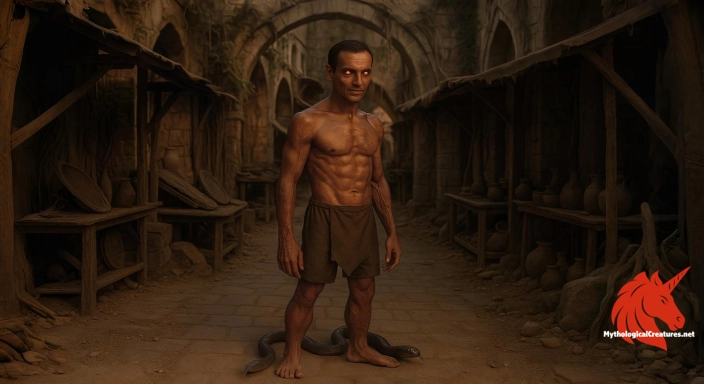
The Mythological Creatures Book Series
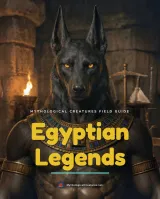
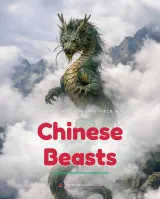
Yokai, Greek, Norse, Egyptian & Chinese. Five illustrated field guides to the creatures the old stories either warned or told you about.
Curated by the Mythological Creatures Team
Series editor: Mythological Creatures Directory
Primary desk: Northern & European Folklore Desk
(rev. November 2025)