
Helreginn: Helreginn is a jötunn from Norse mythology known for his formidable physical prowess.
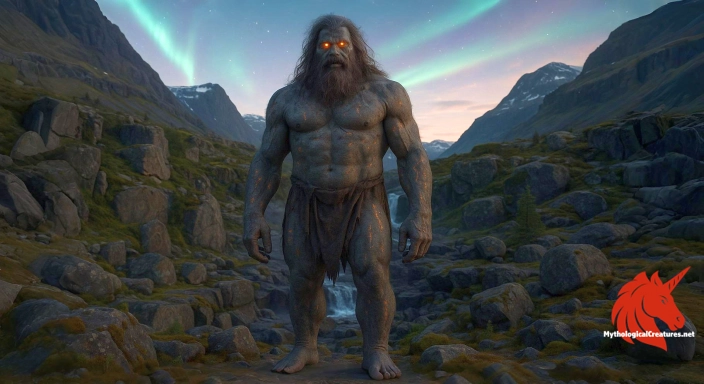
Helreginn
Helreginn - Helreginn embodies the chaotic and formidable nature of jötnar, reflecting the Norse portrayal of cosmic forces in conflict with the divine order.
Origins & First Encounters
Helreginn emerges from the early tapestry of Norse myth as a formidable jötunn whose very name suggests dominion over the realms of death and the underworld.
His designation, meaning 'Ruler over Hel' or 'Hell-power', hints at a connection with the forces that govern the darker aspects of existence.
Although his origins are shrouded in the mists of time, Helreginn is often depicted as a nexus between chaos and the organised cosmos of the Norse deities.
The earliest attestations of his character, though sparse, evoke a being whose power was both respected and feared, embodying the inexorable pull of death and renewal.
Within the broader cultural context, his narrative reflects the Norse understanding of fate and the natural order, where the forces of creation and destruction intertwine.
Helreginn’s mythological persona also highlights the duality inherent in many ancient traditions, where the line between divine authority and dark chaos is often blurred.
This jötunn’s enigmatic presence serves as a reminder of the complexities embedded in early Scandinavian spirituality.
The enduring myth of Helreginn continues to intrigue modern audiences, inviting interpretations that span from the literal to the symbolic.
Source Texts & Tale Variants
The primary narrative strands concerning Helreginn are woven through a patchwork of fragmentary texts and oral traditions rather than a single definitive source.
Ancient manuscripts from the Viking Age contain cryptic references that hint at his role, though few survive in complete form.
These sources often place him within a broader assembly of jötnar, where his association with the underworld is subtly interlaced with the more familiar myths of gods and heroes.
In the poetic strains preserved in Eddic lore, he appears as a figure whose deeds are alluded to rather than detailed explicitly, leaving ample room for interpretation.
Various story variants suggest that he might have been a guardian or even a disruptor of the delicate balance between the living world and the realm of the dead.
Some regional traditions, transmitted orally, attribute to him qualities that elevate him to an almost regal stature in the hierarchy of the infernal.
This multiplicity of accounts has enriched the mythos surrounding Helreginn, making him a subject of ongoing scholarly debate.
Despite the scant direct references, the recurring themes in the available texts underscore a compelling image of a giant intertwined with the forces of death.
Form & Powers
Helreginn is typically envisioned with an imposing physical presence that eclipses mortal proportions, a trait common among the jötnar.
The depictions of his anatomy suggest a towering figure with a robust and rugged build, emblematic of the harsh, untamed elements of nature.
His skin is often imagined as having a weathered, almost stony appearance, reminiscent of ancient cliff faces or the barren landscapes of the underworld.
Many accounts describe his eyes as burning with a cold, otherworldly light, evoking the chill of death and the inevitability of decay.
Artists and storytellers have at times rendered his features with jagged, angular lines that accentuate his fearsome demeanour.
In some depictions, Helreginn sports horn-like protrusions or a crown of twisted, gnarled horns, emphasising his dominion over shadowed realms.
The size and intensity of his features appear to vary across different narratives, with some traditions portraying him as constantly shifting in form to mirror the mutable nature of chaos.
This fluidity in his physicality not only magnifies his mythic stature but also leaves a lasting impression of an entity both primeval and formidable.
Regional Faces
Across the varied landscapes of Scandinavia, Helreginn's story has taken on regional nuances that reflect local cultural traditions and environmental influences.
In Iceland, for instance, his myth often merges with local beliefs concerning the guardianship of the underworld, where he sometimes shares attributes with other chthonic figures.
In parts of Sweden and Denmark, oral accounts tend to imbue him with a volatile temperament, portraying him as a capricious force whose interventions in mortal affairs are both unpredictable and dramatic.
Local folklore frequently highlights his connection to ancient burial mounds and subterranean sites, where he is seen as a living embodiment of the forgotten and the forbidden.
These regional adaptations provide a window into how the same mythic core can be reshaped to suit diverse cultural landscapes.
Variations in his name and the subtle shifts in his narrative persona underscore the fluidity of myth in a society where oral tradition was paramount.
Some communities have even expanded upon his role, merging his identity with that of other underworld deities to create a more complex picture of the afterlife.
This dynamic regional reinterpretation ensures that Helreginn remains a multifaceted symbol within the rich mosaic of Norse mythology.
Cultural Parallels
Examining Helreginn alongside analogous figures from other traditions reveals captivating thematic and symbolic resonances.
His status as a chthonic giant who exerts control over the domain of the dead invites comparisons with figures such as the Greek Hades, although unlike Hades, Helreginn’s origins are rooted in the jötunnic chaos rather than the Olympian order.
The dual nature of his authority—from the macabre realms of decay to the raw power of untamed nature—parallels the roles played by similar entities in various Indo-European mythologies.
In Eastern European folklore, for example, spirits associated with death and the natural cycle bear traits that echo Helreginn’s ominous yet vital presence.
Both the Norse tradition and these other cultural narratives share a common motif: a personification of the darker, inevitable aspects of existence that remain outside the realm of everyday life.
While the specifics of his myth diverge significantly, Helreginn's archetype as a guardian of the boundaries between life and death is unmistakable.
This cross-cultural perspective illuminates the universal human fascination with, and fear of, the unknown forces that preside over mortality.
Thus, Helreginn serves as a compelling example of how mythologies across the world articulate the same fundamental truths through diverse and evocative imagery.
Legacy & Modern Evolution
The myth of Helreginn has experienced a significant evolution over the centuries, transitioning from an obscure giant in ancient lore to a figure whose influence can be discerned in modern cultural expressions.
Traditionally, his narrative was interwoven with the broader cosmological themes of the Norse, symbolising the enigmatic forces that govern both death and the natural cycle.
In the modern era, contemporary artists and writers have been drawn to his dark, mysterious aura, often reimagining him as a symbol of both destruction and transformation.
Helreginn’s image has found new life in the realms of fantasy literature, visual arts, and video games, where elements of his myth are adapted to explore themes of mortality and rebirth.
The ambiguity of his character, straddling the lines between chaos and order, makes him a versatile subject for reinterpretation.
This reimagining frequently reflects a broader modern fascination with the mythological and the sublime, as creators seek to evoke the sublime terror and beauty of the ancient world.
Over time, his role has come to encapsulate not only the dread of the unknown but also an acceptance of the cyclical nature of existence.
Today, Helreginn endures as a potent reminder of the enduring power of myth to articulate the deepest human mysteries, remaining as enigmatic and compelling as in the ancient sagas.
Interesting Fact
Helreginn's name directly translates to 'Ruler over Hel', which intriguingly contrasts with the typically female representation of Hel, thereby offering a unique perspective on Norse mythological dynamics and the symbolism of power in the afterlife.
Curated sponsor space
One subtle banner. Thousands of myth lovers.
We offer a small number of curated sponsor spots for relevant books, courses, games, and art. No clutter, just well-matched partners.
Partner with usQuick Creature Info
Origin:
Features:
Our Mythic Legendary Rating:

Also Sometimes Known As:
Habitat:
Supernatural Powers:
Abilities:
Behavior:
Lore:
Related Creatures, Tales or Lore
- YYmir
- TThjazi
- SSurt
References
Discover Another Mythical Legend You May Not Have Heard Of?
Uncover the mysteries of ancient folklore and expand your knowledge of legendary beings from cultures around the world.
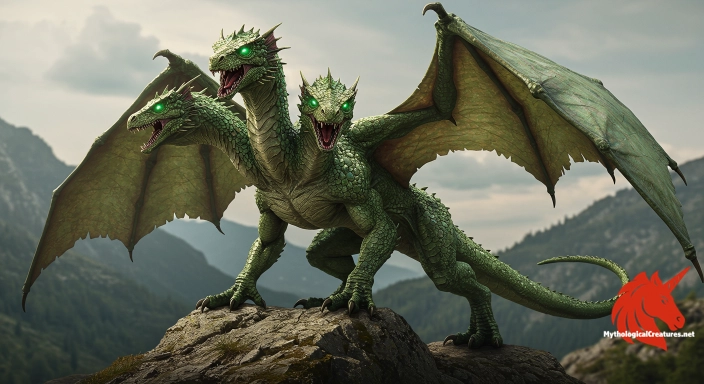
Dare to Meet the Balaur....
Curated by the Mythological Creatures Team
Series editor: Mythological Creatures Directory
Primary desk: Northern & European Folklore Desk
(rev. November 2025)