
Hermóðr: Hermóðr, also known as Hermod, is a Norse god renowned as the son of Odin and the brother of Baldr.
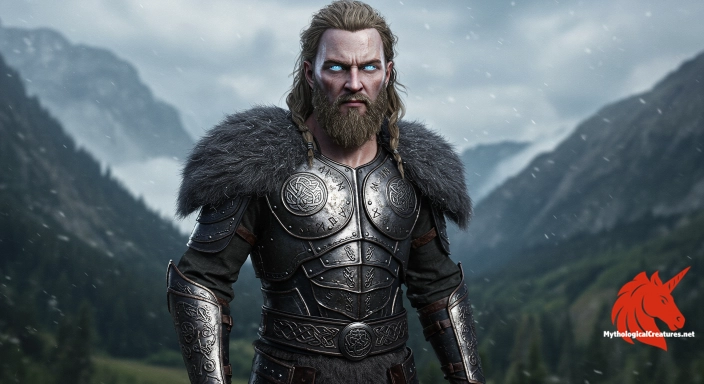
Hermóðr
Hermóðr - Hermóðr is celebrated for his valiant journey to the underworld to negotiate the return of his brother Baldr, symbolizing bravery, loyalty, and self-sacrifice in Norse lore.
Origins & First Encounters
Hermóðr emerges from the mists of Norse tradition as a bold and enigmatic figure whose very name signifies a fierce warrior spirit. He is traditionally recognised as a son of Odin and is intimately connected with the legacy of the Aesir, reflecting both divine authority and mortal vulnerability. His earliest attestations lie buried in the poetic and saga traditions of medieval Scandinavia, where his deeds are recounted with both somber gravity and heroic flair. Often portrayed as the brave envoy who dared traverse the boundary between life and death, his narrative underscores themes of sacrifice and resilience. The mythic heritage attributed to him situates Hermóðr within a cultural milieu that venerates the valor and honour of the gods. His story is interwoven with the tragic fate of his brother Baldr, casting him in a role that is as much about redemption as it is about defiance of cosmic order. Over time, his character has been selectively embellished and interpreted by various storytellers, each reveling in his symbolic role as a mediator between realms. The aura surrounding his persona is imbued with the weight of both heroic endeavour and the inevitability of fate. Cultural memory in Scandinavia retains the echo of his courageous journey as a reminder of the high cost of divine duty. His legacy continues to captivate enthusiasts of myth, offering a glimpse into the complex interplay of family, honour, and destiny in the Norse cosmos.
Source Texts & Tale Variants
The primary literary sources that mention Hermóðr are chiefly the poetic eddic texts and the systematic accounts found in the Prose Edda. His most memorable narrative is linked to the divine expedition to the realm of the dead, a tale that has been preserved in various medieval manuscripts. Though explicit details about his life are sparse, later retellings in saga literature have built upon these founding texts to enrich his mythos. Comparisons across different sources often highlight his role as a messenger of the gods, sent on a perilous mission to confront the inevitabilities of the afterlife. While some fragments mention his character in the context of Baldr’s death and the ensuing mourning of the pantheon, others suggest a broader association with warrior virtues. Folkloric traditions have occasionally woven his story into local legends of heroic travel and spiritual bravery. Each surviving text brings its own nuances to his portrayal, thus ensuring that his character remains both revered and enigmatic. The variations in narrative style and detail across the sources underscore the organic manner in which oral traditions perpetuated his legend. In modern scholarship, Hermóðr continues to be a subject of interest, inviting reinterpretation and debate about his precise role in the mythological hierarchy.
Form & Powers
Descriptions of Hermóðr’s physical appearance are few but evocative, suggesting a figure imbued with the austerity and strength befitting the son of Odin. Artistic renderings have often depicted him as a lithe and determined warrior with striking features that echo the divine lineage of his father. His countenance is frequently described as both noble and resolute, with an expression that conveys his inner commitment to honour and duty. Although ancient texts do not offer exhaustive details, later mythological illustrators have endowed him with an athletic build and an almost otherworldly radiance. His gear, when mentioned, is typically minimalist yet practical, designed for the rigours of his fateful journeys. In some contemporary portrayals, his attire seems to blend martial functionality with subtle ornamentation that hints at divine favour. Variations in his depiction sometimes introduce elements like a keen gaze or windswept hair, symbolising his connection to the ephemeral nature of both life and the divine. While size comparisons with other gods are seldom explicit in the sources, his presence is often rendered as commanding and upright. Collectively, these physical impressions serve not only to define his outward appearance but also to encapsulate his inner virtues and tumultuous destiny.
Regional Faces
Across the Nordic regions, Hermóðr’s myth has been embraced and reshaped in accordance with local cultural sensibilities. In Iceland and Norway, for example, his journey to the underworld has been depicted with an emphasis on the stark, otherworldly landscape, which mirrors the harsh natural environment. Regional traditions sometimes imbue him with a more pronounced role as a psychopomp, guiding souls between the mortal world and the afterlife. His name and deeds have been interwoven with rites of passage and communal remembrances of lost kinship in various local festivals. In certain Scandinavian villages, folk art and oral narratives subtly adjust his character to underscore the inevitability of fate and the cyclical nature of life and death. Some regional accounts present him not merely as a messenger, but as an emblem of hope and resilience in the face of overwhelming tragedy. His legacy in these cultures has often been celebrated through seasonal rituals, where his bravery during times of cosmic crisis serves as a moral exemplar. Local storytellers have also integrated elements of his myth into broader narratives about the struggle between light and darkness. These adaptations reflect a dynamic interplay between pan-Scandinavian mythology and the specific cultural experiences of individual communities. Ultimately, the regional variations of Hermóðr’s tale enrich the tapestry of Norse mythology, offering diverse perspectives on his enduring role within the divine order.
Cultural Parallels
Hermóðr stands as a fascinating counterpart to several messenger figures in other mythological traditions, highlighting the universality of the hero’s journey between realms. In Greek mythology, for instance, Hermes performs a similar function by guiding souls to the underworld, a role that resonates closely with Hermóðr’s own perilous expedition. While the Greek messenger is known for his cunning and swiftness, Hermóðr is celebrated for his courage and stoic defiance of death. Such cross-cultural parallels reveal a common thematic preoccupation with the idea of boundary-crossing and the confrontation with mortality. The echoes between Hermóðr and other divine intermediaries underscore a widespread belief in the necessity of a mediator who can navigate the often treacherous divide between life and the afterlife. In certain Celtic traditions, figures that journey between worlds exhibit traits that closely mirror the resolute and self-sacrificial aspects attributed to Hermóðr. Moreover, comparative mythology suggests that the embodiment of a war-spirit who confronts fate head-on is a recurring archetype, one that transcends geographical and cultural boundaries. These similarities enrich our understanding of how diverse cultures conceptualise heroic acts and the mediation between opposing cosmic forces. The study of Hermóðr alongside these figures invites reflection on the role of myth in articulating the human condition, especially in relation to themes of loss and redemption. In this manner, his character becomes part of a broader dialogue on the perennial struggle between life, death, and the hope for rebirth.
Legacy & Modern Evolution
Over the centuries, Hermóðr’s myth has evolved from a scarcely detailed narrative into a compelling symbol of bravery and the eternal spirit of defiance. His daring expedition into the realm of the dead has captured the imagination of successive generations, imbuing him with qualities that resonate with modern audiences. This evolution is reflected in contemporary interpretations found in literature, visual arts, and even in modern pagan practices that seek to revive the old Norse spiritual traditions. His portrayal has teetered between that of a minor messenger in the early texts and a potent emblem of courage and sacrifice in later artistic reimaginings. Modern adaptations often highlight his role as a bridge between life and death, a motif that continues to inspire creative expressions in various media. The figure of Hermóðr also finds a place in academic discussions about the nature of myth and its ability to reflect societal values, particularly the valorisation of self-sacrifice and the struggle against predestined demise. Public interest in Norse mythology during the Viking revival further cemented his role as a symbol of both martial strength and the fragility of divine intervention. His narrative has been revisited in numerous novels, films, and artworks that explore the interplay of fate, honour, and the human condition. Through these myriad reinterpretations, Hermóðr has transcended his original mythological confines to become a timeless archetype of heroic resolve. As modern cultural discourse continues to engage with the themes of mortality, legacy, and transcendence, his enduring legacy underscores the persistent allure of myth in illuminating the complexities of existence.
Interesting Fact
An intriguing aspect of Hermóðr's myth is his solitary voyage to Hel, which stands out as one of the few detailed narratives of the Norse underworld and exemplifies the deep interconnections between life, death, and heroism in Norse tradition.
For serious myth projects
Feature your work alongside the legends
From academic works to story-rich games, we highlight projects that respect world mythologies. Talk to us about a measured, long-term placement.
Start a conversationQuick Creature Info
Origin:
Our Mythic Legendary Rating:

Also Sometimes Known As:
Habitat:
Supernatural Powers:
Physical Attributes:
Abilities:
Behavior:
Lore:
Related Creatures, Tales or Lore
- HHermes (Greek messenger god)
- MMercury (Roman messenger god)
- GGabriel (Abrahamic tradition messenger angel)
References
Discover Another Mythical Legend You May Not Have Heard Of?
Uncover the mysteries of ancient folklore and expand your knowledge of legendary beings from cultures around the world.
Dare to Meet the Gration....
-963778e7-f3c4-45aa-a0c6-e637cb83fa41_small.webp "Depiction of Gration")
Curated by the Mythological Creatures Team
Series editor: Mythological Creatures Directory
Primary desk: Northern & European Folklore Desk
(rev. November 2025)