
Holawaka: Holawaka is a legendary messenger bird from the Oromo mythology of Ethiopia.
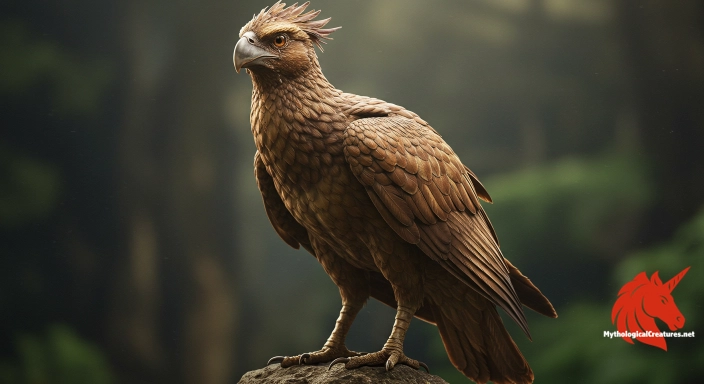
Holawaka
Holawaka - Holawaka’s story explains the mortal condition of humanity and the contrasting regenerative ability of snakes, serving as a cautionary tale regarding the consequences of divine messages.
the legend in five swipes.
the legend in five swipes.
What culture created Holawaka?
Holawaka is a captivating figure from the rich tapestry of Oromo mythology in Ethiopia, a legendary bird with a divinely ordained mission and a tragic destiny. Born from the fervour of ancient oral traditions, it emerged as the messenger of the gods, charged with delivering the promise of immortality to humankind. Its original mandate involved revealing that humans could attain eternal life if they would merely shed their skins, a notion that encapsulated both hope and potential hubris. This myth, deeply interwoven with the cultural and spiritual ethos of the Oromo people, reflects the intricate interplay of divine command and human interpretation. As the story unfolds, Holawaka’s journey becomes a poignant allegory about the unintended consequences of delivering sacred messages. The narrative takes a dramatic turn when the bird’s path crosses with that of a cunning snake, subtly shifting the myth’s focus from promise to punishment. There is a bittersweet quality in the way Holawaka’s divine purpose is compromised, as it inadvertently seals the fate of both man and bird. Over time, the enduring legend of Holawaka has come to symbolise the intricate balance between destiny, divine intervention, and the fragile nature of mortal existence.
Which versions of the Holawaka story survive?
The earliest semblances of Holawaka’s tale are found within the oral traditions of the Oromo people, where elders have long shared this myth as an essential part of their cultural heritage. Written records, though not as ancient as the oral accounts, have gradually surfaced in compilations of Ethiopian folklore and mythological studies. Various regional storytellers have preserved multiple variants of the narrative, each rendering subtle differences in the bird’s mission and its fateful encounter with the snake. In some versions, the emphasis is placed on the bird’s divine origin and the miraculous promise it was meant to convey, whereas others highlight the critical moment of negotiation with the cunning serpent. Local lore often imbues the narrative with moral overtones, stressing the impacts of minor deviations in following divine instructions. Some recitations even propose that the bird’s curse was not entirely its own fault, but a twist of fate wrought by the natural order. Contemporary narrators in both academic and artistic circles continue to revisit and reframe the saga, adding layers of complexity to the original myth. The multifaceted sources, spanning generations and regions, attest to the story’s enduring ability to spark debate and reflection about destiny and divine justice.
Holawaka: Powers, Strengths and Vulnerabilities
Artistic representations of Holawaka consistently depict it as a majestic and awe-inspiring bird, its form imbued with an ethereal luminescence that sets it apart from ordinary avians. The creature is often portrayed with expansive, elegantly curved wings that seem to capture the shifting hues of the Ethiopian skies. Intricate details in its plumage, which may range from deep indigo to flashes of shimmering gold, evoke a sense of both regality and mysticism. Its slender body, coupled with finely structured feathers, hints at a divine origin while also bearing the marks of eternal sorrow. The bird’s eyes are frequently rendered as deep and penetrating, reflecting both ancient wisdom and the agony of its cursed existence. Some depictions suggest that there is an almost imperceptible glow emanating from Holawaka, as if the divine message it carries is physically manifested in its very form. Variations in size and detail across different artworks further emphasise the bird’s dual nature—the embodiment of both celestial beauty and tragic destiny. Even as modern artists take creative liberties, the essential imagery of a bird that soars with grace yet bears an inescapable burden remains a constant and compelling theme.
Which communities kept the Holawaka tradition alive?
Across the diverse landscapes of Ethiopia and its neighbouring regions, Holawaka’s myth has been shaped by unique cultural interpretations and local artistic influences. Different Oromo clans and neighbouring communities have adapted the story to reflect distinct regional values, sometimes altering the bird’s descriptive details or the moral lessons embedded in its narrative. In some areas, the bird is not only seen as a divine messenger but also as an omen or symbol of impending change and transformation. Local variations may adjust the symbolism of its encounter with the snake, imbuing the serpent with differing roles—as a figure of wisdom, trickery, or even as an agent of nature’s cyclic renewal. The rich environmental and cultural context of each region contributes to a nuanced portrayal of Holawaka, with colours, feather patterns, and even its size adapted to reflect local mythology. Certain communities might stress the bird’s connection to the heavens, while others highlight its earthly sorrow and the weight of its eternal curse. These regional adaptations demonstrate the fluidity of myth, as each retelling interweaves local legends and moral imperatives with the broader narrative of divine consequence. Despite these differences, the central themes of fate, sacrifice, and the inextricable link between divine will and mortal life remain consistent throughout the varied renditions.
Which figures are similar to Holawaka?
The myth of Holawaka resonates with striking similarities to other legendary avian messengers found in world mythology, offering a rich field for comparative analysis. Much like the phoenix, which is revered in various cultures for its themes of rebirth and renewal, Holawaka encapsulates both the promise of transformation and the inevitability of decay. The dichotomy between life and death, so evident in its divine message and subsequent punishment, mirrors sentiments found in myths across Africa, Asia, and the Americas. Its narrative also finds a parallel in legends of birds like the thunderbird, where the natural world and divine intervention coalesce to create symbols replete with power and mystery. The interplay between the bird and the snake recalls other mythological conflicts, such as the eternal struggles between chaos and order, or the transformative power of renewal through shedding old skins. As in many ancient narratives, the moral complexity of Holawaka’s tale underscores universal themes such as the cost of enlightenment and the burdens of destiny. Despite its origin in the Oromo tradition, the motifs it embodies—divine punishment, doomed prophecy, and the duality of life—are found in diverse cultural settings. In this way, Holawaka not only stands as a unique emblem within Ethiopian folklore but also as part of a shared human endeavour to explain the mysteries of existence through symbolic storytelling.
How has Holawaka changed over time?
Over the years, the story of Holawaka has undergone a significant evolution, leaving an indelible mark on both traditional and modern cultural expressions. Its tragic narrative has been reinterpreted by contemporary artists, writers, and filmmakers, who see in its eternal cry an enduring symbol of the human struggle against fate. Modern retellings often cast Holawaka as a figure of melancholic beauty, whose suffering speaks to the complexities of ambition and the consequences of divine oversight. This myth, once confined to oral traditions and regional lore, now finds new life in various mediums, from literature to digital art, resonating with audiences far beyond its place of origin. The bird’s transformation from a bearer of hopeful promise to a carrier of inevitable sorrow has come to represent the bittersweet nature of human aspiration and the acceptance of mortality. As modern society grapples with themes of identity, destiny, and the interplay between nature and the supernatural, Holawaka’s tale serves as a powerful allegory for the costs of cosmic imbalance. It also functions as a reminder of how ancient narratives can be reimagined to address contemporary concerns, bridging the gap between myth and modernity. Through its continued presence in art and popular culture, the legacy of Holawaka endures as a timeless meditation on the interplay of hope, despair, and the eternal search for redemption.
Interesting Fact
Holawaka’s eternal cry not only symbolises its suffering but also serves as a mythic explanation for the transient nature of human life in Oromo culture.
Mythological Treasures
Chinese Beasts: A field guide to the dragons and demon kings of Chinese myth
From river dragons to demon kings, with the legends that shaped five thousand years of storytelling.
Japanese Yokai: A field guide to the spirits and demons of Japanese folklore
Fifteen spirits, with the signs to watch for and what the old tales say to do if you meet one.
Greek Myths: A field guide to the monsters of ancient Greece
Every monster here earned its place in legend, and each gets a full page of artwork and the story behind it.
the legend in five swipes.
Curated sponsor space
One subtle banner. Thousands of myth lovers.
We offer a small number of curated sponsor spots for relevant books, courses, games, and art. No clutter, just well-matched partners.
Partner with usQuick Creature Info
Origin:
Features:
Associations:
Our Mythic Legendary Rating:

Habitat:
Supernatural Powers:
Physical Attributes:
Abilities:
Behavior:
Weaknesses:
Lore:
References
Discover Another Mythical Legend You May Not Have Heard Of?
Uncover the mysteries of ancient folklore and expand your knowledge of legendary beings from cultures around the world.
Dare to Meet the Calybe....
The Mythological Creatures Book Series
Yokai, Greek, Norse, Egyptian & Chinese. Five illustrated field guides to the creatures the old stories either warned or told you about.

Curated by the Mythological Creatures Team
Series editor: Mythological Creatures Directory
Primary desk: African & Diaspora Traditions Desk
(rev. November 2025)