
Hroðr: Hróðr is a renowned female jötunn in Norse mythology, known primarily from the Eddic poem Hymiskviða.
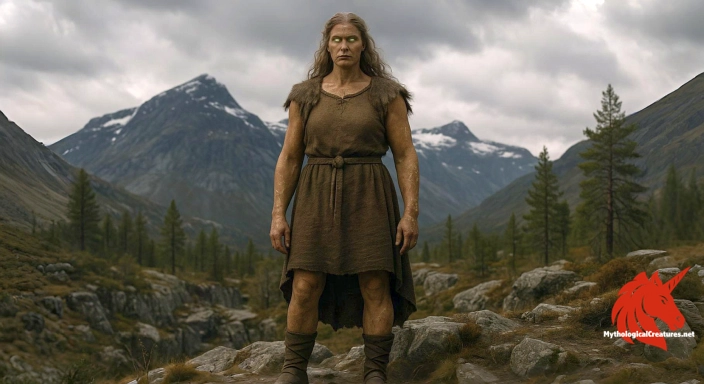
Hroðr
Hroðr - Her ambiguous lineage and relationships, especially in the context of Týr's parentage, highlight the complex interplay between gods and giants in Norse mythology.
Origins & First Encounters
Hróðr, whose very name means 'famed', occupies an enigmatic position within the vast tapestry of Norse mythology. Her sparse yet intriguing mention in ancient texts places her among the notable jötnar whose roles straddle both conflict and kinship with the gods. In the Eddic poem Hymiskviða, her presence is subtly interwoven with that of Thor, casting her as an adversary whose exact nature remains uncertain. Some interpretations hint at a more familial connection, suggesting that Hróðr may even be the nurturing mother of Týr. This dual possibility—both foe and maternal figure—reflects the inherent complexity of jötunn figures in the Norse mythic tradition. The early attestations of her character speak to a world in which the boundaries between the divine and the monstrous are fluid and ever-shifting. Hróðr's identity is further complicated by the cultural values of the Vikings, who revered both strength in battle and the vital role of nurturing in their legendary genealogies. In sum, her story, though fragmentary, enriches our understanding of the interplay between fame, power, and maternal influence in Old Norse lore.
Source Texts & Tale Variants
The primary account of Hróðr is found in the Eddic poem Hymiskviða, where her mention is brief yet loaded with interpretative possibilities. Within this text, she is alluded to in connection with Thor, leading some to surmise that she represents one of his adversaries, while others propose that she fulfills a more maternal role. Alternative readings of the poem propose that Hróðr may be the mother of Týr, a nuance that adds depth to her character. Other poetic fragments, such as those found in Hábarðsljóð, echo themes similar to those in Hymiskviða, thereby contributing layers of ambiguity regarding her true identity. The Prose Edda later complicates the narrative by suggesting divergent genealogical ties for Týr, further muddling Hróðr's precise legacy. Throughout these texts, the shifting portrayals of her role illustrate the dynamic nature of Norse myth, where oral and written traditions often intermingle. This multiplicity of narratives has encouraged scholars to view her as both a symbolic adversary to the gods and a nurturing presence within the mythic family tree. Each variant, whether emphasising conflict or care, reinforces the idea that Hróðr’s story is not fixed but evolves according to the needs and values of her audience.
Form & Powers
While the surviving records offer only a sketch of Hróðr’s physical appearance, one can infer that she embodied the formidable traits typical of a jötunn. It is likely that she possessed a towering and robust stature that mirrored the harsh, untamed elements of the natural world. Imaginative reconstructions suggest her eyes might have shone with an intense, almost elemental light, indicative of both wisdom and latent aggression. Her visage could have been marked by features that conveyed both beauty and a hint of the ferocity inherent in giant-kind. In many ways, the physicality attributed to such figures is as much symbolic as it is descriptive, representing the boundary between chaos and order. The aesthetic of a giantess like Hróðr may well include elements of wild, flowing hair and a muscular frame, underscoring the blend of beauty and danger. Though no detailed iconography survives, the typical representations of Norse giantesses allow us to envision her as an embodiment of raw natural power. This physical portrayal, replete with subtle hints of both grace and might, serves to reinforce her multifaceted character in the mythological tradition.
Regional Faces
Across the Norse world, the character of Hróðr appears to have been subject to regional reinterpretation, reflecting the dynamic nature of oral tradition in medieval Scandinavia. In Icelandic lore, for instance, giantesses often emerge as both enigmatic figures and benevolent nurturers, and Hróðr’s ambiguous role finds resonance with these local narratives. On the Scandinavian mainland, similar entities were sometimes depicted as formidable opponents to the gods, thereby reinforcing her potential status as a divine adversary. Regional storytellers might have emphasised different aspects of her nature—ranging from her fearsome power to her more caring, maternal functions—depending on the cultural priorities of their communities. Variations in local dialects and poetic traditions further contributed to a diverse tapestry of interpretations surrounding her figure. Some tales present her as the archetypal guardian of ancient wisdom, while others align her closely with themes of conflict and cosmic disruption. This multiplicity of portrayals is emblematic of the broader Norse mythological landscape, which was enriched and complicated by local adaptations. As a result, Hróðr stands not as a monolithic figure, but as a dynamic symbol whose qualities could be tailored to suit regional storytelling trends.
Cultural Parallels
Hróðr shares intriguing similarities with giantess figures found in other mythological traditions, reflecting a common motif of formidable female entities whose roles are as dual as they are ambiguous. Much like the powerful matriarchs in Greek lore, who presided over realms both nurturing and destructive, Hróðr embodies the tenuous balance between benevolence and antagonism. In Celtic myth, too, there are echoes of giantesses whose alliances with heroes or deities complicate simple readings of good and evil, paralleling the dual interpretations of Hróðr. The convergence of roles—both as a potential adversary and a maternal guide—suggests a shared cultural archetype, one that transcends geographic boundaries and speaks to universal themes of power and kinship. This comparative lens highlights how various cultures have used similar figures to explore the interplay of nature and civilisation. Hróðr’s ambiguous lineage and shifting allegiances mirror the multifaceted portrayals of mythological women elsewhere, such as the enigmatic goddesses who straddle the line between creation and destruction. These cross-cultural parallels underscore the importance of giantess figures in articulating a society’s relationship with the untamed and the divine. In doing so, Hróðr serves as a bridge linking disparate mythological systems, each reflecting the complexities inherent in the portrayal of female power.
Legacy & Modern Evolution
The evolution of Hróðr’s myth reflects the broader shifts in the interpretation of Norse mythology from its early oral traditions to its modern reimaginings. In the medieval period, figures like Hróðr symbolised the intricate ties between the divine and the chaotic, serving both as adversaries and nurturing archetypes. As the myths were codified in texts such as the Eddas, her character was reinterpreted in diverse ways, often coloured by the ideological leanings and cultural priorities of the scribes. The romantic revival of Norse lore in the nineteenth century further transformed her image, with modern scholars and artists embracing her complexity as representative of ancient feminine strength and mystery. Today, Hróðr often appears in contemporary literature and graphic novels, where her ambiguous role is celebrated as part of a broader re-evaluation of traditional mythic archetypes. Modern interpretations frequently highlight her duality—the capacity to inspire both fear and respect—as a lens through which to explore modern themes of identity and power. Her legacy, though rooted in obscure references and variant traditions, continues to spark creative reinterpretations and scholarly debate. As new media and scholarly inquiry shine fresh light on ancient sources, Hróðr remains a compelling figure whose evolving myth reflects the timeless interplay between the past and the present.
Interesting Fact
A notable aspect of Hróðr's myth is the contested parentage of Týr, which highlights the evolving nature of Norse mythological traditions and the cultural importance of fosterage in Viking society.
Reach myth fans
Connect your myth-driven brand with this audience
Our readers are writers, educators, gamers, and collectors who care about mythology. Enquire about a limited sponsor placement on creature pages.
Enquire about sponsorshipQuick Creature Info
Origin:
Features:
Associations:
Our Mythic Legendary Rating:

Habitat:
Supernatural Powers:
Physical Attributes:
Abilities:
Behavior:
Lore:
Related Creatures, Tales or Lore
- BBestla
- AAngrboda
- SSkadi
References
Discover Another Mythical Legend You May Not Have Heard Of?
Uncover the mysteries of ancient folklore and expand your knowledge of legendary beings from cultures around the world.
Dare to Meet the Twrch Trwyth....
Curated by the Mythological Creatures Team
Series editor: Mythological Creatures Directory
Primary desk: Northern & European Folklore Desk
(rev. November 2025)