
Hrungnir: Hrungnir is a formidable stone jötunn from Norse mythology, renowned for his immense strength and brawling nature.
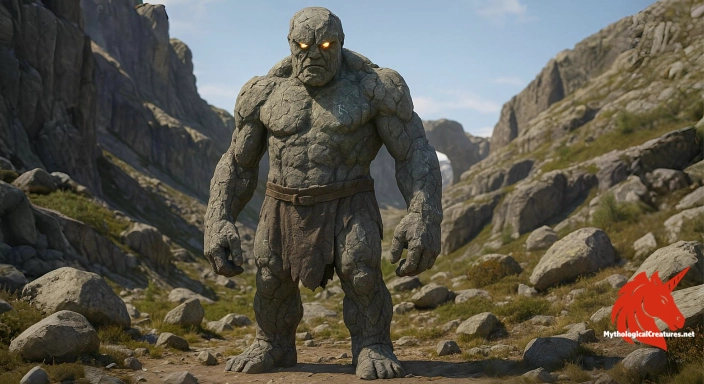
Hrungnir
Hrungnir - His battle with Thor underscores the struggle between divine order and chaotic nature.
the legend in five swipes.
the legend in five swipes.
How did Hrungnir enter folklore?
Hrungnir emerges as one of the most memorable jötnar in Norse mythology, a formidable force whose very name suggests brawling might and untamed power. Born of ancient myth traditions, he is depicted as a being fashioned of stone, symbolising the raw and unyielding aspects of nature. His myth finds early attestation in the Old Norse literary corpus, where his exploits provide insight into the cosmic struggles between gods and giants. In a world where the divine heroes maintain the order of the cosmos, Hrungnir represents the chaotic and untamed forces that continually test the gods’ supremacy. His story is intricately linked with that of Thor, whose legendary battle against him is recounted with dramatic gravitas. The myth of Hrungnir is not just a tale of physical might but also a narrative that underscores the perils of overweening pride and the inevitable clash between order and chaos. His presence in the myths is interwoven with themes of destiny, honour, and the inexorable force of nature’s elements. The vivid portrayal of his character amplifies the rich tapestry of Norse myth, underlining the cultural importance of these mythical conflicts. His enduring legacy in ancient lore continues to capture the imagination, inviting audiences to explore the depths of Norse cosmology.
How many versions of the Hrungnir story are there?
The primary sources for Hrungnir’s tale are embedded within the Norse mythological texts, where his encounter with Thor is most famously recounted. Several medieval manuscripts reference his violent and fated duel, providing a glimpse into the narrative traditions of early Scandinavian literature. His story appears in various compilations that highlight the interplay between divine beings and their monstrous adversaries. Some texts recount a wager involving Odin, Sleipnir, and the swift Gullfaxi, adding layers of rivalry and challenge to his myth. In these stories, Hrungnir’s transgression in the realm of the gods is elaborated with both poetic imagery and stark brutality. Different versions of the account emphasise varied aspects of his character—from his stone-like constitution to his irreverent behaviour within Asgard. Manuscripts and oral traditions have preserved multiple variants which illustrate his role as an archetypal mighty giant. Later folklore also introduces subtle modifications of his legend, enriching the narrative with local motifs and moral lessons. Each retelling reasserts the timeless tension between the gods and their formidable foes.
Hrungnir: What Manner of Being?
In vivid detail, Hrungnir is portrayed as an imposing figure sculpted entirely of stone, a literal embodiment of the unyielding forces of nature. His immense body appears as if carved from rugged bedrock, with contours and fissures that speak of eons of enduring strength. The texture of his form suggests a landscape of jagged edges and weathered surfaces, echoing the harsh geography of the ancient north. His eyes, often imagined as deep-set crevices or glowing seams, capture a glimpse of the inner volcanic fury that fuels his being. Each movement of his colossal frame seems to reverberate like the rumble of distant thunder, underlining his connection to the elemental power of the earth. The depiction of his limbs and shoulders underscores not only raw physical might but also the stoic permanence of stone. Artistic interpretations sometimes capture his head as towering and formidable, reflecting the inevitability of nature’s wrath when provoked. Certain versions of the myth suggest a subtle sheen on his surface, hinting at a complex interplay of light and shadow over his stony skin. This physical portrayal reinforces his image as a timeless relic of primordial power, unyielding and unassailable until challenged by divine intervention.
What do different regions call Hrungnir?
The myth of Hrungnir has found expression in various regional traditions across Scandinavia, where local storytellers imbued his character with distinctive cultural nuances. In some Icelandic renditions, he is cast not merely as a brute force but as a tragic figure whose downfall underscores the inevitable conflict between hubris and divine order. Versions from the Swedish regions often highlight his connection to the rugged natural landscapes, presenting him as a personification of the wild, untamed earth. In contrast, certain Danish adaptations have focused more on the dramatic spectacle of his duel with Thor, emphasising the heroic aspects of the thunder god’s victory. The regional lore tends to portray his attributes differently—some emphasise his monumental physicality while others delve into his symbolic representation of natural chaos. Local mythmakers have at times linked his stone form to ancient tales of earth spirits and mountain deities, thereby intermingling his identity with broader natural elements. The varied regional narratives often serve to underscore the moral lessons of pride, consequence, and the balance between order and entropy. Despite these variations, the central theme of an unstoppable force pitted against the might of the gods remains constant. Thus, Hrungnir’s myth has been dynamically adapted to reflect the unique cultural and environmental canvases of Norse-speaking regions.
What figures resemble Hrungnir?
When examined through the lens of comparative mythology, Hrungnir occupies a position analogous to several stone giants and primordial beings found in neighboring cultures. His categorisation as a being forged of stone invites comparisons with the Hurrian Ullikummi, a similarly formidable giant whose rapid growth challenged the heavens. This recurring motif of stone as a symbol of enduring, elemental power is evident in multiple ancient narratives beyond the Norse tradition. The dramatic duel between a thunder deity and a stone giant finds echoes in mythological frameworks where gods must subdue chaotic natural forces. Comparable figures emerge in the myths of Teshub and Tarhunt, in which the gods are tasked with overcoming formidable adversaries that embody the wild forces of the earth. Such cross-cultural parallels highlight a shared human fascination with the interplay between order and chaos, reflecting universal themes of cosmic balance and moral rectitude. These similarities underscore a broader Indo-European mythological tapestry where colossal beings often challenge divine authority. In this context, Hrungnir’s story not only enriches Norse lore but also contributes to a global narrative tradition of mythic duels. The interweaving of these themes across cultures reveals the enduring power of archetypal symbols that transcend geographical boundaries.
The Lasting Influence of Hrungnir
Over the centuries, the depiction of Hrungnir has evolved from the terse accounts of medieval manuscripts to more elaborate and nuanced portrayals in modern media. The original myth, once confined to the oral traditions and early written texts of the Norse, has been reinterpreted to resonate with contemporary audiences fascinated by epic narratives. His colossal battle with Thor has sparked the imagination of artists, writers, and filmmakers, becoming a staple of modern adaptations of Norse mythology. In the realm of graphic novels and digital art, Hrungnir is often depicted with a striking blend of ancient terror and modern dynamism, his stone form rendered with intricate detail. As popular culture embraces the mythos of the gods and giants, he has come to symbolize the raw power of natural forces, standing as a counterpoint to civilisation’s order. Scholars appreciate his myth as a reflection of the struggles between chaos and structure, a theme as relevant today as it was in primordial times. His enduring image resonates in discussions around mythology, where he is seen as both a relic of ancient beliefs and a vibrant character in modern narratives. The evolution of his story mirrors how ancient legends can be re-envisioned and kept alive through successive generations, adapting to new cultural contexts while retaining their timeless allure. In modern legacy, Hrungnir embodies the intersection of myth, art, and cultural identity, continuing to inspire debates and creative reinterpretations worldwide.
Interesting Fact
Despite his fearsome appearance and might, Hrungnir’s tale intertwines with other stone giants across Near Eastern mythologies, such as the Hurrian Ullikummi, illustrating a cross‐cultural archetype of the formidable, earth‐born adversary.
Mythological Treasures
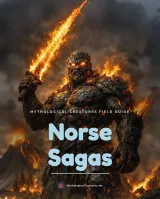
Norse Sagas: A field guide to the beasts of the Viking world
Drawn from the saga accounts themselves, with the powers, weaknesses and doom of each being set out.
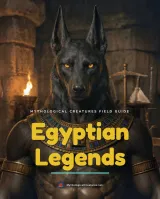
Egyptian Legends: A field guide to the gods and monsters of ancient Egypt
Guardians of the living and devourers of the dead, with the role each played in judgement.
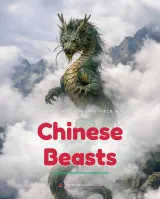
Chinese Beasts: A field guide to the dragons and demon kings of Chinese myth
From river dragons to demon kings, with the legends that shaped five thousand years of storytelling.
the legend in five swipes.
Mythology commerce, done carefully
Align your store with our global myth audience
If you sell myth-inspired jewellery, prints, decks, or collectibles, we can feature your brand without overwhelming the reading experience.
Partner with usQuick Creature Info
Origin:
Associations:
Our Mythic Legendary Rating:

Habitat:
Supernatural Powers:
Physical Attributes:
Abilities:
Behavior:
Lore:
Related Creatures, Tales or Lore
- UUllikummi
- YYmir
- TThrym
References
Discover Another Mythical Legend You May Not Have Heard Of?
Uncover the mysteries of ancient folklore and expand your knowledge of legendary beings from cultures around the world.
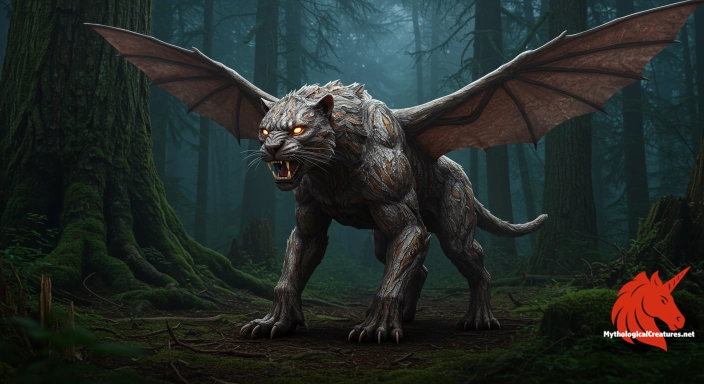
Dare to Meet the Splintercat....
The Mythological Creatures Book Series
Yokai, Greek, Norse, Egyptian & Chinese. Five illustrated field guides to the creatures the old stories either warned or told you about.
Curated by the Mythological Creatures Team
Series editor: Mythological Creatures Directory
Primary desk: Northern & European Folklore Desk
(rev. November 2025)