
Huaguang Dadi: Huaguang Dadi is a revered Taoist war deity known for his control over fire and his ability to bestow blessings.
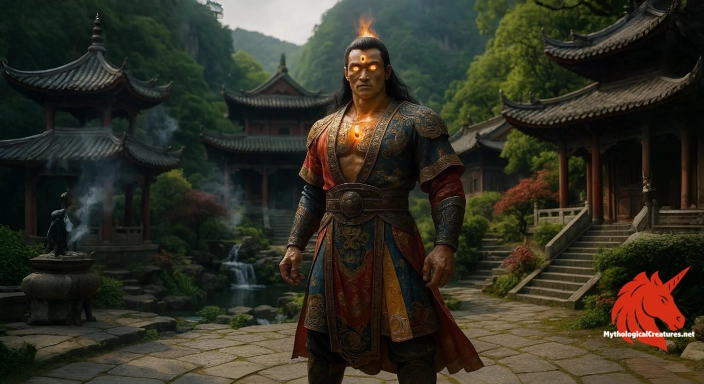
Huaguang Dadi
Huaguang Dadi - He is revered for his ability to grant wishes, bring prosperity, and protect communities.
Origins & First Encounters
Huaguang Dadi is a compelling figure in Taoist mythology, renowned as a war deity whose influence bridges the mortal and divine realms. His early attestation in collections such as the Lai Sea Collection establishes him as a pivotal guardian within the complex tapestry of Chinese spiritual tradition. He is often depicted as the head of the Four Guardian Marshals, symbolically overseeing the balance of the five elements and ensuring the proper flow of cosmic energies. His narrative is steeped in both martial prowess and benevolence, which has made him an icon sought for blessings in various aspects of daily life, from fertility to academic achievement. Legends recount his transformative journey, whereby he shifted from human existence through divine punishment to ascension, embodying an ongoing process of rebirth and renewal. He is also known by the epithet Wu Xian and as the Three-Eyed deity, each title reflecting different facets of his mythic persona. Annual celebrations on September 28, his reputed birthday, serve to honour his enduring impact on agricultural prosperity and communal well-being. The rich interweaving of elemental symbolism and martial strength in his lore continues to inspire both ritual observance and artistic representation.
Source Texts & Tale Variants
The narrative traditions surrounding Huaguang Dadi emerge from a rich corpus of ancient texts and vibrant local folklore. Early references in sources like the Lai Sea Collection provide a foundational account of his divine attributes and his association with the five phases. A wealth of variant stories, preserved through Hakka folk customs, further embellish his legend with episodes of miraculous transformation and supernatural exploits. In these accounts, his playful yet dangerous engagement with the element of fire is a recurrent theme, including the notorious episode of burning the Jade Emperor’s Nine Dragon Terrace. Multiple story variants recount his journey from a penalised deity in the celestial court to a cultivator attaining profound enlightenment. The evolution of his myth demonstrates a dynamic integration of ritual practices and oral storytelling that adapts to local cultural needs. Temples, inscriptions, and communal recitations have all contributed to a plurality of narratives that celebrate both his martial accomplishments and his benevolent interventions. The enduring nature of these diverse sources highlights how Huaguang Dadi’s story is not fixed but continually reinterpreted through the lens of regional belief and ritual practice. His legend remains a living tradition where historical texts and folklore converge to maintain his relevance in contemporary religious life.
Form & Powers
Traditional depictions of Huaguang Dadi convey a figure of formidable presence and intricate symbolic detail. He is often illustrated wearing elaborate ceremonial armour adorned with motifs that represent the five elemental forces, with hues that range from the cool blues of the east to the fiery reds of the south. A striking aspect of his iconography is the presence of three eyes, a mark of his ability to perceive both the physical and spiritual dimensions. His robust and muscular build is rendered with an artistic flair that emphasises both his martial strength and inner enlightenment. Facial expressions in these portrayals typically balance stern determination with compassionate benevolence, reflecting his dual nature as both protector and benefactor. Intricate engravings and mythic symbols embellish his attire, connecting him inexorably to the cosmic principles of evolution and balance. Artistic renditions sometimes incorporate elements of flame and celestial light, reinforcing his association with the element of fire. Over time, his physical representation has evolved, blending traditional Taoist motifs with local artistic innovations to create a dynamic and enduring image. The visual legacy of Huaguang Dadi continues to inspire temple statuaries, murals, and ritual artefacts, underscoring the power of myth in material culture.
Regional Faces
Regional interpretations of Huaguang Dadi vary widely, reflecting the adaptability of his myth to different local contexts. In rural areas such as Xunwu County in Jiangxi, his birthday on September 28 is celebrated with grand temple fairs where communities pray for bountiful harvests and favourable weather conditions. Local traditions in Hakka communities accentuate his transformative journey, emphasising the phases in which he shifted from a human to a divine presence. In Yongding County, Fujian, he has come to be revered as a god of wealth, with particular admiration from merchants, including those from the cigarette trade. Diverse regional practices include monthly ritual offerings and elaborate ceremonial feasts that underscore his role in bestowing prosperity and good fortune. Variations in the accounts of his birth—ranging from the Gregorian date of September 28 to the lunar-based 28th day of the ninth month—illustrate the fluidity and local adaptation of his legend. Folk performances, temple rites, and community festivals across regions have all tailored his myth to align with local economic, agricultural, and cultural priorities. These regional adaptations ensure that while his core attributes remain consistent, Huaguang Dadi’s narrative is enriched by the unique traditions and spiritual needs of each locality. The multiplicity of his regional cults reflects the dynamic interplay between central religious doctrine and localized devotional practice.
Cultural Parallels
Analyzing Huaguang Dadi in a broader mythological context reveals intriguing cross-cultural parallels. His fiery attributes and the distinctive third eye evoke a similarity with figures such as the Hindu god Shiva, whose third eye is emblematic of cosmic insight and transformative power. In East Asian traditions, parallels can also be drawn with figures like Bishamonten, a deity who, while primarily associated with war and wealth, similarly bridges martial and protective functions. His dual character, capable of both strict retribution and generous benevolence, mirrors the recurring mythological motif of the warrior who also nurtures prosperity. The integration of the five elemental forces in his legend is a theme that resonates with many indigenous creation myths around the world, where natural elements govern cosmic balance. The narrative of transformation—from punishment to redemption and enlightenment—finds echoes in various mythic traditions globally, emphasising a universal spiritual journey. His ability to provide blessings in both war and harvest contexts further links him with multi-faceted deities in other cultures who embody the dualities of destruction and creation. Such comparative analysis highlights how shared mythological symbols, like elemental harmony and visionary insight, traverse cultural boundaries. In this way, Huaguang Dadi’s myth is part of a larger dialogue among world mythologies, underscoring universal themes of renewal, power, and divine benevolence.
Legacy & Modern Evolution
Throughout history, the depiction and significance of Huaguang Dadi have evolved to meet the changing needs of his devotees. Initially established as a formidable war deity, his narrative gradually embraced broader themes of benevolence and cosmic balance, making him a versatile symbol in both martial and agricultural contexts. This evolution is evident in the manner in which his legend integrates aspects of human frailty, divine punishment, and ultimate enlightenment. Modern interpretations of his myth have expanded his role to include not just warriors but also scholars, farmers, and businesspeople who seek his favour in various endeavours. Contemporary temple fairs, artistic representations, and ritual performances keep his legend alive, blending age-old traditions with modern communal practices. His birthday remains a focal point for celebration in many regions, reinforcing his status as a living cultural icon. The dynamic transformation from a deity of retribution to one of benevolence resonates with modern themes of personal growth and renewal. In urban settings as well as rural communities, the enduring appeal of Huaguang Dadi is reflected in the continued construction of temples and the revival of classical festivals. His legacy, imbued with both historical gravitas and contemporary relevance, serves as a reminder of the timeless power of myth to inspire, protect, and guide society.
Interesting Fact
Huaguang Dadi’s legend uniquely blends Taoist and Buddhist elements, reflecting the syncretic nature of Chinese religious traditions and his role as a bridge between the mortal and divine realms.
Support the directory
Promote your myth project and fund more research
Sponsor placements help keep this directory growing and free to use while giving your work a focused, relevant audience.
Learn how sponsorship worksQuick Creature Info
Associations:
Our Mythic Legendary Rating:

Also Sometimes Known As:
Habitat:
Supernatural Powers:
Physical Attributes:
Abilities:
Behavior:
Lore:
References
Discover Another Mythical Legend You May Not Have Heard Of?
Uncover the mysteries of ancient folklore and expand your knowledge of legendary beings from cultures around the world.
Dare to Meet the Ishinagenjo....
Curated by the Mythological Creatures Team
Series editor: Mythological Creatures Directory
Primary desk: Asian & Pacific Myth Cycles Desk
(rev. November 2025)