
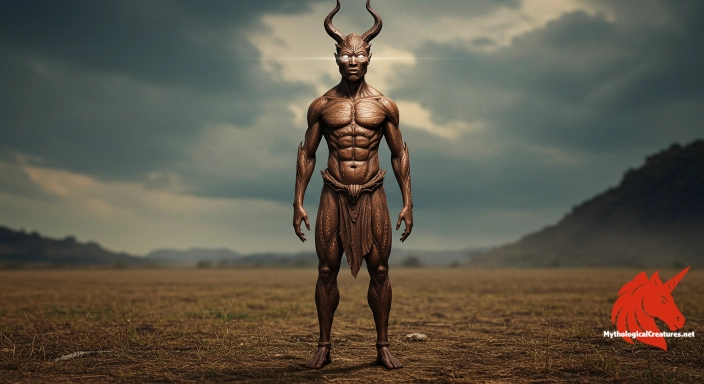
Ikenga: Ikenga is a horned deity in Igbo tradition symbolizing personal strength, achievement, and destiny.
Ikenga
Ikenga - Ikenga is a vital symbol of personal power and success, linking individuals with their ancestral spirit and personal destiny in Igbo culture.
the legend in five swipes.
the legend in five swipes.
Where does the story of Ikenga begin?
Ikenga is an emblematic figure among the Igbo people, representing a fusion of personal agency, ancestral presence, and divine strength. The deity’s name, meaning 'strength of majesty', captures the formidable spiritual power it embodies within Igbo cosmology. Its origins can be traced back to ancient ritual practices where the worship of personal gods and ancestors was central to community life. Early attestations reveal that Ikenga was established as a symbol of individual achievement and military prowess, designed to inspire nobility and determination. The icon has long been a fixture in the lives of those of high repute, predominantly maintained by men as a personal guide and protector. Deeply enmeshed in the spiritual fabric of the Igbo, Ikenga also signifies the interconnectedness of mortal endeavour and cosmic order. Its presence is celebrated in ceremonial art and household shrines, underscoring its cultural significance over generations. The unique integration of personal destiny with sacred ritual elevates Ikenga beyond a simple deity to a continual reminder of one’s duty and honour. The enduring resonance of Ikenga reflects a society that values both individual merit and the collective wisdom of its ancestors.
How did the story of Ikenga change over time?
The narratives regarding Ikenga emanate largely from rich oral traditions and ritualistic practices that have been preserved over centuries. Numerous shrine artefacts, carved sculptures, and ceremonial regalia provide tangible connections to ancient times, offering insights into the deity’s revered status. Stories of Ikenga have been passed down through generations, featuring in both private family lore and community festivities. Diverse recensions of its myth reveal variations in its attributes and functions, each adapted to contextual social and political needs. The enduring presence of Ikenga in cultural ceremonies provides indirect textual testimony, even though these accounts have primarily been transmitted orally. Folkloric recitations during festivals and rites of passage further illuminate the layers of meaning assigned to Ikenga. The symbolism associated with the god is also noted in comparative studies with neighbouring ethnic mythologies. Regional records, though less codified than written texts, serve as crucial primary sources that enhance our understanding of the deity. The multiplicity of these traditions underscores Ikenga’s dynamic role as both a personal and communal guardian in Igbo society.
Ikenga: What Manner of Being?
Ikenga is commonly represented as a striking, horned figure, meticulously carved to embody the ideals of power and heroic destiny. Its physical form is often rendered in wood, bronze, or stone, showcasing detailed craftsmanship that highlights its imposing structure. The most distinct feature is the prominently featured right hand, which symbolises a person’s ability to act decisively and achieve greatness. The horns adorning its head serve as visual metaphors for strength, authority, and the transcendent, connecting the mortal world with the divine. Intricate carvings and embellishments often depict ancestral motifs, reinforcing the linkage between personal ambition and familial heritage. Variations in the form can include geometric patterns and symbolic icons that refer back to traditional cosmological elements. The deity’s visage is both fierce and dignified, reflecting the dual nature of spiritual protection and human endeavour. The tactile quality of the polished surfaces contributes to an aura of sanctity and resilience, inviting reverence from its custodians. Each detail of the sculpture is imbued with a purpose, ensuring that every curve and advancement conveys layers of cultural and spiritual significance. Overall, the physical attributes of Ikenga make it a powerful visual representation of enduring strength and ancestral wisdom.
How does the Ikenga legend change from place to place?
While Ikenga is fundamentally a product of Igbo spiritual tradition, its influence extends to various communities across Southern Nigeria. Among the Edo people, a similar figure known as Ikegobo embodies the same principles of power and personal destiny, albeit with local stylistic nuances. In Urhobo areas, the figure is recognised as Ivri, where the emphasis on individual empowerment remains a central theme. The Isoko tradition further diversifies this iconography with three distinct shrine images—each reflecting aspects of the spirit double, personal endeavour, and inner determination. Despite the differences in nomenclature and artistic expression, a common thread of celebrating personal responsibility and ancestral guidance is evident. These regional adaptations reveal how local cultural narratives have reshaped the icon to reflect community-specific values and rituals. Such variations are highlighted through differences in material, scale, and ceremonial context, alluding to the adaptability of the concept. The synthesis of these diverse interpretations enriches the broader tapestry of Nigerian mythologies. They collectively illustrate the way local traditions adopt and modify symbols to express a shared human aspiration for excellence. The regional evolution of Ikenga and its variants underlines the compelling power of myth to transcend geographical boundaries and cultural specifics.
Do other traditions know Ikenga by another name?
The symbolic essence of Ikenga draws fascinating parallels with mythological figures across different cultures, resonating with a universal representation of personal empowerment. Its association with the right hand as a source of action and strength echoes the reverence found in depictions of the archangel Michael within Christian iconography. Similar to Greek hero cults and Roman representations of the genius, Ikenga encapsulates the interplay between individual destiny and divine favour. In many indigenous African traditions, personal talismans and shrine figures function to affirm the spiritual claims of an individual, much like the ethos underlying Ikenga. Comparable traits can be seen in the veneration of warrior spirits and ancestral guides, where physical representations are meant to mobilise inner strength. The cultural dialogue between Ikenga and these international symbols further reveals shared human concerns regarding fate, honour, and the quest for transcendence. The layering of personal ambition with cosmic order is a recurring motif that enriches its interpretation in comparative mythology. This synthesis of ideologies from multiple cultures allows Ikenga to be viewed not as an isolated symbol, but as part of a broader narrative of human aspiration. The universal language of power articulated through myth continues to bridge disparate traditions, offering a glimpse into a common human psyche. Such parallels invite a deeper understanding of how diverse cultures celebrate and codify the potent forces of individual agency and collective memory.
How has the image of Ikenga evolved?
The legacy of Ikenga has evolved significantly over time, paralleling changes in social structure and artistic expression within Igbo society. Once a strictly personal talisman reserved for the elite, Ikenga now enjoys a renewed prominence as a symbol of cultural pride and self-empowerment in the modern era. Contemporary reinterpretations have incorporated new media and forms of expression, ensuring that this ancient icon remains relevant to today's generations. Artists and cultural practitioners have reimagined Ikenga in sculptures, prints, and multimedia installations, merging traditional symbolism with modern aesthetics. Its depiction is not only confined to ritual contexts but has also found a home in museums and public exhibitions. This evolution reflects a broader shift towards embracing indigenous heritage as a source of empowerment and identity in a rapidly changing world. The imagery of Ikenga continues to inspire discussions on resilience, personal agency, and the enduring influence of ancestral wisdom. Modern narratives often reframe the deity as a beacon for progress, encouraging individuals to harness their inner strength. This dynamic legacy bridges the past with the present, illustrating how ancient symbols can be recontextualised to address contemporary challenges. Ultimately, Ikenga remains a potent emblem that encapsulates the timeless pursuit of honour and the multifaceted journey of personal development.
Interesting Fact
An intriguing observation is that Ikenga, while deeply rooted in Igbo culture, is often compared to the Christian archangel Michael, highlighting a fascinating blend of indigenous and global spiritual traditions.
Mythological Treasures
Greek Myths: A field guide to the monsters of ancient Greece
Every monster here earned its place in legend, and each gets a full page of artwork and the story behind it.
Norse Sagas: A field guide to the beasts of the Viking world
Drawn from the saga accounts themselves, with the powers, weaknesses and doom of each being set out.
Egyptian Legends: A field guide to the gods and monsters of ancient Egypt
Guardians of the living and devourers of the dead, with the role each played in judgement.
the legend in five swipes.
For myth educators and toolmakers
Built a resource for mythology learners?
If you offer courses, teaching tools, or research platforms focused on myth and folklore, consider a discrete placement on our reference pages.
Introduce your resourceQuick Creature Info
Origin:
Features:
Associations:
Our Mythic Legendary Rating:

Also Sometimes Known As:
Habitat:
Supernatural Powers:
Physical Attributes:
Abilities:
Behavior:
Lore:
Related Creatures, Tales or Lore
- AAngel Michael
- AAmadioha
- SShango
References
Discover Another Mythical Legend You May Not Have Heard Of?
Uncover the mysteries of ancient folklore and expand your knowledge of legendary beings from cultures around the world.
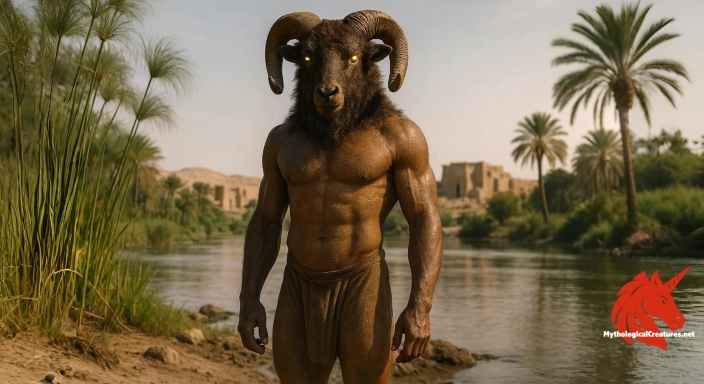
Dare to Meet the Heryshaf....
The Mythological Creatures Book Series
Yokai, Greek, Norse, Egyptian & Chinese. Five illustrated field guides to the creatures the old stories either warned or told you about.
Curated by the Mythological Creatures Team
Series editor: Mythological Creatures Directory
Primary desk: African & Diaspora Traditions Desk
(rev. November 2025)