
Ikuchi: Ikuchi is a legendary yōkai from Japanese folklore, depicted as a formidable sea serpent.
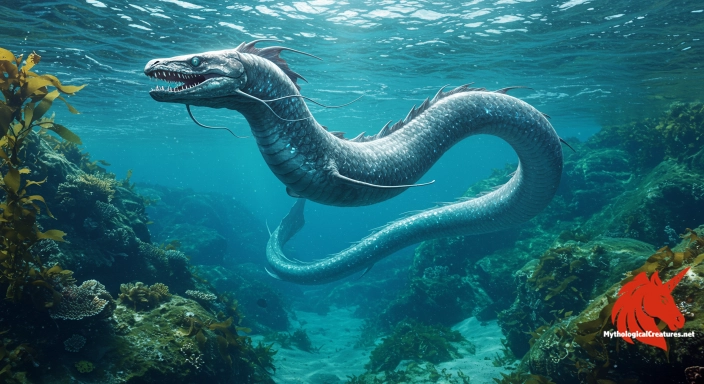
Ikuchi
Ikuchi - Ikuchi embodies the enigmatic and formidable aspects of the ocean in Japanese myth.
Origins & First Encounters
Ikuchi stands as a mysterious sea serpent from the rich tapestry of Japanese legend, its origins deeply rooted in the maritime superstitions of old Japan. Born of cultural narratives that intertwine with the unpredictability of the ocean, it has long captured the imagination of seafarers and storytellers alike. Emerging from the Edo period, this enigmatic yōkai first appeared in anecdotal records that reveal both its ominous presence and its ethereal beauty. Its early attestations, notably in texts such as Tankai and Mimibukuro, suggest that the creature was regarded with both reverence and apprehension. The legends surrounding Ikuchi reflect a broader cultural context where the sea was seen as a realm of unfathomable power and mystery. Intricate local beliefs endowed it with a character that was at once fearsome yet intriguingly sublime. Over time, its mythic lore has symbolised nature’s dual capacity for creation and destruction. Mariners and communities alike were compelled to acknowledge the spirit of the ocean embodied in its form, and its story continues to resonate within the broader sphere of Japanese folklore. Its narrative, steeped in both beauty and dread, serves as a reminder of the ocean’s timeless, unpredictable force. Ikuchi remains a captivating emblem of nature’s indomitable spirit and the cultural legacy of Japan’s ancient coastal traditions.
Source Texts & Tale Variants
The primary records of Ikuchi are found within the storied pages of Edo period anecdote collections, which provide a rare glimpse into the folklore of that era. The creature is notably described in Tankai, a text dated to 1795 and composed by Tsumura Sōan, where its sudden, sweeping appearance is recounted with vivid detail. Equally, Mimibukuro, completed in 1814 by Negishi Yasumori, offers its own portrayal of Ikuchi, enriching the myth with subtle narrative fluctuations. These texts serve as foundational sources that capture the oral traditions and literary creativity of the period. Each account, though differing in tone and detail, weaves a tapestry that illustrates the creature’s elusive and mutable nature. Some versions hint at a benevolent aspect, while others underscore its role as an omen amidst the treacherous sea. The narrative diversity found in these texts suggests a fluidity of myth that allowed local interpretations and oral embellishments to inform its character. Beyond these written sources, fragmented oral histories and local legends also attest to the enduring allure of Ikuchi. They collectively underscore the significance of the creature within the maritime communities and their need to explain the unpredictable moods of the sea. In these early sources, Ikuchi is portrayed as a phenomenon that bridges the gap between natural wonder and supernatural menace.
Form & Powers
The physical depiction of Ikuchi is as enigmatic as the creature itself, with its form often described in terms that evoke both splendour and terror. Visual accounts portray it as a long, sinuous serpent whose body undulates with a fluid grace reminiscent of the shifting tides. Its scales are sometimes said to glitter with a mysterious sheen, catching the light of the moon and the shimmer of restless waters. Descriptions hint at an appearance that is both corporeal and ephemeral, as if it straddles the boundary between the physical world and an otherworldly realm. Some narratives detail a pronounced serpentine head with deep, reflective eyes that seem to harbour the wisdom of the ocean’s depths. There are accounts in which the creature’s body appears to change size, evoking imagery of both an immense leviathan and a more modest, elusive spirit. The texture of its skin is sometimes likened to the smooth, polished surface of a river stone, while at other times, a rougher, almost ancient quality is suggested. This variegated portrayal contributes to its mysterious allure, making it a subject of endless fascination. The interplay of light and shadow on its form is said to create an effect both mesmerizing and disquieting, affirming its place as a creature that defies simple definition. Such detailed descriptions have cemented its image as a living embodiment of the ocean’s capricious splendour.
Regional Faces
Regional lore reveals that the essence of Ikuchi is not confined to a single, uniform image but is instead subject to myriad local interpretations across Japan’s coastal communities. In some areas, particularly among the fishing villages of the Edo period, Ikuchi is portrayed as an iridescent presence, its form shifting with the changing hues of the sea and sky. Local traditions in the Kanto region often imbue it with additional supernatural qualities, sometimes depicting it as a gentle guardian of the deep rather than a harbinger of doom. In contrast, narratives from the remote islands may accentuate its more ominous attributes, painting it as a portent of turbulent storms and challenging maritime conditions. Rural oral histories frequently incorporate rituals and folk practices meant to appease its spirit, underscoring the deep interconnection between the creature and the livelihoods of those who lived by the sea. Variations in its description—from majestic and enigmatic to foreboding and vengeful—reflect the diverse cultural landscapes and the differing relationships these communities held with the ocean. Some localised versions even suggest that Ikuchi was responsible for bestowing bountiful catches upon those who honoured its mysteries, thereby integrating it into regional practices of reverence and offering. The spectrum of narratives across regions highlights the dynamic manner in which folklore evolves to address local concerns and environmental realities. These regional retellings serve as cultural mirrors, reflecting the nuanced ways in which the natural world impacts human life and myth. In this way, Ikuchi becomes a versatile symbol, adaptable to both the celebratory and the cautionary aspects of coastal existence.
Cultural Parallels
Ikuchi shares intriguing parallels with a variety of mythological sea serpents and aquatic spirits that populate global folklore, creating a rich field for comparative analysis. Much like the legendary Umibozu of Japanese tradition, Ikuchi embodies the profound mysteries of the ocean and the inherent uncertainty it brings to seafaring life. Its serpentine characteristics evoke comparisons with the great sea dragons of Chinese lore, reflecting a common motif of sinuous, awe-inspiring figures that command both respect and fear. Across European mythologies, tales of sea serpents similarly echo themes of nature’s untamed fury and enigmatic allure. These cross-cultural connections highlight a universal human impulse to personify the sublime forces of water through creatures that both protect and punish. While the specifics of its depiction vary—from the benevolent guardian to the ominous harbinger—Ikuchi resonates with many traditions that see the ocean as a domain of capricious and formidable powers. The creature’s ability to traverse the boundary between the mortal and the supernatural has made it a touchstone in discussions about the symbolism of water in religious and cultural contexts. Its dual role as a symbol of both creation and destruction finds comparative echoes in other mythic traditions worldwide. The layered narratives that surround Ikuchi thus serve as a reminder of the interconnectedness of mythologies when it comes to exploring humanity’s ancient relationship with the sea. In examining these cultural parallels, it becomes clear that the figure of Ikuchi is part of a broader narrative that speaks to the enduring mystery of the deep waters.
Legacy & Modern Evolution
Over the centuries, the portrayal of Ikuchi has undergone a remarkable evolution, reflecting shifting cultural attitudes and the ongoing dialogue between tradition and modernity. Once confined to the pages of Edo period texts, its myth has gradually infiltrated modern media, from literature and art to film and digital animation. This transformation has seen Ikuchi being reimagined not merely as a terror of the open sea, but as a symbol of environmental consciousness and the ever-changing face of nature. Contemporary artists often harness its sinuous form to comment on the fragile and unpredictable dynamics of both the natural world and human society. The creature’s enduring legacy is visible in modern festivals and museum exhibits that celebrate Japan’s rich folkloric traditions, inviting the public to engage with a cultural heritage that is as mysterious as it is enduring. Modern reinterpretations sometimes imbue Ikuchi with a sense of melancholy, reflecting a broader fascination with the passage of time and the loss of ancient wisdom. Its dual image as an agent of both destruction and renewal continues to inspire creative works that blend myth with modern ecological concerns. Scholars and enthusiasts alike now view Ikuchi as a cultural icon—a living bridge that connects historical maritime lore with the pressing environmental issues of today. This evolution in its depiction underscores the timeless appeal of yōkai as mirrors of societal anxieties and aspirations. In contemporary dialogue, Ikuchi remains a potent reminder of the depth and complexity of Japan’s mythological heritage, continually adapting to new cultural contexts while retaining its core mystique.
Interesting Fact
Despite its formidable and mysterious presence, Ikuchi is not typically portrayed as malevolent, instead embodying the awe-inspiring and unpredictable spirit of the sea.
For serious mythcraft
Your project belongs among the legends
If your work deepens how people understand, play with, or teach mythology, a sponsor placement here keeps it in front of the right readers all year.
Submit a sponsorship enquiryQuick Creature Info
Features:
Associations:
Our Mythic Legendary Rating:

Habitat:
Supernatural Powers:
Physical Attributes:
Abilities:
Behavior:
Lore:
References
Discover Another Mythical Legend You May Not Have Heard Of?
Uncover the mysteries of ancient folklore and expand your knowledge of legendary beings from cultures around the world.
Dare to Meet the Bukavac....
Curated by the Mythological Creatures Team
Series editor: Mythological Creatures Directory
Primary desk: Asian & Pacific Myth Cycles Desk
(rev. November 2025)