
Isonade: Isonade is an enormous, shark-like sea monster from Western Japan known for its fearsome presence along the coast.
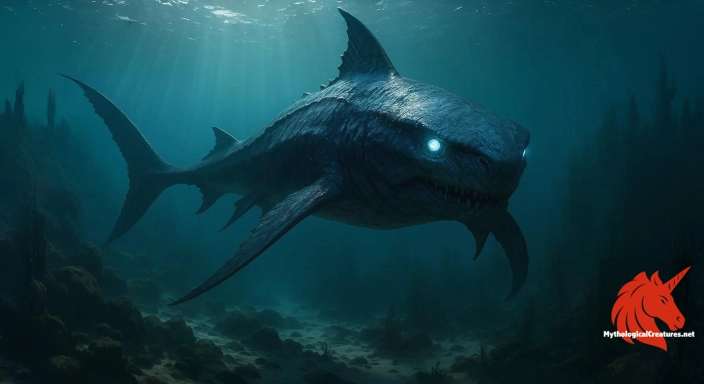
Isonade
Isonade - Symbolises the dangers of the untamed sea and serves as a cautionary tale in local maritime lore.
Origins & First Encounters
The Isonade is a formidable sea monster from Japanese folklore, recognised for its enormous, shark-like presence. Rooted in the coastal myths of Western Japan, it is believed to inhabit the turbulent waters off Matsuura and neighbouring regions. Its enigmatic nature has been transmitted through generations, captivating local fishermen and seaside inhabitants alike. The creature’s name, which intriguingly translates to 'beach stroker', invites wonder and caution in equal measure.
Early accounts suggest that its legend emerged from the collective anxieties of communities confronting an unpredictable ocean. Over time, the Isonade came to embody both the allure and the terror of the sea, exemplifying nature’s unbridled power. It is celebrated and feared as a spectral guardian whose appearances signal the raw forces of marine life. The enduring role of the Isonade in coastal narratives testifies to its deep cultural significance and its timeless intrigue.
Source Texts & Tale Variants
Ancient manuscripts and oral traditions have kept the tale of the Isonade alive, with coastal legends recorded in regional folklore collections. Medieval and Edo period narratives recount eerie encounters that are wrapped in the mystique of an untamed sea. Several local accounts from Matsuura describe a lurking presence beneath stormy waters, its form both dramatic and unsettling. Illustrative woodblock prints from the Edo era further captured its monstrous qualities and contributed to a visual tradition surrounding the creature.
Different story variants offer a multifaceted view of the Isonade, sometimes portraying it as an avenging force and at other times as a capricious guardian of the ocean. In some retellings, the creature’s powers extend to influencing tides and weather, adding layers to its mythic persona. As coastal communities passed on these stories by word of mouth, subtle regional embellishments enriched the legend. This broad tapestry of textual and oral sources cements the Isonade’s status as a key figure in Japan’s maritime folklore.
Form & Powers
The Isonade presents a striking and terrifying likeness to a giant shark, yet its form is imbued with mythic embellishments that set it apart from ordinary sea creatures. Its elongated body is cloaked in rugged, weather-beaten skin that shifts between deep greys and murky blues, echoing the ever-changing moods of the ocean. The creature’s massive head is dominated by a gaping maw lined with serrated, jagged teeth that speak of its predatory nature. Powerful dorsal fins, accentuated with barbed edges, slice through the water as if deliberately crafted for destruction.
Legend describes its eyes as glowing with an eerie, otherworldly light that hints at both primal fury and ancient wisdom. A series of additional fin-like appendages trace its streamlined flank, merging beauty with menace. The Isonade’s elongated tail, robust and muscular, is said to be capable of lashing out with devastating force. Folkloric accounts vary in details, with some suggesting that its sheer size rivals that of small boats, thereby amplifying its fearsome reputation. Every aspect of its anatomy resonates with the dual themes of natural splendour and inherent peril.
Regional Faces
Regional interpretations of the Isonade are as diverse as the coastal landscapes of Western Japan, where the creature is both feared and revered. In Matsuura, narratives tend to emphasise its raw, predatory instincts, with a focus on its role as a cautionary spectre for unwary beachgoers. In nearby coastal areas, however, storytellers often incorporate additional, fantastical elements that lend the creature a more serpentine or even dragon-like appearance. These local adaptations blend longstanding marine superstitions with distinctive regional identities shaped by local seafaring traditions.
Other communities portray the Isonade as an ethereal spirit whose sudden appearances are harbingers of tempests and natural calamities. Rituals and protective customs developed by local fishermen sometimes invoke the creature’s name as both a warning and a form of respect for the uncertainties of the sea. Additional embellishments, such as descriptions of luminous markings or an unearthly glow in its eyes, further differentiate these regional versions. Such variations underscore how geographical context and community experiences sculpt the myth, offering a kaleidoscopic view of a single enigmatic creature.
Cultural Parallels
The Isonade shares numerous attributes with other legendary sea monsters found in global mythologies, making it a compelling figure for comparative study. Its colossal and fearsome form bears a resemblance to the biblical Leviathan, while echoes of Norse sea serpents also emerge in some depictions. Like many monstrous oceanic beings, the Isonade symbolises the unpredictable and often perilous nature of the sea. Its blending of realistic shark-like features with supernatural elements parallels the mythic sea dragons celebrated in Chinese lore.
These interwoven traditions highlight a common human impulse to personify the untamed forces of nature as monstrous beings. Similarities with legends such as the Kraken illustrate how various cultures grapple with the dangers lurking beneath the waves. In addition, the moral overtones present in tales of the Isonade resonate with broader narratives where sea monsters serve as cautionary emblems. Ultimately, the creature’s myth acts as a unique yet universally understood metaphor, melding local cultural insights with widespread maritime anxieties.
Legacy & Modern Evolution
Over the centuries, the image of the Isonade has evolved from a horrifying maritime threat into a multifaceted cultural icon. During the Edo period, its fearsome aspects were immortalised in woodblock prints that captured both its monstrous form and the mystery of the sea. As Japanese society transformed, the creature’s narrative adapted, reflecting shifting attitudes toward nature, myth, and modernity. Its depiction in historical texts and art has long served as a symbolic reminder of the ocean’s unpredictable power.
Today, the Isonade appears in modern media ranging from films and novels to digital art and animation, often embodying both menace and melancholy. Contemporary interpretations sometimes cast it as a misunderstood guardian of the marine realm, highlighting themes of environmental conservation and cultural heritage. Modern artists reimagine this ancient spectre, blending traditional imagery with current societal concerns. Festivals and coastal exhibitions that celebrate local myth further underscore its lasting impact. In this way, the Isonade continues to inspire awe and caution, bridging the gap between archaic lore and present-day storytelling.
Interesting Fact
The name 'Isonade', translating to 'beach stroker', is thought to refer to its peculiar mode of movement along the coastline, a detail that has intrigued folklorists and locals alike for generations.
Support the directory
Promote your myth project and fund more research
Sponsor placements help keep this directory growing and free to use while giving your work a focused, relevant audience.
Learn how sponsorship worksQuick Creature Info
Associations:
Our Mythic Legendary Rating:

Also Sometimes Known As:
Habitat:
Supernatural Powers:
Physical Attributes:
Abilities:
Behavior:
Lore:
Related Creatures, Tales or Lore
- UUmibōzu
- LLeviathan
- JJormungandr
References
Discover Another Mythical Legend You May Not Have Heard Of?
Uncover the mysteries of ancient folklore and expand your knowledge of legendary beings from cultures around the world.
Dare to Meet the Ningyo....

Curated by the Mythological Creatures Team
Series editor: Mythological Creatures Directory
Primary desk: Asian & Pacific Myth Cycles Desk
(rev. November 2025)