
Itzamna: Itzamná is an upper god and creator deity in Maya mythology, revered as one of the foremost figures in the Classic and Postclassic Maya pantheon.
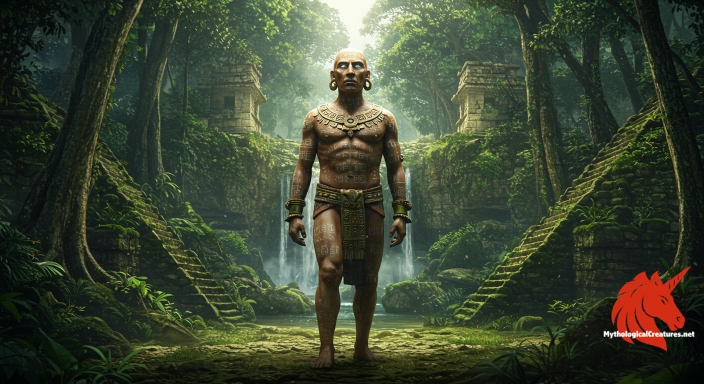
Itzamna
Itzamna - Regarded as one of the most important gods in the Classic and Postclassic Maya pantheon, Itzamná is credited with creation and maintaining cosmic order.
Origins & First Encounters
Among the most towering figures in Maya mythology, Itzamna emerges as a celestial architect and a guardian of cosmic wisdom. His origins trace back to the vibrant epochs of the Classic and Postclassic periods, where he was revered both as a creator deity and an overseer of the heavenly realms. Long before modern research pieced together his complex iconography, he was popularly known as 'god D', a mysterious title that hinted at his profound influence. Early colonial accounts and archaeological remnants suggest that his myth was as multifaceted as the cosmos itself. The deity’s residence in the sky symbolises not only his lofty dominion but also his enduring guidance over earthly affairs. His subtle presence in ancient codices and ceramics points to an intricate interplay of art, ritual, and cosmology. In the rich cultural tapestry of the Maya, Itzamna is celebrated for his role in establishing order from primordial chaos, a theme that continues to captivate audiences both old and new. His legacy lives on as a potent emblem of divine inspiration and celestial power, bridging the ancient and the eternal.
Source Texts & Tale Variants
The sources chronicling Itzamna’s myth are as diverse as they are fragmentary, ranging from early colonial relaciones to meticulously preserved codices. Early Spanish scribes recorded scattered references that, although brief, emphasised his status as an upper deity. Iconographic evidence from pre-Spanish ceramics and murals further enriches our understanding, revealing a deity whose image evolved with the artistic currents of his time. Lacandon lore later introduced variants where a creator figure known as Nohochakyum or Hachakyum appeared to continue his legacy. These varied narrative strands illustrate how different communities adapted his myth to suit their evolving spiritual needs. In several instances, the same visual motifs have been reinterpreted to reflect changing ritualistic landscapes. The fragmented texts and physical artefacts serve as complementary windows into a myth that was transmitted orally and via art over generations. Each surviving piece of evidence, whether inscribed on stone or woven into folklore, contributes to a broader mosaic of his divine persona. Diverse traditions thus provide overlapping perspectives, enriching the enigmatic portrait of this revered sky god.
Form & Powers
The visual representations of Itzamna offer a rich tableau of symbolic regalia and mystical attributes. He is frequently depicted with an imposing presence, complete with elaborate headpieces that evoke celestial splendour and cosmic order. In many surviving images, his dignified face is adorned with detailed markings, suggesting a deep well of ancient wisdom that transcends mortal understanding. Some depictions present him with a long, stylised beard and a set of acute, penetrating eyes that seem to observe the flow of time and history. Iconography often includes gestures of blessing, with his extended hands symbolically bestowing life and order onto the world. The depiction of his figure in sumptuous robes and intricate jewellery underlines his status as a deity of both creation and knowledge. Variations in his portrayed stature and symbolic accessories hint at the regional and chronological adaptations of his image. The interplay of light and shade in his portrayals further deepens his enigmatic aura, suggesting that his form is as mutable as the myths that celebrate him. Altogether, the detailed physical descriptions not only capture his divine essence but also mirror the evolving artistic traditions of the Maya people.
Regional Faces
Itzamna’s depiction varies widely across the diverse regions of the Maya world, reflecting local traditions and environmental contexts. In the heartland of the Classic Maya civilisation, he is often depicted as the aloof creator, whose serene visage emanates authority and ancient wisdom. In contrast, certain highland communities imbue him with more intimate, village-centric attributes, blending his celestial nature with local agricultural and natural cycles. Lacandon traditions, for instance, introduce a variant of his persona that emphasises a more accessible, nurturing aspect. Local adaptations have seen his symbols and regalia transform subtly, with variations in headgear, ceremonial adornments, and even colour palettes. Urban centres and rural settlements alike have tailored his myth to resonate with their specific cultural and ritual practices. The shifting iconography across regions underscores an enduring adaptability in his representation, allowing him to remain central to diverse spiritual narratives. These dynamic regional differences affirm that Itzamna’s identity was not static, but rather a living tradition continually reinterpreted in the light of local values and histories. Ultimately, his regional variations serve as a testimony to the fluidity of myth and the capacity of ancient deities to transcend geographical boundaries.
Cultural Parallels
A comparative glance at Itzamna and his counterparts in other mythological traditions reveals striking thematic parallels. Much like other sky-bound creator deities, his role resonates with universal themes of creation, wisdom, and celestial order. In other Mesoamerican cultures, deities like Q'uq'umatz echo similar dualities, blending elements of benevolence with transformative power. His image, balancing between the human and the divine, finds a counterpart in mythic figures from diverse traditions such as the Greek or Norse pantheons. These international analogues further illustrate how ancient societies grappled with the mysteries of existence through comparable symbolic frameworks. The intermingling of human qualities with supernatural authority in his depictions mirrors patterns seen in other early cultures where deities served as moral and existential guides. In this way, Itzamna not only embodies Maya spiritual ideals but also partakes in a broader cross-cultural dialogue about the nature of creation. The convergence of myths across disparate eras and regions speaks to a shared human fascination with the cosmos and the origin of life, reaffirming the universality of certain spiritual archetypes. These cultural parallels help underscore that the allure of divine creation myths bridges many civilizations, making Itzamna a vital link in the global tapestry of mythology.
Legacy & Modern Evolution
The evolution of Itzamna’s myth is a striking narrative of transformation and continuity, mirroring the broader shifts within Maya society over millennia. Once vividly portrayed in pre-Spanish codices and ceramics, his legacy has been continually reshaped by the influences of colonialism, modern scholarship, and cultural revival. In recent years, descendants of the ancient Maya have rekindled interest in his figure, integrating his myth into community rituals and educational projects. Contemporary artists and authors increasingly draw upon his image to convey themes of wisdom, balance, and the enduring power of nature. His symbolic presence has found new expression in digital media and museum exhibitions, where ancient motifs blend seamlessly with modern artistic sensibilities. This renewal of interest underscores a broader trend of reasserting indigenous identities in the face of global cultural homogenisation. As scholars piece together fragmented narratives from diverse sources, Itzamna’s myth continues to inspire dialogues about heritage, spirituality, and the continuity of human creativity. By embodying both the mysteries of the ancient world and the aspirations of modern communities, his legacy serves as a dynamic bridge between past and present. In this light, Itzamna remains a towering figure—a testament to the timeless human quest for understanding and transcendence.
Interesting Fact
Itzamná's early identification as 'god D' exemplifies how modern archaeological reinterpretations can reshape our understanding of ancient mythologies.
Partner with Mythological Creatures
Bring your myth-based world into ours
From game settings to narrative worlds, we work with partners who treat myths with care. Share your project for a potential sponsor slot.
Partner with usQuick Creature Info
Origin:
Associations:
Our Mythic Legendary Rating:

Also Sometimes Known As:
Habitat:
Supernatural Powers:
Physical Attributes:
Abilities:
Behavior:
Lore:
Related Creatures, Tales or Lore
- HHunab Ku
- KKukulkan
- CChaac
References
Discover Another Mythical Legend You May Not Have Heard Of?
Uncover the mysteries of ancient folklore and expand your knowledge of legendary beings from cultures around the world.
Dare to Meet the Nahuelito....

Curated by the Mythological Creatures Team
Series editor: Mythological Creatures Directory
Primary desk: Americas & Indigenous Traditions Desk
(rev. November 2025)