
Jenu: Jenu is a wild and cannibalistic hairy giant from Mi'kmaq folklore.
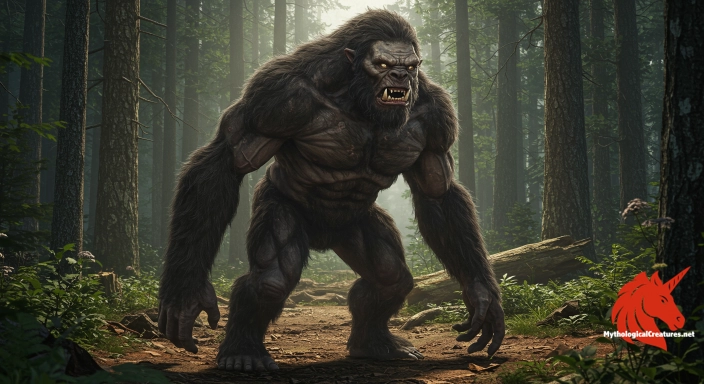
Jenu
Jenu - The Jenu represents the dangers of the untamed wilderness and the taboo of cannibalism, serving as a cautionary symbol in Mi'kmaq culture.
the legend in five swipes.
the legend in five swipes.
How did the legend of the Jenu begin?
The Jenu stands as a formidable figure within Mi'kmaq folklore, its legend woven intricately into the deep cultural fabric of Atlantic indigenous tradition. Its origins are rooted in ancient oral narratives where the wild and cannibalistic nature of the giant mirrors the raw, untamed forces of the natural world. Over the centuries, its myth has been passed down through generations, serving both as a caution and a symbol of nature's indomitable power. The creature’s fearsome reputation is accentuated by its portrayal as a being that dwells on the fringes of civilisation, challenging human control and order. Local tales recount eerie encounters that blend terror with a sense of respect for the wilderness. The Jenu emerges not only as a monstrous presence but as a complex emblem of the natural and supernatural realms in Mi'kmaq storytelling. Its narrative reflects the tension between human vulnerability and the wild, unpredictable forces that exist beyond the communal hearth. Over time, this myth has evolved, intertwining with broader indigenous themes of survival, caution, and the enduring mystery of the world beyond human boundaries.
Who wrote down the legend of the Jenu?
The primary sources for the Jenu story are deeply embedded in the oral traditions of the Mi'kmaq people, where storytellers have long recounted its terrifying exploits. Such narratives have been maintained through ritual and community gatherings, ensuring that every subtle variation of its tale finds a home in local memory. Early European explorers and chroniclers occasionally noted these stories, albeit through a lens that sometimes misinterpreted indigenous symbolism. Later anthropological research began to appreciate the rich layers of meaning in these oral accounts, highlighting the Jenu as more than merely a folkloric monster. Various regional retellings emphasise different aspects of the creature, from its wild physical appearance to its cannibalistic habits, revealing a dynamic array of story variants. In some versions, the Jenu is portrayed as a solitary, cursed being, while in others it appears as part of a broader mythological ecosystem of wild spirits. Despite the paucity of early written records, the constant retelling has allowed for a robust collective memory to flourish, preserving its menace and cultural significance. This diverse tapestry of narratives ensures that the Jenu continues to be a subject of fascination and study among both indigenous scholars and enthusiasts of myth.
What did people say the Jenu looked like?
The physical portrayal of the Jenu is as formidable as it is unsettling, with descriptions that convey a monstrous blend of human and animalistic features. The creature is often depicted as a towering giant, its body covered in unkempt, matted hair that speaks to its wild and untamed nature. Its facial features are said to be both grotesque and haunting, with deep-set, piercing eyes and a mouth capable of unbelievable savagery. Some accounts detail a powerful, heavily muscled frame with limbs that are disproportionately large, enabling it to move with a predatory, loping gait. The texture of its skin is frequently described as rugged and scarred, a testament to its constant battles with both nature and its own monstrous tendencies. Witness accounts sometimes include the eerie detail of a faint, almost otherworldly glow emanating from its eyes during the twilight hours. Variations in size and form abound, suggesting that the legend of the Jenu adapts to the storyteller’s intention, ranging from a spectral giant to a corporeal brute. Every element of its physical description contributes to a collective image that is both terrifying and emblematic of nature’s unbridled ferocity.
How far did the story of the Jenu spread?
While the myth of the Jenu is specifically anchored in Mi'kmaq culture, its narrative echoes across the borders of neighbouring indigenous traditions. In certain eastern Canadian communities, similar creatures appear with subtle modifications that reflect regional landscapes and cultural priorities. In areas bordering the traditional Mi'kmaq lands, tales may merge the ferocious characteristics of the Jenu with those of the Wendigo known in Anishinaabe and Cree lore. These adaptations often adjust the emphasis from purely cannibalistic actions to warnings about the dangers of isolation and unchecked hunger. Some local variations even temper the monstrous traits, casting the Jenu in a more ambiguous light as both a harbinger of nature’s wrath and a misunderstood guardian of the wild. This regional interplay reveals how indigenous narratives fluidly evolve, absorbing influences and reinterpretations from neighbouring tribes. The resulting mosaic of accounts underlines the role of environment and tradition in shaping the creature’s image. Through these local adaptations, the Jenu remains a potent and flexible symbol, reflective of the diverse ways communities interact with the natural world.
Jenu: Shared Themes in World Myth
Comparative analysis of the Jenu highlights its intriguing parallels with other legendary beings across North American indigenous cultures. Much like the Wendigo of Anishinaabe and Cree lore, the Jenu embodies the terrifying potential of nature when it descends into madness and moral decay. Both figures are emblematic of cannibalistic tendencies, representing the breakdown of societal order in the face of environmental extremes. There are also echoes of the elusive Sasquatch in its hairy, forest-bound appearance, albeit the Jenu’s narrative is punctuated by a far more violent and predatory nature. Cross-cultural similarities can be found in European folklore as well, where wild men and forest giants served as warnings about the dangers lurking beyond civilisation. The thematic connections often centre around the interplay between human failings and the overwhelming force of the natural world. Despite the shifts in context, these narratives consistently transform natural phenomena and social anxieties into powerful mythic figures. Such comparative reflections illustrate that the Jenu is part of a broader tapestry of legends that use the monstrous to symbolise the inherent wildness at the edges of human experience.
Jenu: The Legend's Second Life
The evolution of the Jenu myth over the centuries reveals a dynamic interplay between tradition and modern reinterpretation. Initially a feared monster of the deep wilderness, the creature’s portrayal has shifted to encapsulate broader themes of ecological imbalance and the consequences of straying from cultural moorings. In contemporary indigenous art and literature, the Jenu is often reimagined as a symbol of nature’s resilience and a caution against the exploitation of the environment. Modern retellings tend to highlight its dual role as both a fearsome predator and a poignant metaphor for the loss of traditional ways in modern society. The creature’s enduring legacy has inspired various creative endeavours, from visual arts to narrative film, where its image is adapted to reflect current societal challenges. Academic discourse now recognises the Jenu not merely as a relic of folklore, but as a living symbol that evolves alongside cultural shifts. It continues to stimulate debate regarding the intersections of myth, identity, and environmental stewardship. Today, the Jenu remains a compelling figure whose narrative challenges contemporary audiences to reflect on the deep and sometimes dark connections between humanity and the natural world.
Interesting Fact
Jenu is closely linked to other North American legendary beings like the Wendigo, Sasquatch, and Yeti, reflecting a common cultural motif of monstrous, wild giants in indigenous storytelling.
Mythological Treasures
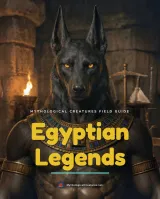
Egyptian Legends: A field guide to the gods and monsters of ancient Egypt
Guardians of the living and devourers of the dead, with the role each played in judgement.
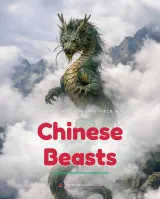
Chinese Beasts: A field guide to the dragons and demon kings of Chinese myth
From river dragons to demon kings, with the legends that shaped five thousand years of storytelling.
Japanese Yokai: A field guide to the spirits and demons of Japanese folklore
Fifteen spirits, with the signs to watch for and what the old tales say to do if you meet one.
the legend in five swipes.
For authors, artists, and makers
Created something from the realm of myth?
If your book, deck, game, or artwork draws from legendary creatures and lore, you can showcase it here in a tasteful, year-round placement.
Share your projectQuick Creature Info
Origin:
Our Mythic Legendary Rating:

Habitat:
Supernatural Powers:
Physical Attributes:
Abilities:
Behavior:
Weaknesses:
Lore:
References
Discover Another Mythical Legend You May Not Have Heard Of?
Uncover the mysteries of ancient folklore and expand your knowledge of legendary beings from cultures around the world.
Dare to Meet the Korkyra....
-c6e4d7ca-8640-44ee-9013-c92705d96bd7_small.webp "Depiction of Korkyra")
The Mythological Creatures Book Series
Yokai, Greek, Norse, Egyptian & Chinese. Five illustrated field guides to the creatures the old stories either warned or told you about.
Curated by the Mythological Creatures Team
Series editor: Mythological Creatures Directory
Primary desk: Americas & Indigenous Traditions Desk
(rev. November 2025)