
Jinmenju: Jinmenju is a mythical, human-faced tree from Japanese and Chinese folklore, depicted with blossoms that resemble human heads.
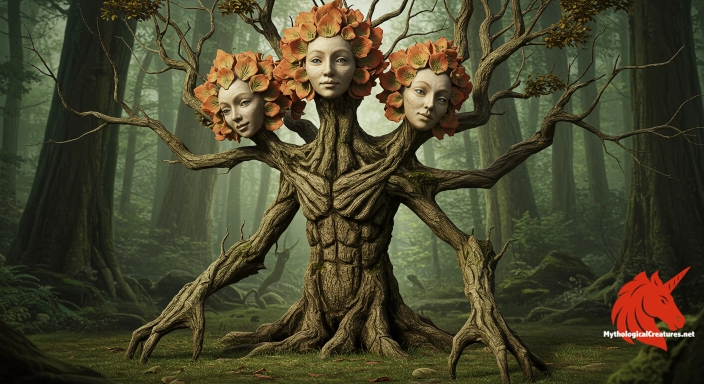
Jinmenju
Jinmenju - Represents the uncanny intersection of humanity and nature, evoking both fascination and unease in traditional folklore.
Origins & First Encounters
Emerging from the rich tapestry of East Asian folklore, the Jinmenju stands as an enigmatic bridge between the natural and the supernatural. Its origins stretch back to ancient mythologies where the boundaries between humans and nature intertwined in mysterious ways. Bearing the literal meaning of 'human-faced tree', this creature evokes an uncanny fusion of botanical life and anthropomorphic features. It has been classified as both a yōkai and a yaoguai, reflecting its dual capacity to enchant and unsettle. Early legends portray it as a living testament to the marvels of the natural world infused with spiritual energies. The first well-known attestation appears in the Edo period, where artistic depictions began to capture its elusive essence. Its portrayal in the renowned Konjaku Hyakki Shūi by Toriyama Sekien provided a seminal visual record that has influenced its myth ever since. Over centuries, the Jinmenju has evolved into a symbol of nature’s unpredictable spirit and the merging of life with mystery. The creature continues to spark the imagination of those who explore the darker, more ambiguous aspects of folklore. Its enduring allure serves as a reminder of the timeless dialogue between the realms of nature and the paranormal.
Source Texts & Tale Variants
The record of the Jinmenju finds its roots in classical anthologies that celebrated the wonders of the supernatural. Its most celebrated appearance in the Konjaku Hyakki Shūi by Toriyama Sekien provided an influential visual narrative that has echoed through later generations. Subsequent texts and folklore compilations built upon this initial representation, each adding subtle variations to its story. Ancient Chinese sources also recount similar phenomena, hinting at a cross-cultural fascination with anthropomorphic flora. Oral traditions in rural communities have enriched the myth, infusing it with layers of local mythos and personal interpretations. In various manuscripts and narrative scrolls, the tree is depicted with attributes that transcend mundane botanical characteristics. These retellings occasionally assign the tree an active role in foretelling omens or mirroring human emotions. Some tales describe it as quietly communicating with those who wander in twilight woods. Over time, craftsmen and storytellers have ensured that the Jinmenju’s legend remains mutable, adapting to the sensibilities of each era. All these sources consolidate its standing as a perennial figure in the world of supernatural folklore.
Form & Powers
The Jinmenju is visually extraordinary, marked by a trunk and branches that hint at human-like contours. Its bark is often depicted as deeply furrowed and gnarled, as if bearing the weight of countless untold stories. Most striking are the blossoms that emerge along its limbs, each flower meticulously forming a visage complete with eyes, nose, and mouth. These human-faced blooms can exhibit a range of expressions—from a serene calmness to a haunting, unsettling grimace. The detailed features imbue the tree with an eerie vitality, as if it were privy to secret human emotions. Variations in size show the tree either as a modest sapling or as a towering giant, lending further mystery to its legend. The leaves surrounding the uncanny blossoms add a splash of vibrant colour, creating an arresting contrast with its enigmatic faces. Seasonal changes alter the tree’s appearance, with the hues of its foliage shifting like the passage of time. Every element of its form invites both admiration and a sense of trepidation. Such a detailed physical portrayal has cemented its status as one of folklore’s most compelling figures.
Regional Faces
In Japan, the Jinmenju is woven into the fabric of local lore, often portrayed as a mysterious presence in serene and secluded landscapes. Its depiction in Japanese art emphasises an ethereal quality, one that blends both benign charm and an unsettling aura. Meanwhile, in Chinese tradition, similar mythological trees sometimes carry a darker, more ominous reputation. The regional narratives diverge subtly, with some local legends portraying the tree as a whimsical oddity, while others see it as a portent of misfortune. Rural communities in Japan may regard it with a mixture of reverence and caution, believing it to reveal hidden truths about the natural order. In Chinese accounts, the tree often embodies nature’s retributive force, mirroring ancient philosophical ideas about the balance between creation and decay. These cultural adaptations reveal how distinct communities infuse their environmental context into the creature’s persona. Festivals, local art, and oral storytelling have all contributed to nuanced regional interpretations. Each adaptation highlights a cultural preoccupation with the uncanny and unexplainable in nature. Ultimately, these regional variations underscore the Jinmenju’s ability to transcend cultural boundaries while adapting to local mythic sensibilities.
Cultural Parallels
Comparative mythology reveals that the Jinmenju occupies a unique niche in the broader landscape of supernatural beings. Its unparalleled blend of human and natural attributes draws interesting parallels with the European mandrake, a plant often ascribed with human-like features. The motif of imbuing a natural element with human characteristics is a recurrent theme in cultures across the globe. Similar to enchanted trees and sentient forests in various traditions, the human-faced tree symbolizes the merger of life’s tangible and intangible realms. In many myths, such hybrid forms invite reflection on the essence of existence and the boundaries of nature. This convergence between botanical life and human qualities can be seen in indigenous stories where trees are endowed with spirit and wisdom. Cross-cultural comparisons often reveal that while the specifics may differ, the underlying fascination with the anthropomorphism of nature remains constant. In this light, the Jinmenju stands as both a uniquely East Asian entity and as part of a universal narrative trend. Such reflections extend our understanding of how diverse cultures perceive and celebrate the enigmatic aspects of the natural world. The enduring legacy of these mythic parallels illustrates humanity’s timeless need to bridge the gap between the animate and the inanimate.
Legacy & Modern Evolution
Over the centuries, the Jinmenju has evolved from a peculiar motif in classical art to an enduring symbol in contemporary popular culture. Its earliest depictions in Edo period prints established a visual language that modern artists continue to reinterpret. Today, the tree makes frequent appearances in manga, anime, and video games, each medium offering its own twist on the myth. Contemporary portrayals often expand its role to reflect modern anxieties about nature and identity. This evolution has transformed the creature into a multifaceted allegory, one that encapsulates both the beauty of the natural world and its potential for eerie unpredictability. The human-faced blossoms are now seen not only as supernatural curiosities but also as metaphors for the complex relationship between humanity and the environment. Modern reinterpretations frequently blend traditional mysticism with cutting-edge aesthetics, reimagining the tree as a harbinger of environmental caution. Its image is revisited in digital art and literature, inviting a new generation to explore ancient themes through a modern lens. The Jinmenju’s transition from classical folklore to modern symbolism highlights the fluid nature of myth-making. Its continuing presence in popular media underscores an ongoing dialogue between historical narrative and contemporary culture. This enduring metamorphosis reveals how folklore acts as a living, adaptable conversation between past traditions and current societal issues. Ultimately, the legacy of the Jinmenju remains a powerful reminder of nature’s capacity to inspire wonder, fear, and profound reflection in each generation.
Interesting Fact
Jinmenju’s portrayal in the Edo period Konjaku Hyakki Shūi by Toriyama Sekien is one of the earliest and most influential visual representations of a creature that blurs the line between the human and natural worlds, making it a subject of enduring fascination.
For authors, artists, and makers
Created something from the realm of myth?
If your book, deck, game, or artwork draws from legendary creatures and lore, you can showcase it here in a tasteful, year-round placement.
Share your projectQuick Creature Info
Features:
Associations:
Our Mythic Legendary Rating:

Also Sometimes Known As:
Habitat:
Physical Attributes:
Abilities:
Behavior:
Lore:
Related Creatures, Tales or Lore
- KKodama
- MMokumokuren
- SShinboku no Kami
References
Discover Another Mythical Legend You May Not Have Heard Of?
Uncover the mysteries of ancient folklore and expand your knowledge of legendary beings from cultures around the world.
Dare to Meet the Kuraokami....

Curated by the Mythological Creatures Team
Series editor: Mythological Creatures Directory
Primary desk: Asian & Pacific Myth Cycles Desk
(rev. November 2025)