
Kuraokami: Kuraokami is a legendary Japanese dragon and Shinto deity of rain and snow.
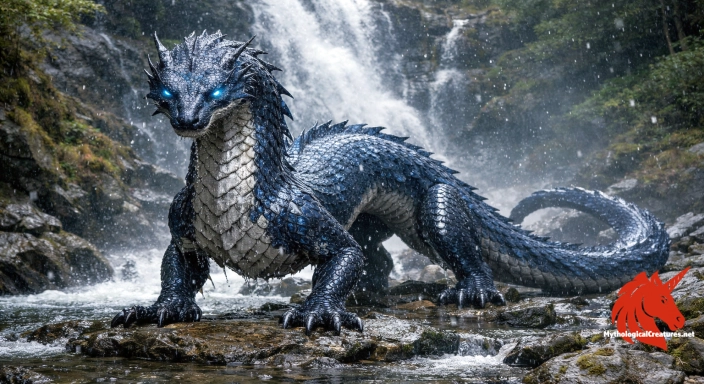
Kuraokami
Kuraokami - Kuraokami symbolizes the life-sustaining power of rain and snow, and its myth underpins the importance of weather in agricultural cycles in Japan.
the legend in five swipes.
the legend in five swipes.
The Earliest Known Accounts of Kuraokami
Kuraokami is a majestic figure in Japanese mythology, revered as a celestial dragon and a deity governing both rain and snow. Born out of the dramatic events surrounding the divine family of Izanagi and Izanami, his emergence is intimately linked with the cataclysmic death of Izanami and the subsequent reaction of Izanagi. His origin story, drawn from the ancient chronicles of the Kojiki and Nihon Shoki, situates him among the primordial forces shaping the Japanese archipelago. The deity’s birth from the body or blood of the fire god Kagutsuchi imbues him with an elemental duality, balancing creation with destruction. Beyond the literal meteorological phenomena he controls, Kuraokami embodies the unpredictable nature of the environment and the inherent cycle of life and renewal. His myth resonates with themes of sorrow, retribution, and the eventual restoration of order in the cosmos. The narrative surrounding his character reflects a deep cultural engagement with both the benevolent and fearful aspects of nature. Over centuries, his legacy has nurtured a symbolic bridge between natural phenomena and the spiritual heritage of Japan.
Where can you read about Kuraokami?
The earliest accounts of Kuraokami appear in the classical texts of the Kojiki and Nihon Shoki, where his origins are interwoven with the tragic and transformative events of the divine family. These ancient sources offer a glimpse into a time when gods and natural elements were inextricably linked in mythic narratives. Various textual traditions describe his birth differently, with some versions emphasising the role of Kagutsuchi’s blood and others focusing on the physical remnants of his form. Over time, folklore and shrine records enriched the original narratives, varying his character to suit local beliefs and climatic conditions. Oral traditions further embellished the details of his appearance and powers, ensuring that his myth remained dynamic and responsive to changing cultural contexts. Regional inscriptions and lesser-known legends sometimes present alternative interpretations that highlight his influence over specific weather patterns. This multiplicity of accounts has allowed his myth to evolve, reflecting the diverse ways in which society has sought to explain the unpredictable forces of rain and snow. The enduring appeal of Kuraokami in ancient literature and regional lore underscores his central role in the mythological canon of Japan.
The Appearance and Powers of Kuraokami
Kuraokami is typically envisioned as a serpentine dragon of formidable stature and vibrant presence. His body is often depicted with sinuous curves and intricate scales that gleam with a subtle iridescence reminiscent of a stormy sky. In many representations, his elongated form undulates gracefully, conveying both power and elegance in its movement. Distinctive horns crown his head, complementing his piercing eyes that seem to capture the wisdom of the ages and the deep mysteries of the natural world. His claws, sharp and formidable, appear capable of both gentle caresses as rain and destructive strikes as tempest winds. The creature’s overall form fluctuates in size across various depictions, at times overwhelming the landscape while in other portrayals he assumes a more modest, albeit potent, presence. Artists have often blended traditional elements with imaginative details, such as a mane-like fringe echoing the flow of water or mist. The rich tapestry of his visual imagery has allowed for a range of artistic interpretations, each celebrating the harmony between his peaceful and fearsome aspects. His elegant yet imposing appearance serves not only as a religious symbol but also as a reflection of the delicate balance between nature’s nurturing and destructive forces.
The Local Faces of Kuraokami
The portrayal of Kuraokami varies notably across the diverse regions of Japan, each adapting his myth to local environmental and cultural conditions. In certain central regions, he is venerated as a beneficial spirit whose timely rains ensure the prosperity of harvests and the vitality of agrarian life. In contrast, communities along Japan’s river valleys sometimes view him as capricious, a wild force whose sudden outbursts can lead to floods and unpredictable weather shifts. Northern areas, where snowfall and icy conditions dominate the seasonal landscape, often associate his presence with the onset of winter’s chill. Meanwhile, in more temperate southern islands, Kuraokami is celebrated as a guardian who tempers the ferocity of tropical storms. These regional adaptations are frequently reflected in local festivals, shrines, and ritualistic practices, each tailored to address the unique climatic challenges of the area. Such cultural variations highlight how communities have personalised the deity to meet their specific environmental needs and fears. The regional narratives surrounding him have enriched his myth, turning him into a multi-dimensional symbol whose characteristics are as varied as the landscapes of Japan. Each local adaptation reinforces his enduring connection to the natural world and its ever-changing moods.
Kuraokami: Echoes in Other Mythologies
Kuraokami’s myth bears striking similarities to other serpent and dragon deities that preside over water and storms in numerous cultures. His powerful control over rain and snow finds echoes in the Chinese Lung and the Vietnamese Long, both of which are esteemed for their ability to balance natural elements. In the context of Western mythology, his dualistic nature is reminiscent of dragons that, despite their fearsome appearances, are often seen as guardians of precious resources and symbols of nature’s regenerative power. The juxtaposition of life-sustaining rains with the potential for destructive storms is a recurring theme across folklore, suggesting a universal respect for the ambivalent forces of nature. Indigenous American stories, such as those featuring the Thunderbird, similarly celebrate these elements as both protectors and harbingers of nature’s might. The evolution of his image over time also parallels the transformation of other ancient deities into modern symbols of environmental stewardship. This cross-cultural dialogue underscores how disparate societies have long grappled with and revered the raw power of natural phenomena. Kuraokami thus becomes an integral part of a global tapestry of myth, linking Eastern traditions with a broader human fascination with the mysterious and unpredictable forces of nature. By comparing these diverse traditions, one gains a deeper insight into the universal themes that have shaped our collective understanding of the natural world.
Kuraokami: Modern Retellings and Reinventions
Over the centuries, the image of Kuraokami has undergone significant transformation, moving from the pages of ancient texts to inspiring contemporary artistic expression. His once strictly religious and mythic portrayal has gradually expanded into a symbol of nature’s enduring might and the necessary balance between chaos and order. Modern reinterpretations in literature, film, and visual arts have reimagined him as both a guardian of the environment and an emblem of natural resilience. Artistic depictions now often blend traditional iconography with contemporary design, reflecting the evolving relationship between culture and nature. Festivals and shrine rituals continue to honour his ancient spirit, yet they also integrate modern elements that speak to current environmental concerns. In a society increasingly mindful of ecological balance, his legacy resonates with themes of sustainability and respect for the natural world. This shift from pure mythology to a broader cultural symbol illustrates how ancient narratives can adapt to address new societal challenges. His dynamic portrayal in anime, manga, and other modern media has introduced his legend to a global audience, ensuring that his myth remains vibrant and relevant. Even as historians and artists reinterpret his form, Kuraokami endures as a powerful reminder of the timeless interplay between myth and the natural environment, bridging the ancient and the contemporary.
Interesting Fact
Unlike many Western dragons depicted solely as destroyers, Kuraokami is revered as a vital protector of life, underscoring the unique cultural emphasis on balance and renewal in Japanese mythology.
Mythological Treasures
Japanese Yokai: A field guide to the spirits and demons of Japanese folklore
Fifteen spirits, with the signs to watch for and what the old tales say to do if you meet one.
Chinese Beasts: A field guide to the dragons and demon kings of Chinese myth
From river dragons to demon kings, with the legends that shaped five thousand years of storytelling.
Greek Myths: A field guide to the monsters of ancient Greece
Every monster here earned its place in legend, and each gets a full page of artwork and the story behind it.
the legend in five swipes.
For publishers and studios
Your next readers are already here
Many of our visitors are looking for books, campaigns, and resources that deepen their journey into myth. Position your title or setting here.
Discuss a placementQuick Creature Info
Features:
Associations:
Our Mythic Legendary Rating:

Also Sometimes Known As:
Habitat:
Supernatural Powers:
Physical Attributes:
Abilities:
Behavior:
Lore:
Related Creatures, Tales or Lore
- RRyujin
- CChinese Dragon
- NNaga
References
Discover Another Mythical Legend You May Not Have Heard Of?
Uncover the mysteries of ancient folklore and expand your knowledge of legendary beings from cultures around the world.
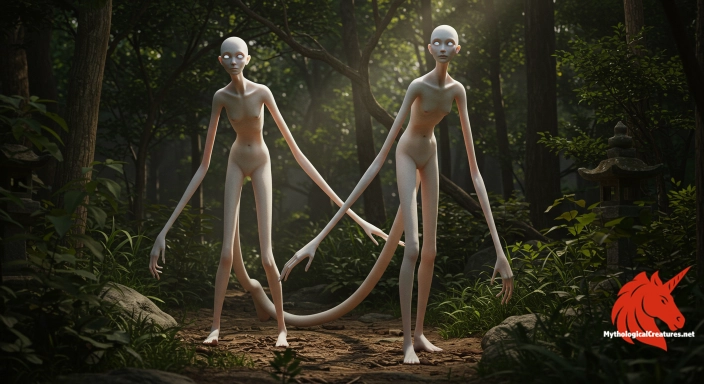
Dare to Meet the Ashinagatenaga....
The Mythological Creatures Book Series
Yokai, Greek, Norse, Egyptian & Chinese. Five illustrated field guides to the creatures the old stories either warned or told you about.




Curated by the Mythological Creatures Team
Series editor: Mythological Creatures Directory
Primary desk: Asian & Pacific Myth Cycles Desk
(rev. November 2025)