
Kakyen: Kakyen is a legendary man-eating bird from Meitei mythology, renowned as the king of the birds.
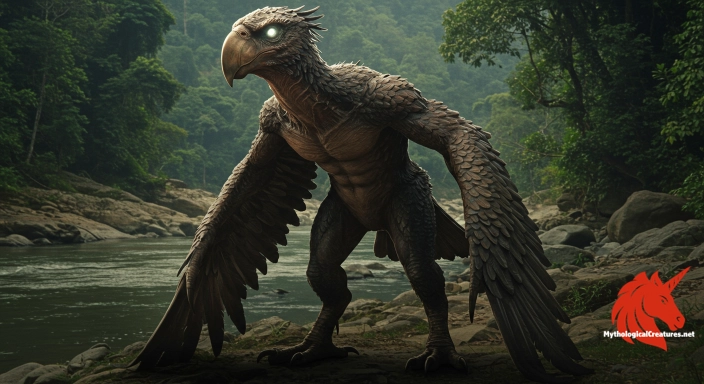
Kakyen
Kakyen - Kakyen is a culturally significant figure embodying the formidable and chaotic elements of Meitei folklore, symbolizing both a scavenger and a ruler among birds.
Origins & First Encounters
The enigmatic Kakyen looms large in the mythological tapestry of Manipur, where its presence is woven into the fabric of ancient lore and heroic exploits. Born from a rich cultural milieu, this formidable man‐eating bird emerged as a symbol of both awe and terror among the people of Kangleipak. With roots tracing back to early Meitei traditions, Kakyen is celebrated for its dual role as a fierce predator and an unlikely servant to the illustrious King Kangba. Its narrative is laced with dramatic encounters, most notably the fierce battles with the Meitei princes Taothingmang and Yoimongba, which have enthralled listeners for generations. The creature’s actions, including the consumption of discarded bodies along riverbanks, hint at a complex symbolism that blends death with a form of ritual purification. Its storied exploits encapsulate a time when the boundaries between the natural and supernatural were thought to be fluid and ever‐influential. Over time, the legend of Kakyen has grown in both scale and depth, reflecting transitions in cultural attitudes and artistic expression. The bird’s mythic status has been preserved through oral tradition, art, and literary documentation, ensuring its enduring influence on regional identity. As a bridge between the mortal and the mythic, Kakyen continues to challenge and inspire the imagination. Its multifaceted legacy remains an essential chapter in the annals of Meitei history and myth.
Source Texts & Tale Variants
The story of Kakyen finds its roots in an array of ancient texts and oral traditions treasured by the people of Manipur. One of the primary literary sources, the Sakok Lamlen Ahanba, extols the creature as the undisputed king of the birds, bestowing upon it the regal title of “Thilpai Ngamba Thinungkhak.” This appellation not only distinguishes Kakyen from its avian counterparts but also highlights its elevated status within the mythic hierarchy. The Tutenglon text further chronicles the valorous deeds of the Meitei princes Yoimongba and Taothingmang, situating the bird within a broader narrative of heroism and conflict. Alternative versions of the tale, preserved through centuries of oral tradition, often embellish Kakyen’s attributes and roles, thereby adding layers of complexity to its identity. These variations provide insight into the shifting cultural perceptions that have surrounded the creature over time. The interplay between scribal records and folk narration has ensured that both the grandeur and the menace of Kakyen are deeply etched in local memory. Each source, whether written or spoken, contributes unique nuances that have enriched the legendary status of the bird. The convergence of these diverse narratives underlines the dynamic nature of Meitei myth-making. In essence, the collected sources form a mosaic, each piece essential in understanding the full scope of Kakyen’s enduring legend.
Form & Powers
Visualising Kakyen, one is met with the image of a colossal bird whose physical form exudes both majesty and menace. Its expansive wingspan, often depicted in traditional art as vast enough to blot out the sun, emphasises its otherworldly nature. The creature’s plumage, shrouded in deep, earthy tones interspersed with flashes of iridescence, hints at a supernatural brilliance hidden within rugged textures. A sharply curved beak, designed for both tearing flesh and symbolising its predatory essence, dominates its facial features. Robust, talon-like feet complete its imposing anatomy, marking it as a hunter capable of swift, decisive strikes. Local accounts often speak of mesmerising eyes that seem to burn with an inner intensity, conveying wisdom as well as intrinsic danger. Although specific measurements may vary among accounts, Kakyen is consistently portrayed as towering over typical avian species, with size itself becoming a symbol of its mythic power. The interplay of shadow and light across its form is frequently celebrated in regional iconography, infusing its image with an artful tension between beauty and terror. Each anatomical detail is meticulously rendered in folklore, transforming the bird into an icon that is both feared and revered. These vivid descriptions, passed down through the generations, ensure that every portrayal of Kakyen remains a testament to ancient artistic imagination and symbolic might.
Regional Faces
Within the diverse cultural landscape of Manipur, Kakyen’s myth is subject to a variety of regional interpretations that underscore its multifaceted character. In some local retellings, the bird emerges not solely as a ruthless predator but also as a sacred guardian, its presence intertwined with the spiritual well‐being of specific communities. Different villages have adapted the narrative to reflect local environmental features, with the river near Heibok Ching often serving as a central stage for its legendary exploits. In these regions, Kakyen is sometimes viewed as a celestial force, a messenger whose arrival presages both calamity and renewal. The creature’s depiction shifts subtly between communities, at times being revered as a protector against malevolent spirits and at other moments feared as an omen of impending doom. Folktales passed down orally contribute unique local flavours, enriching the overarching myth with context-specific symbolism and ritual significance. The blend of local geography and cultural practices has fostered an environment where the myth of Kakyen evolves with each retelling. Such variations demonstrate the flexibility of myth and the capacity of traditional narratives to mirror regional identities. Ultimately, the regional adaptations of Kakyen illustrate a dynamic interplay between history, environment, and community values. They also serve as a reminder of how mythology can be tailored to encapsulate the unique spirit of different locales within a broader cultural framework.
Cultural Parallels
Across the world, many cultures have celebrated the myth of a giant, formidable bird, placing Kakyen within a global tradition of awe-inspiring avian legends. The colossal Roc of Arabian tales, for instance, shares a kinship with Kakyen in its depiction as an immense bird capable of challenging the natural order. Similarly, the legendary elements found in the figure of the griffin evoke a parallel sense of power and majesty that resonates with the Kakyen myth. In South Asian traditions, the mighty Garuda serves a dual role as both protector and destroyer, mirroring the complex symbolism embedded in the Kakyen narrative. Cross-cultural comparisons reveal that these legendary birds often embody nature's unpredictability and the eternal struggle between order and chaos. The use of avian imagery as a conduit for exploring themes of royalty, mortality, and the divine is a recurring motif that ties Kakyen to a broader mythological context. Just as the Roc and similar creatures capture the imagination, Kakyen stands as a testament to the universal human fascination with the extraordinary. The interplay of fear and reverence in these legends underscores a shared cultural need to personify the forces of nature in larger-than-life forms. Moreover, these cross-cultural narratives have enriched each other over time, feeding into a collective myth that transcends geographical boundaries. In comparing these myths, one observes that Kakyen, while distinct in its regional colour, echoes a timeless archetype found in the global realm of legendary creatures.
Legacy & Modern Evolution
The enduring legacy of Kakyen is evident in the way its myth has transitioned from ancient lore into modern cultural symbolism. Initially portrayed in traditional texts as a fearsome beast whose very presence portended both destruction and divine retribution, the bird’s image has gradually evolved over the centuries. Modern interpretations tend to view Kakyen through a more nuanced lens, recognising it as a complex emblem of transformation and resilience rather than merely a harbinger of doom. Contemporary artists and writers have embraced its myth, often reimagining the bird as a bridge between the mortal world and an abstract realm of potent symbolism. The creature’s narrative has also found its reflection in local festivals, theatrical performances, and community art, ensuring that its legend remains vibrantly alive. Scholars and cultural custodians continue to re-evaluate historical manuscripts, unearthing layers of meaning that speak to the interplay of history, myth, and identity. This evolution in portrayal has mirrored broader societal shifts, as communities seek to reconcile traditional myth with modern realities. Even as scientific progress reshapes our understanding of the natural world, the myth of Kakyen endures as a metaphor for the untamed and unpredictable forces of life. Its story, rich in allegory and mystery, continues to inspire a sense of wonder and introspection among contemporary audiences. Thus, Kakyen remains a living testament to the power of myth to adapt, survive, and illuminate the cultural heritage of Manipur.
Interesting Fact
Kakyen is uniquely celebrated in Meitei literature, with texts like Tutenglon and Sakok Lamlen Ahanba immortalising its legend as both a feared predator and the crowned ruler of birds.
Reach myth fans
Connect your myth-driven brand with this audience
Our readers are writers, educators, gamers, and collectors who care about mythology. Enquire about a limited sponsor placement on creature pages.
Enquire about sponsorshipQuick Creature Info
Origin:
Features:
Associations:
Our Mythic Legendary Rating:

Also Sometimes Known As:
Habitat:
Supernatural Powers:
Physical Attributes:
Abilities:
Behavior:
Lore:
References
Discover Another Mythical Legend You May Not Have Heard Of?
Uncover the mysteries of ancient folklore and expand your knowledge of legendary beings from cultures around the world.
Dare to Meet the Thangching....

Curated by the Mythological Creatures Team
Series editor: Mythological Creatures Directory
Primary desk: Asian & Pacific Myth Cycles Desk
(rev. November 2025)