
Thangching: Thangching, also known as Thangjing, is a primordial deity in Sanamahism and the ruling guardian of the Moirang dynasty in Manipur.
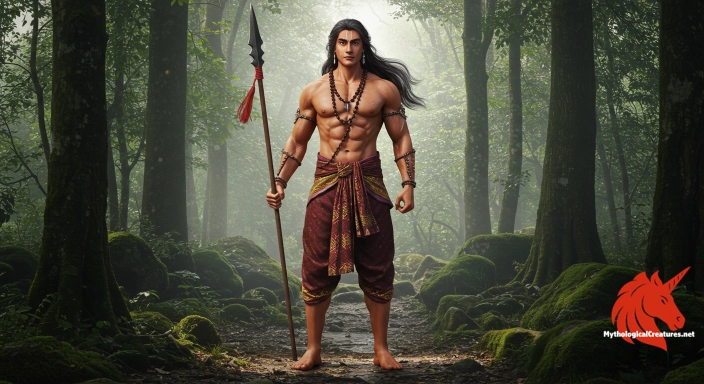
Thangching
Thangching - Central to the indigenous Sanamahism in Manipur, Thangching is revered as a sanctified protector of the south-western direction and a key figure in the cultural heritage of the Moirang dynasty.
Origins & First Encounters
Thangching, also known as Thangjing, occupies a central place within the indigenous spiritual landscape of Manipur as a primordial deity in Sanamahism. This ancient god is intricately linked with the Moirang dynasty, which flourished under his divine auspices. The deity is celebrated as the ruling spirit over the sacred Loktak Lake, a storied water body that is both a natural wonder and a cultural symbol. His reverence as one of the four cardinal Umang Lais underscores his role in overseeing specific spatial and cosmic realms, particularly the south-western direction. Historical narratives and oral traditions suggest that Thangching has been venerated for centuries, his influence woven into the tapestry of local rituals and communal memory. The myths surrounding him have been passed down through generations, each retelling reinforcing his connection to nature and governance. As a divine figure, Thangching is invoked in prayers and ceremonies that aspire to secure fertility, prosperity and environmental harmony. His early attestations can be traced to ancient manuscripts and traditional performances, which continue to inspire both locals and scholars of mythology. The fusion of myth and nature in his persona presents him as both a nurturing provider and a formidable force of natural order.
Source Texts & Tale Variants
The primary bodies of literature celebrating Thangching arise from a rich tradition of oral and written records inherent to Sanamahism. Ancient manuscripts, temple inscriptions and epic ballads of the Moirang region recount tales of his mighty deeds and divine interventions. Local puyas and folklore manuscripts, written in traditional Meitei script, compile narratives that offering insight into his origins and his role as a guardian deity. Diverse story variants exist, with some traditions emphasising his nurturing aspects and others highlighting his capacity to command nature. These ancient texts are complemented by ritual songs and chants performed during seasonal festivals and temple ceremonies. Over time, layered interpretations have enriched these primary sources, reflecting both the mystical and pragmatic facets of his character. The Thangching Temple and the sacred Thangjing Peak provide tangible sites where myths are celebrated and renewed with every generation. Although many of the records have been preserved through oral tradition, they continue to be influential sources for understanding the regional cosmology and cultural identity of Manipur.
Form & Powers
Visual depictions of Thangching encapsulate an aura of divine regality and natural splendour. Traditional iconography often shows him with an imposing stature, symbolising the robustness and enduring spirit of nature. His imagery is typically adorned with elaborate regalia that mirrors the fertile landscapes and mythic power of Loktak Lake. Carvings and paintings found in his temple often convey serene, yet commanding facial expressions that resonate with wisdom and authority. The deity is sometimes portrayed with elements of both human and natural forms, integrating motifs of flora, fauna and water. Variations in his depictions exist, with some local interpretations emphasising a more anthropomorphic appearance while others render him as a majestic, abstract force of nature. Artistic renditions from different periods illustrate subtle shifts in style, sometimes incorporating symbols of the Moirang dynasty. These representations also include motifs that signify his role as a protector and benefactor of the land, echoing the interplay between the divine and the natural world.
Regional Faces
Across varying regions of Manipur, Thangching takes on a spectrum of roles that reflect distinct local traditions and cultural priorities. In some areas, his presence is intimately connected with the cycles of agriculture and the seasonal rhythms of the Loktak Lake. Communities in the vicinity of the Thangjing Peak often celebrate annual festivals that directly invoke his blessings for bountiful harvests and environmental balance. His persona may be adapted by local priests and shamans to align with the specific spiritual needs of each community, resulting in nuanced ritual practices and iconographic differences. Rural interpretations emphasise his role as the guardian of water bodies and the protector of communal natural resources. Meanwhile, urban devotees may focus on his symbolic associations with resilience and renewal in the face of modern challenges. The diversity of his cult across regions illustrates the dynamic interplay between local tradition and pan-Manipuri identity. Such regional variations, while echoing a common mythological framework, reinforce the adaptability of Thangching's character to differing social and ecological contexts.
Cultural Parallels
When examined alongside similar deities across neighboring cultural landscapes, Thangching’s attributes reveal fascinating parallels with nature guardians in various mythologies. His role as a protector of water bodies and fertility resonates with water deities found in Southeast Asian and South Asian traditions. Just as certain river gods or nature spirits in other cultures serve as custodians of the natural world, Thangching embodies the nurturing as well as potentially tempestuous forces of nature. Comparisons can be drawn with other cardinal guardians who oversee specific cosmic directions, emphasising a shared human inclination to delineate sacred spaces. His dual identity as both a benevolent provider and a formidable sentinel mirrors the composite nature of mythological deities in many indigenous religious systems. Cross-cultural connections also emerge in the artistic representations of nature deities, where symbolic regalia and natural motifs are common threads. Such comparative analysis not only underscores the widespread veneration of nature but also highlights the unique cultural nuances embedded within Manipur’s Sanamahism. The study of these parallels enriches our understanding of Thangching as both a local and a trans-cultural figure of enduring significance.
Legacy & Modern Evolution
The historical evolution of Thangching reveals a profound adaptation of his mythos to changing cultural and environmental landscapes. Over the centuries, the ways in which he is visualised and celebrated have been shaped by both local socio-political shifts and broader religious renaissances in the region. His ancient narratives have come to symbolize a complex interplay of tradition and modernity in Manipur, where rituals at the Thangching Temple continue to inspire devotion and cultural pride. Contemporary artistic expressions, ranging from traditional dance to modern visual art, reinterpret his image to reflect current societal values and ecological concerns. Modern festivals and temple ceremonies serve as vibrant platforms where his storied past is reinvigorated to address issues of environmental conservation and cultural continuity. The Thangjing Peak, as a natural landmark, remains a revered pilgrimage site, attracting both spiritual seekers and cultural historians. In academic and artistic circles alike, Thangching is explored as a bridge between ancient myth and present-day identity. His enduring legacy lies in his capacity to symbolise not only the mystical forces of nature but also the enduring spirit of the Manipuri people in a rapidly changing world.
Interesting Fact
Thangching's association with the natural environment, particularly Loktak Lake, underscores a unique blend of spirituality and ecology in Manipuri culture.
Support the directory
Promote your myth project and fund more research
Sponsor placements help keep this directory growing and free to use while giving your work a focused, relevant audience.
Learn how sponsorship worksQuick Creature Info
Features:
Associations:
Our Mythic Legendary Rating:

Also Sometimes Known As:
Habitat:
Supernatural Powers:
Abilities:
Behavior:
Lore:
Related Creatures, Tales or Lore
- KKoubru
- SSanamahi
- VVaruna
References
Discover Another Mythical Legend You May Not Have Heard Of?
Uncover the mysteries of ancient folklore and expand your knowledge of legendary beings from cultures around the world.
Dare to Meet the Hine-nui-te-pō....
Curated by the Mythological Creatures Team
Series editor: Mythological Creatures Directory
Primary desk: Asian & Pacific Myth Cycles Desk
(rev. November 2025)