
Kerubiel: Kerubiel, also known as Cherubiel or Cerubiel, is an exalted angel from the apocryphal Book of Enoch, celebrated as the principal regent of the Cherubim.
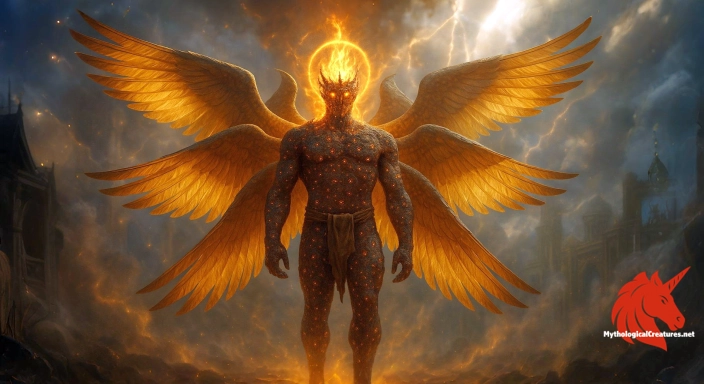
Kerubiel
Kerubiel - A highly exalted angel who embodies divine fire and authority; his appearance symbolizes the glory and power of God.
Origins & First Encounters
Kerubiel emerges as one of the most majestic entities in celestial lore, embodying both the awe-inspiring power and the enigmatic beauty of divine fire. Born from ancient mystical traditions and first attested in the apocryphal Book of Enoch, his origins are intertwined with the earliest conceptions of the heavenly host. His name, evoking "The Flames Which Dance Around the Throne of God," highlights a character that is as radiant as it is formidable. Steeped in the fervour of early Judaic mysticism, he has been revered not only as a guardian of the cherubim but also as a symbol of divine retribution and sanctity. The narratives surrounding Kerubiel bridge the gap between spiritual authority and elemental spectacle, inspiring both fear and admiration among the faithful. His commanding presence, depicted as towering across the seven heavens, reinforces his role as an overseer of cosmic order. Over centuries, his character has been nurtured through oral traditions and esoteric teachings, ensuring that his legend endures beyond the confines of written scripture. His dual embodiment of beauty and dread illustrates the timeless tension between creation and destruction in celestial mythology. In the tapestry of myth, Kerubiel remains an emblem of the divine fire that both illuminates and consumes.
Source Texts & Tale Variants
The primary source of Kerubiel’s mythic narrative is the apocryphal Book of Enoch, where his celestial duties and fiery presence are vividly detailed. This ancient text not only outlines his regency over the cherubim but also embeds him within a broader framework of heavenly administration. Subsequent pseudepigraphal works and commentaries have expanded upon these accounts, providing varied depictions of his divine attributes. Multiple versions in these texts illustrate him as a being whose every utterance is accompanied by bursts of elemental fire, reinforcing his association with cataclysmic forces. Oral traditions further enriched his story, infusing local nuances into his representation as a protector and arbiter of cosmic justice. The enduring nature of these mythic sources has allowed scholars and mystics to explore his character in both theological debate and artistic endeavours. Some narratives emphasise his otherworldly beauty and transcendent power, while others highlight his role as a harbinger of divine will. The layers of tradition found in these texts mirror the complexity of early angelic lore, where celestial hierarchies and elemental symbolism intersect. Together, these diverse sources form a mosaic that underpins Kerubiel’s lasting imprint in mythological scholarship.
Form & Powers
Kerubiel’s physical manifestation is as striking as it is otherworldly, described with a level of detail that borders on the surreal. Standing seven heavens tall, his form is comprised entirely of burning coals, evoking intense imagery of a living furnace. Thousands of eyes are scattered across his body, each one a window into the omniscience that his divine role demands. His face, a dynamic tapestry of flickering flames, exudes both warmth and terrifying intensity. Each spark from his eyes burns with the light of celestial fire, while his lashes, likened to bolts of lightning, emphasise his connection to nature’s raw energy. The presence of expansive, all-encompassing wings further amplifies his otherworldly allure, wrapping him in a shroud of mystic splendour. Every word he utters is said to unleash cascades of fire, linking his very speech with the power to transform and annihilate. Thunder reverberates and lightning arcs around him, as if the very heavens respond to his might. The extraordinary details of his anatomy, from his fiery visage to the elemental phenomena that accompany him, create a figure both formidable and transcendent.
Regional Faces
While the core descriptions of Kerubiel remain rooted in apocryphal accounts, regional traditions tend to colour his image with local artistic and theological interpretations. In the realms of ancient Judaic mysticism, he is celebrated primarily as an embodiment of divine fire and retributive justice, with his role as regent of the cherubim taking centre stage. In certain Christian traditions, especially those in Byzantine and medieval Europe, his depictions merge with broader cherubic iconography, sometimes even softening aspects of his fierce appearance to symbolise protective guardianship. Middle Eastern artistic renditions occasionally incorporate subtle motifs of local cosmic symbolism, underscoring the interplay between divine wrath and benevolence. In contrast, some Eastern traditions reinterpret his celestial attributes in line with regional elemental deities, blending his fire-based ferocity with themes of purification and renewal. This mosaic of regional adaptations illustrates how his myth transcends cultural boundaries while still retaining core attributes such as overwhelming brilliance and cosmic authority. The interplay of light, flame, and divine energy in regional artworks speaks to a shared human fascination with the metaphysical unknown. In each culture, Kerubiel is both reimagined and revered, ensuring his myth remains vibrant and multifaceted. These variations highlight the universal quest to understand and depict the ineffable power of the heavens.
Cultural Parallels
The myth of Kerubiel invites comparisons with a host of other mythological figures who too embody the potency of divine fire and celestial authority. Similar to the multi-winged cherubim depicted in the Hebrew Bible, Kerubiel’s image is interwoven with the symbolic language of light, flame, and omniscience. In parallel, some Vedic deities also represent fiery transformation and cosmic order, offering a cross-cultural echo of his elemental might. Islamic mystical traditions offer angelic beings whose roles and appearances mirror his blend of beauty and destructive power, highlighting the shared motif of divine guardianship across different faiths. Other celestial guardians in various cultures, like the Zoroastrian fire spirits, reveal an enduring human fascination with harnessing the power of fire as both a creative and destructive force. The constant interplay of natural phenomena such as lightning and earthquakes in Kerubiel’s narrative finds resonance in numerous mythologies where nature and divinity intersect. These comparative reflections not only underline the thematic universality of a fiery protector but also enrich the deeper understanding of mystical hierarchies. In exploring these analogues, one finds that the conceptual convergence around elements like fire and light speaks to a broader mythic language. Such cross-cultural parallels underscore a universal reverence for the powerful, transformative energy that a being like Kerubiel symbolises.
Legacy & Modern Evolution
The image of Kerubiel has evolved dramatically over the centuries, transitioning from ancient apocryphal texts to modern popular culture. In his early mentions, he epitomised the incomprehensible majesty and terror of divine fire, a vision that struck both awe and fear into the hearts of early believers. Over time, artistic renderings in medieval illuminated manuscripts and religious icons transformed him into a compassionate yet formidable guardian of cosmic order. The dynamism of his narrative, blending elements of wrath and protection, has allowed modern artists and writers to reinterpret his story within the frameworks of fantasy and speculative fiction. Contemporary portrayals often highlight his dual nature as both a fierce arbiter of divine will and a beacon of transcendent wisdom. His legacy endures in the form of visual symbolism; modern depictions continue to invoke his elemental powers through innovative artistic media and digital recreations. As theological perspectives shift, Kerubiel has come to represent a broader contemplation of the interplay between destruction and renewal. The myth has also inspired academic debates and cultural discussions, merging insights from ancient mysticism with modern philosophical inquiries. Ultimately, his continued presence in literature, art, and spiritual studies speaks to the timeless allure of a figure who bridges the realms of the divine and the elemental.
Interesting Fact
Kerubiel's unique form, comprised entirely of burning coals and adorned with thousands of eyes, sets him apart as a vivid embodiment of divine fire and eternal light.
For myth educators and toolmakers
Built a resource for mythology learners?
If you offer courses, teaching tools, or research platforms focused on myth and folklore, consider a discrete placement on our reference pages.
Introduce your resourceQuick Creature Info
Associations:
Our Mythic Legendary Rating:

Also Sometimes Known As:
Habitat:
Supernatural Powers:
Physical Attributes:
Abilities:
Behavior:
Lore:
Related Creatures, Tales or Lore
- SSeraphiel
- MMetatron
- UUriel
References
Discover Another Mythical Legend You May Not Have Heard Of?
Uncover the mysteries of ancient folklore and expand your knowledge of legendary beings from cultures around the world.
Dare to Meet the Vine....
-4dd8a206-fd46-4155-8455-0ff6227ee778_small.webp "Depiction of Vine")
Curated by the Mythological Creatures Team
Series editor: Mythological Creatures Directory
Primary desk: Hellenic & Ancient Mediterranean Desk
(rev. November 2025)