
Kesari: Kesari is a male vanara from Hindu mythology, known primarily as the father of Hanuman.
-98321035-ccec-4efe-a7ea-f171df7717e1_small.webp "Kesari - Kesari's legacy is significant as it underscores the divine lineage of Hanuman and reflects the valor and virtues attributed to the vanara race in Hindu mythology.")
Kesari
Kesari - Kesari's legacy is significant as it underscores the divine lineage of Hanuman and reflects the valor and virtues attributed to the vanara race in Hindu mythology.
Origins & First Encounters
Kesari emerges in the rich tapestry of Hindu mythology as a revered vanara whose legacy is closely interwoven with the epic narratives of the Ramayana. His role as the father of Hanuman and the husband of Anjana has cemented his place among the mythic progenitors of heroic tradition. Born into a lineage of forest-dwelling warriors, he is celebrated not just for his martial prowess but also for his unwavering sense of duty and honour. Hailing from a time when divine interventions and mortal endeavours coalesced, his tale is one of strength, loyalty, and the fulfilment of noble destiny. Ancient oral traditions and regional legends alike paint him as a paragon of virtue whose life set the stage for the extraordinary feats of his son. His origins, shrouded partly in mystery, are often depicted as being blessed by celestial forces, imbuing him with qualities that transcend the mortal realm. The enduring cultural resonance of his character has guaranteed that even minor mentions become symbolic threads in the grand narrative of devotion and heroism. In the shifting sands of myth, Kesari stands as a testament to a bygone era of epic adventures and divine ancestry. His legacy continues to inspire both literary retellings and visual artworks, each celebrating the blend of might and benevolence that defined his character. The ancient spirit of his contribution remains a cherished part of Hindu mythological tradition, embodying the timeless virtues of courage and fidelity.
Source Texts & Tale Variants
The foundational mentions of Kesari are found in a wide array of ancient texts where he is noted chiefly as the progenitor of one of Hinduism’s most illustrious heroes. Though direct references in seminal texts like the Ramayana might be sparse, later retellings and regional manuscripts have expanded his story with rich narrative detail. Folklore and oral tradition have elevated his myth, embedding him within the broader context of divine and heroic ancestry. Multiple versions of his tale are circulated in local ballads and temple lore, each providing subtle variations that emphasise different aspects of his character. Some accounts detail his own acts of bravery and moral fortitude, offering insights into his heroic disposition and the ethical ideals he embodied. The tradition of passing down his story through generations has allowed his character to evolve, with minstrels and storytellers embellishing his feats to inspire their audiences. Despite the fragmentary nature of early attestations, regional compendiums have played a vital role in preserving and enriching his myth. The lyrical and dramatic retellings found in various parts of India provide a canvas on which his legacy is continually reimagined. His narrative thus serves as a connective thread between the ancient sacred texts and the dynamic, living traditions of later eras. Each version, while varied in details, consistently upholds his stature as a venerable ancestor whose life was integral to the divine order.
Form & Powers
In artistic depictions, Kesari is portrayed as a robust and muscular vanara whose wiry strength speaks to both his lineage and his warrior spirit. His physique combines the agility of a nimble primate with the commendable sturdiness of a seasoned fighter, reflecting the dual nature of his heritage. Detailed representations often highlight his well-defined muscles, broad shoulders, and lithe yet powerful limbs that suggest an extraordinary prowess in battle. His facial features, imbued with both sharp determination and gentle wisdom, set him apart from ordinary mortals. The traditional imagery sometimes includes a gleaming coat of fur, rendered in hues that range from deep bronze to a vibrant russet, which accentuates his dynamic presence. Intricate illustrations and temple carvings have captured the fluid line of his posture and the poised readiness evident in every gesture. Visual renditions frequently show him adorned with modest ornaments that symbolise his status and the martial virtues he upholds. The balance between ferocity and serenity in his countenance speaks of a character refined by years of both struggle and devotion. His eyes, often depicted as bright and perceptive, seem to mirror an inner resolve that hints at the extraordinary destiny that awaited his lineage. The anatomical precision in his portrayals underlines the blend of natural strength and divine blessing that defines his overall appearance.
Regional Faces
Regional narratives offer a delightful variety of interpretations of Kesari, often tailoring his attributes to local cultural ideals and historical contexts. In southern traditions, for instance, his character is frequently celebrated for his martial attributes and the disciplined life of a vanara warrior. Northern retellings may place a greater emphasis on his role as the patriarch of a blessed lineage, highlighting the moral and familial virtues he exemplifies. In some locales, the story of Kesari is interlaced with the spiritual landscape, linking him to sacred groves, ancient temples, and rituals that honour the natural world. The diverse depictions extend beyond mere physical descriptions to include symbolic associations with fertility, protection, and cosmic balance. Local festivals sometimes feature dramatic enactments of his exploits, wherein dancers and actors illustrate his heroic deeds and unwavering resolve. Temples in various regions incorporate his story into bas-reliefs and murals, each interpretation subtly distinct in its stylistic and narrative nuances. As communities passed down his myths through generations, the specifics of his adventures and virtues were adaptively highlighted to resonate with regional values and spiritual aspirations. The multiplicity of these stories contributes to a vibrant mosaic that not only celebrates his myth but also adapts it to the evolving cultural milieu. In each region, Kesari transforms from a solitary mythic figure to a symbol of collective identity and ancestral pride.
Cultural Parallels
The myth of Kesari finds fascinating parallels in the legends of other cultures, where the archetype of a noble progenitor endowed with divine strength appears time and again. His narrative as the forebear of a great hero echoes the lineage motifs found in various mythologies, emphasising the transmission of heroic qualities from one generation to the next. Similar to the illustrious ancestors in Greek and Mesopotamian myths, Kesari’s story is imbued with elements of divine intervention that elevate his mortal achievements to a transcendent level. Like the celebrated heroes of East Asian lore, such as figures in Chinese epic tales, he embodies both the ferocity of the warrior and the benevolence of a paternal guide. In comparative terms, his character represents the universal theme of noble origin, not only in physical form but also in the ethical and spiritual values he imparts. While other traditions might emphasise the trickster or mischievous aspects of non-human deities, Kesari is portrayed with a dignified simplicity that underscores moral rectitude and steadfast loyalty. The symbiotic relationship between his persona and that of his famous offspring mirrors a broader cultural motif found across continents: the revered power of heredity in the mythic narrative. His legacy invites scholars and enthusiasts alike to explore commonalities between disparate cultural traditions that celebrate the grandeur of ancestral heroes. In doing so, his myth assists in drawing insightful comparisons between the symbolism embedded in varied religious and cultural practices. Ultimately, the comparative analysis of Kesari’s myth enriches the global tapestry of heroic legends by highlighting shared human values and the universal appeal of noble origin stories.
Legacy & Modern Evolution
The evolution of Kesari’s depiction over time illustrates a dynamic interplay between ancient narrative motifs and contemporary cultural reinterpretations. Once a relatively understated figure in primary texts, his legacy has burgeoned through adaptive retellings that cast him as a pillar of ancestral fortitude and moral integrity. Modern portrayals often integrate his image into diverse media, from classical art and temple iconography to vibrant contemporary dance and theatrical productions. His enduring symbolism finds new relevance as modern audiences rediscover the timeless virtues of bravery, discipline, and devotion that he represents. In the evolving landscape of myth and popular culture, his character is sometimes invoked to comment on themes of heritage, duty, and the importance of ancestral wisdom. Festivals, local performances, and artistic exhibitions dedicated to the vanara tradition often highlight his contributions as integral to the narrative of divine lineage leading to Hanuman. The reinterpretation of his myth serves both as a homage to ancient religious traditions and a means of instilling cultural pride among devotees. His narrative has transcended centuries, inspiring reinterpretations that resonate with contemporary ideals of strength and resilience. In modern scholarship and artistic endeavours, Kesari’s image continues to symbolize the enduring power of myth to inform and uplift society. Today, his legacy remains a vital thread in the intricate fabric of Hindu mythology, connecting the storied past with the vibrant present.
Interesting Fact
An interesting aspect of Kesari's legacy is his direct contribution to the lineage of Hanuman, linking mortal valor with divine heritage in Hindu mythology.
For serious mythcraft
Your project belongs among the legends
If your work deepens how people understand, play with, or teach mythology, a sponsor placement here keeps it in front of the right readers all year.
Submit a sponsorship enquiryQuick Creature Info
Features:
Our Mythic Legendary Rating:

Habitat:
Physical Attributes:
Abilities:
Lore:
References
Discover Another Mythical Legend You May Not Have Heard Of?
Uncover the mysteries of ancient folklore and expand your knowledge of legendary beings from cultures around the world.
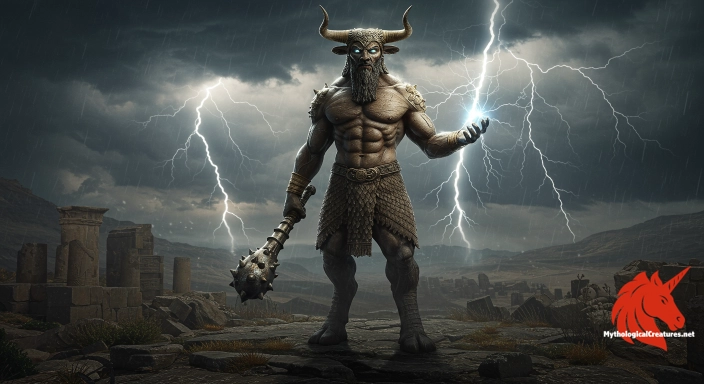
Dare to Meet the Hadad....
Curated by the Mythological Creatures Team
Series editor: Mythological Creatures Directory
Primary desk: Asian & Pacific Myth Cycles Desk
(rev. November 2025)