
Keukegen: Keukegen is a mysterious yokai depicted in Toriyama Sekien's Konjaku Hyakki Shūi.
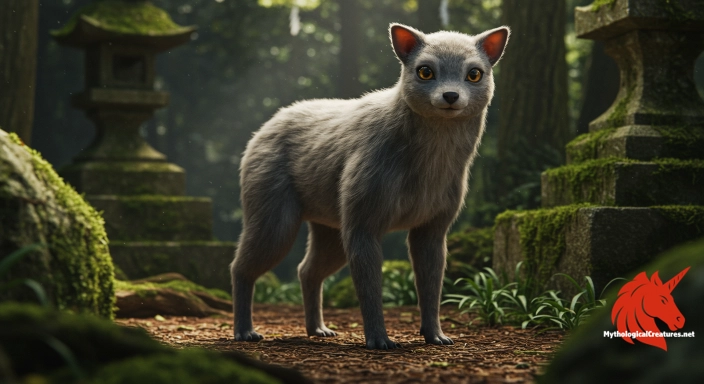
Keukegen
Keukegen - Represents the enigmatic aspect of yokai, reflecting the ephemeral and elusive nature of supernatural phenomena in Edo period Japan.
Origins & First Encounters
Keukegen emerges from the vibrant tapestry of Edo period folklore, a mysterious figure whose identity is forever entwined with the supernatural iconography of Japan. Its very name, meaning 'fluffy hair appearance', conjures an image that is as whimsical as it is elusive, suggesting a nature both unfathomable and strangely familiar. First recorded in Toriyama Sekien’s celebrated Konjaku Hyakki Shōi, Keukegen was introduced as part of a larger compendium of yōkai that challenged the boundaries between the natural and the uncanny. This early depiction set the stage for its enduring presence in the cultural imagination, inspiring both awe and scholarly curiosity. The creature’s ambiguous traits reflect a tradition of visual mystification, where physical appearance becomes a metaphor for the enigmatic forces of nature.
Beyond its initial portrayal, Keukegen has gradually acquired layers of symbolic meaning, standing as a testament to the era’s fascination with the surreal. Its image, rich with interpretative potential, has been embraced by storytellers and artists alike, each seeking to unlock the secrets hinted at by its untamed hair. The creature is emblematic of a period in Japanese history when the boundary between the seen and unseen was mercurial and mutable. Cultural narratives surrounding Keukegen evoke a sense of wonder and caution, reminding audiences that beauty and mystery often reside in the unexpected. In this way, the creature not only represents a relic of traditional myth but also continues to invite reinterpretation in diverse artistic forms.
Source Texts & Tale Variants
Keukegen’s primary source is the seminal work Konjaku Hyakki Shōi by Toriyama Sekien, a compendium that has long served as the foundation for many modern interpretations of yōkai. Despite the brevity of its original description, the illustration and scant commentary have provided fertile ground for later folklore to expand upon. Early Edo period manuscripts and later commentaries occasionally revisit the enigmatic character of Keukegen, hinting at roles that range from whimsical benignity to subtle omens. A sparse narrative accompanied the original depiction, leaving room for regional oral traditions to infuse their own creative details. In various retellings, the creature’s fleeting presence in the literary record allowed for an evolution of its role within local mythologies. Some storytellers have reimagined its abilities, attributing to it an affinity for manipulating natural elements or inspiring unexpected mischief. The minimalistic approach taken by Sekien has encouraged successive generations to explore and elaborate on its character. As a result, while definitive texts remain limited, the layers of anecdote and reinterpretation continue to enrich Keukegen’s mythos. These evolving narrative threads illustrate how a sparse original account can blossom into a complex and multifaceted folklore tradition. Even now, the modest mentions in classical texts serve as a catalyst for imaginative reinterpretation in contemporary studies.
The fragmentary nature of these early accounts has allowed local legends to creatively adapt the story, with variations appearing in regional literature that emphasise different aspects of its mysterious nature. This adaptability has ensured that Keukegen remains a dynamic presence within the broader landscape of Japanese myth.
Form & Powers
The visual impression of Keukegen is dominated by an abundance of untamed, flowing hair that almost seems to have a will of its own. The creature is often depicted with a vague, humanoid silhouette that is partially obscured by this luxuriant tuft, creating an enigmatic interplay between form and formlessness. Its features, though only subtly hinted at, suggest eyes that may gleam with an inner mischief and an intelligence that lies hidden among its bristly locks. The hair itself is rendered in such a way that it appears both soft and wild, evoking a visual motif that is both endearing and slightly eerie. Artists of the period infused the illustration with an ephemeral quality, making it seem as though the hair is constantly in motion, caught in an eternal dance with the wind.
Further descriptions, drawn from subsequent artistic reinterpretations, propose that the creature’s size may be modest yet its presence remains unmistakably forceful. Some versions imply a delicate balance of human and animalistic traits, where precise facial details dissolve into a mass of tangled fibres. The contrast between the clarity of the few distinct features and the overwhelming cascade of hair creates an impression of controlled chaos. This layered depiction not only serves as a hallmark of its name but also reinforces the idea of nature’s unpredictable beauty. Overall, the physical manifestation of Keukegen stands as a visual allegory for the wild, unkempt forces that defy neat categorisation.
Regional Faces
Across Japan, Keukegen has been reimagined through a plethora of local traditions, each contributing unique nuances to its character. In certain rural villages, it is celebrated not merely as a mischief-maker but as a guardian spirit whose sudden appearance presages changes in the environment. Some local narratives assert that encountering Keukegen during the harvest season is a sign of nature’s abundance, while others caution that its presence might disrupt the delicate balance of rural life. This multiplicity of interpretations is often influenced by regional customs and the local importance of natural cycles, leading to a rich tapestry of stories surrounding the creature. The depiction of its signature flowing hair, for instance, has resonated with areas famous for their traditional textile arts, imbuing the myth with cultural symbolism specific to those communities.
In mountain regions, Keukegen is sometimes portrayed as an elusive spirit that guides travellers through treacherous terrain, hinting at a benevolent facet rarely seen in more urban legends. Conversely, coastal areas have woven its narrative into maritime superstitions, where it is deemed a harbinger of sudden changes in weather. Local festivals frequently incorporate theatrical representations of the creature, blending humour with cautionary tales that celebrate the unpredictability of nature. Such regional variations highlight the adaptability of its mythos, ensuring that while its core identity remains tethered to its original illustration, the details continue to evolve with local colour and tradition. Through these adaptations, Keukegen reflects a broader pattern of how folklore is reinterpreted to mirror the unique cultural and physical landscapes of its tellers.
Cultural Parallels
Keukegen finds itself in dialogue with a wide array of mythological creatures, both within Japan and across the world. Its elusive, shapeshifting nature is reminiscent of other yōkai whose forms are as much a metaphor for human emotion as they are depictions of natural phenomena. The creature shares thematic parallels with the European archetype of the werewolf, wherein the interplay between human and animalistic attributes evokes a sense of transformed identity. In East Asian traditions beyond Japan, there are spirits adorned with extravagant natural elements, such as the Chinese huli jing or Korean hyolmo, which similarly blur the lines between the animate and inanimate. The depiction of abundant hair, in particular, resonates with global motifs that use natural overgrowth as a symbol of wildness and uncontrollable energy. Both Keukegen and these cross-cultural figures embody the tension between order and chaos, a recurring theme in mythologies that seek to explain the unpredictable forces of the environment. This interweaving of imagery and symbolism highlights a universal fascination with the liminal spaces between humanity and nature. Such comparative analysis underscores how seemingly minor details, like a cascade of hair, can serve as powerful symbols across diverse cultural landscapes. By engaging with these parallels, Keukegen not only reinforces its unique place within Japanese folklore but also participates in a broader, global conversation about transformation and the sublime. Its ambiguous character thereby becomes a bridge linking varied mythological traditions under a shared narrative of mystique and metamorphosis.
In exploring these similarities, scholars have noted that the creature’s narrative flexibility allows it to morph and adapt, much like its ever-shifting locks, reinforcing its status as a timeless symbol of the uncanny.
Legacy & Modern Evolution
Over the centuries, the legacy of Keukegen has transitioned from its origins in a single, albeit influential, illustrated compendium to a dynamic emblem in modern cultural expressions. While its initial portrayal was brief and enigmatic, subsequent generations have embraced the creature as a muse for creative reinterpretation in art, literature, and even digital media. Contemporary depictions often accentuate its playful yet mysterious nature, merging traditional imagery with modern sensibilities. Modern graphic novels, anime, and video games have reimagined Keukegen as a quirky, enigmatic figure whose untamed hair has become a metaphor for the wild unpredictability of life. This evolution is reflective of a broader trend in Japanese culture, where historical yōkai are revitalised to address contemporary themes, from environmental uncertainty to the fluidity of personal identity. Art exhibitions and scholarly explorations continue to celebrate Keukegen as a bridge between ancient folklore and modern pop culture. As creators invest new layers of meaning into its mythos, the creature emerges not only as a relic of the past but as an ever-evolving symbol of transformation. Its journey underscores how folklore can be a living narrative, continually adapted to mirror the changing cultural landscape. In many ways, Keukegen’s enduring appeal lies in its capacity to embody both the mysterious allure of traditional myth and the innovative spirit of modern reinterpretation. Today, it stands as a reminder that even the most obscure symbols can achieve timeless resonance, capturing the imagination of audiences across generations.
The ongoing dialogue between historical depictions and contemporary artistic interpretations ensures that Keukegen remains a vibrant and relevant figure in the world of myth and legend.
Interesting Fact
An interesting observation about Keukegen is that its simplistic, evocative design has led to diverse interpretations over time, symbolising the ephemeral beauty and mystery inherent in Japanese supernatural lore.
For myth educators and toolmakers
Built a resource for mythology learners?
If you offer courses, teaching tools, or research platforms focused on myth and folklore, consider a discrete placement on our reference pages.
Introduce your resourceQuick Creature Info
Features:
Our Mythic Legendary Rating:

Also Sometimes Known As:
Habitat:
Supernatural Powers:
Physical Attributes:
Behavior:
Lore:
Related Creatures, Tales or Lore
- NNoppera-bō
- NNurarihyon
- YYurei
References
Discover Another Mythical Legend You May Not Have Heard Of?
Uncover the mysteries of ancient folklore and expand your knowledge of legendary beings from cultures around the world.
Dare to Meet the Shesha....
Curated by the Mythological Creatures Team
Series editor: Mythological Creatures Directory
Primary desk: Asian & Pacific Myth Cycles Desk
(rev. November 2025)