
Klabautermann: The Klabautermann is a benevolent water kobold from North Sea folklore, known for secretly aiding sailors and fishermen.
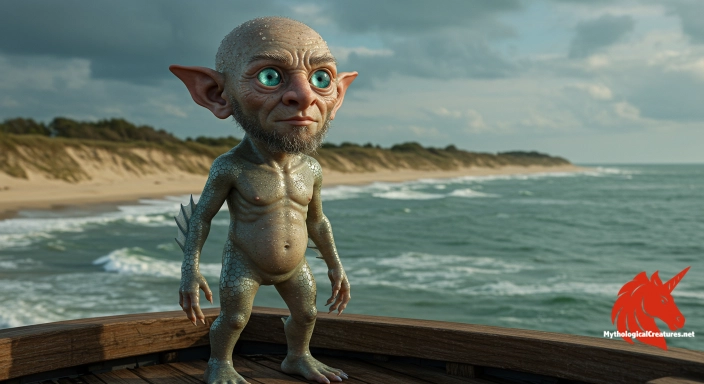
Klabautermann
Klabautermann - Considered a protective spirit by sailors, the Klabautermann is believed to ensure smooth voyages and safeguard ships from peril.
Origins & First Encounters
The Klabautermann emerges as a small yet industrious spirit deeply embedded in maritime lore and seafaring tradition. Believed to be an enchanting water kobold, this creature is cherished by sailors, fishermen, and coastal communities of the North Sea. It is sometimes known by the name 'Kalfater', a title that underscores its affiliation with nautical labour, particularly in the act of caulking ships. Its origins intertwine the mystical maritime world with the rustic charm of rural legends, embodying both nautical expertise and a touch of earthy magic. Early attestations of this entity were borne out of the oral narratives of coastal communities, which quickly secured its place in the collective imagination of seafarers. Mariners have come to trust this benevolent helper to avert misfortune and offer subtle guidance during perilous voyages. Interestingly, while its dwelling is primarily the restless sea, some traditions also portray it as a hidden dweller in secluded mountain caverns, a depiction echoed in Dutch and Belgian tales of kaboutermanneken. This dual existence across water and land reflects the blended cultural heritage of coastal and rural life. The enduring legacy of the Klabautermann highlights a deep-rooted human belief in unseen allies who safeguard life’s adventurous journeys.
Source Texts & Tale Variants
Sailors’ logs, local ballads, and maritime chants have all contributed to the rich tapestry of the Klabautermann’s narrative. Early oral accounts among seafarers portrayed the creature as a steadfast guide, intervening during storms and mechanical mishaps. Medieval manuscripts and local chapbooks occasionally mention a mysterious boat spirit whose attributes interlace with broader kobold traditions. Dutch, German, and Frisian narratives further elaborate on its role as a diligent caulker helper, essential to the maintenance of aging vessels. In several coastal villages, humble offerings of bread and butter feature in the stories that aim to appease this capricious yet kind entity. Varied retellings even depict the Klabautermann with traits that oscillate between a silent guardian and a playful trickster. Recorded anecdotes and local historians have bridged maritime superstition with terrestrial myth by linking it to the kaboutermanneken of mountain lore. The evolution of these narratives—in song, in printed folktales, and in everyday conversation—has imbued its legend with a layered, multifaceted quality that mirrors the hardships and hopes of seafaring communities.
Form & Powers
The Klabautermann is an elusive figure that exhibits an intriguing blend of maritime practicality and ethereal presence. Its physical form is usually described as compact and wiry, well suited to the nimble tasks required on a working ship. Expressions of deep-seated wisdom and mischief are visible in its bright eyes, which seem to mirror the ever-changing moods of the sea. Many accounts mention a rugged, weather-beaten face, suggestive of many hours spent braving salt-sprayed winds and turbulent waters. When depicted, it sometimes appears in piecemeal sailor’s attire, complete with a diminutive cap and vestments reminiscent of rope and canvas. Certain traditions embellish its appearance with natural adornments such as bits of seaweed, small shells, or even droplets of water that glimmer like enchanted jewels. The creature’s size is subject to much variation, with some legends portraying it as only a few inches tall, while others offer it a more substantial, almost human presence. This malleability in scale symbolises its ability to move seamlessly between the mundane and the magical. Its overall appearance—rugged yet subtly enchanted—reinforces its role as a guardian spirit of the unpredictable sea.
Regional Faces
The portrayal of the Klabautermann shifts notably as it passes through the cultural lenses of various regions. In the North Sea, seafarers attribute to it a calming presence, believing that its appearance on deck often heralds safer passages through stormy waters. German renditions tend to emphasise its role as a tireless labourer, ever-ready to assist with intricate repairs and maintenance of creaking vessels. In contrast, Dutch and Belgian narratives sometimes reimagine this creature as the kaboutermanneken—a spirit not only of the sea but also one that inhabits secluded mountain caverns. Frisian tales, in particular, accentuate a more mystical aspect where its presence can signal either forthcoming fortune or a subtle warning of impending challenges. Local adaptations frequently paint the creature with both a helpful and mischievous brush, reflecting the unpredictable temperament of the natural environment. Attributes such as appearance, mannerisms, and even size can vary from one locale to another, offering each community its own unique interpretation. These regional nuances enrich the Klabautermann’s myth, bridging maritime realities with the imaginative qualities found in local legends and rural iconography. The creature’s variability across regions serves to highlight the diverse relationships humans have with nature’s mysterious forces.
Cultural Parallels
When set beside comparable figures from other mythological traditions, the Klabautermann reveals a host of intriguing similarities. It bears a kinship with household sprites like the brownies found in northern European lore, both embodying the spirit of unseen assistance. Maritime sprites from Scandinavian traditions, such as the nisse or the vattenväsen, share with the Klabautermann the role of a guardian who quietly oversees the daily tasks of seafarers. Notions of a helpful but enigmatic creature also echo in Celtic legends, where diminutive beings are entrusted with the safety and wellbeing of travellers on both land and water. The Klabautermann’s dual existence—bridging the tangible work of ship maintenance with ethereal, preternatural abilities—resonates with wider European kobold myths. Such comparisons reveal an enduring theme: small, overlooked beings that wield a subtle but significant influence over human endeavours. This cross-cultural dialogue emphasises a shared human need to invoke unseen protectors in the face of nature’s overwhelming power. In many respects, the creature stands as a unique embodiment of maritime benevolence, drawing parallels with similar guardians that inhabit and enrich local mythologies across the continent. The synthesis of these various traditions enriches the narrative complexity of the Klabautermann, making it not only a symbol of maritime tradition but also a bridge between diverse cultural mythologies.
Legacy & Modern Evolution
The transformation of the Klabautermann from a shadowy maritime guardian to a celebrated cultural icon reflects a long process of mythic evolution. Originally confined to whispered seafaring tales and practical superstitions aboard wooden ships, it quickly grew to occupy a place in broader literary and artistic traditions. Early depictions, utilitarian in form and steeped in the day-to-day realities of life at sea, gradually gave way to narratives replete with playful and enigmatic traits. In modern times, the creature appears in novels, films, and role-playing games, where its attributes are reimagined to resonate with contemporary sensibilities. Art exhibitions and coastal festivals now frequently feature the Klabautermann as a symbol of maritime heritage and resilience. This modern reimagining not only echoes its ancient role as a protector but also reaffirms the human connection with the mysterious forces of nature. As cultural perspectives shift, the Klabautermann has come to embody both historical tradition and the creative reinterpretations of modern storytellers. The persistent allure of this water kobold highlights how mythology can adapt and thrive in new cultural contexts. Even now, its image serves as a talisman of good luck, bridging the realms of past superstition and present-day imagination.
Interesting Fact
The very sight of a Klabautermann was considered a blessing by sailors, often heralding a safe voyage and the promise of good fortune.
For serious mythcraft
Your project belongs among the legends
If your work deepens how people understand, play with, or teach mythology, a sponsor placement here keeps it in front of the right readers all year.
Submit a sponsorship enquiryQuick Creature Info
Origin:
Features:
Associations:
Our Mythic Legendary Rating:

Also Sometimes Known As:
Habitat:
Supernatural Powers:
Physical Attributes:
Abilities:
Behavior:
Lore:
References
Discover Another Mythical Legend You May Not Have Heard Of?
Uncover the mysteries of ancient folklore and expand your knowledge of legendary beings from cultures around the world.
Dare to Meet the Sheshe....
Curated by the Mythological Creatures Team
Series editor: Mythological Creatures Directory
Primary desk: Northern & European Folklore Desk
(rev. November 2025)