
Madre de aguas: Madre de aguas is a colossal, immortal water serpent from Cuban folklore renowned for her impenetrable, scale-armoured body and formidable strength.
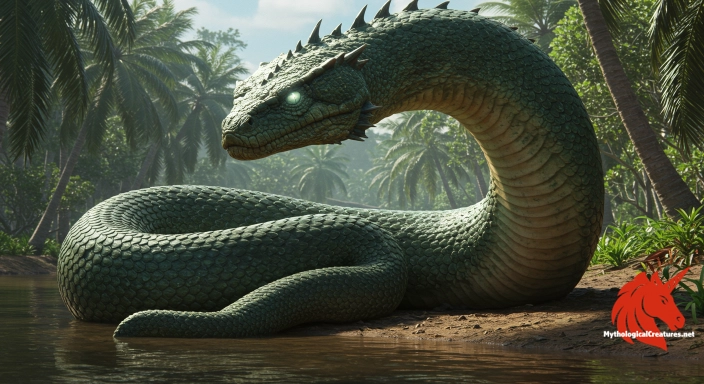
Madre de aguas
Madre de aguas - Represents the eternal, protective, and sometimes vengeful nature of water in Caribbean mythology
Origins & First Encounters
Madre de aguas, also known as Magí and occasionally referred to as Mama Glo, emerges from the rich tapestry of Cuban folklore as a figure of both reverence and fear. Her origins reach back to the early modern era, with first attested tales dating from the 1600s that captivated local communities. Legends portray her as an eternal guardian of water, embodying the life force of rivers and lakes that never run dry. The myth interweaves elements of the natural world with the supernatural, presenting her as a colossal serpent whose very existence is intertwined with nature’s cyclical rhythms. Over time, stories have grown in complexity, blending symbols of rebirth, protection, and the peril of defying nature’s laws. Local communities have embraced her dual nature, both as a nurturer of life and as a formidable force against those who dare to disrupt the natural order. Her enduring presence in folklore underscores the cultural importance of water and its sacred, life-sustaining properties. The narrative of Madre de aguas remains a compelling symbol of the intertwined fates of human civilisation and the natural world.
Source Texts & Tale Variants
Early accounts, emerging in the 1600s, set the stage for a narrative that has been enriched by centuries of oral tradition and written folklore. Chroniclers of the early colonial period recorded the awe inspired by her colossal appearance and the mysterious aura that surrounded her habitat. Over time, diverse storytellers contributed new layers to the myth, infusing the narrative with local environmental and spiritual insights. Creole traditions, where she is known as Mama Glo, have added their distinctive nuances, underscoring her role as a divine water spirit. Variations of her story also appear under the names Mami Wata and Watramama on other islands, highlighting shared mythological themes across cultural boundaries. Different texts describe not only her immense size and bullet-proof scales but also her supernatural ability to protect unending water sources. Folktales often recount that anyone attempting to harm or capture her meets a lethal fate, a recurring motif that intensifies her fearsome reputation. The diverse documentation through both written records and oral narratives has created a layered and multifaceted myth that continues to evolve with each retelling.
Form & Powers
Madre de aguas is celebrated in myth as a gargantuan boa snake, her body described as being as wide as a palm tree and imbued with a palpable sense of grandeur. Her scales are arranged in a unique, reverse pattern compared to ordinary serpents, granting her an armour that is said to be impenetrable by bullets. Prominently, she bears two horn-like projections at the front of her head, a feature that distinguishes her from natural snake species and lends her an almost celestial quality. Her physical form is often detailed with descriptions that evoke both beauty and menace, as the interplay of light on her thick, lustrous scales creates an otherworldly shimmer. There are accounts that suggest her eyes hold a hypnotic allure, reflecting the mysteries of the deep waters she inhabits. The colossal proportions attributed to her imply that she dominates entire river systems, moving with both grace and undeniable power. Some narratives hint at variations in her size and hue, with certain traditions depicting subtle iridescence reminiscent of moonlit water. The vivid physical descriptions serve to enhance the aura of invincibility and eternal guardianship that surrounds her legendary form, inviting wonder and caution in equal measure.
Regional Faces
Across various Caribbean and neighbouring regions, the figure of Madre de aguas assumes different local identities and cultural inflections. In Cuba, her narrative is firmly rooted in the local respect for water, casting her as the eternal keeper of rivers and lakes. In Creole folklore, the name Mama Glo conjures images of a nurturing yet formidable spirit who both protects and punishes depending on human actions. Regions beyond Cuba invoke her myth under the titles Mami Wata and Watramama, each version integrating local colour and environmental elements. These regional variations highlight the adaptability of her myth, as communities adjust her attributes to reflect their own relationship with nature. Some islands accentuate her role in the fertility and prosperity of the land, while others stress the deadly consequences of disturbing the natural order. Local art and storytelling often merge indigenous symbols with the myth, reinforcing her status as both a cultural icon and a natural force. Such regional adaptations continue to enrich the canon of her legend, underscoring the seamless blend between mythology and local environmental ethos.
Cultural Parallels
Madre de aguas shares a host of intriguing similarities with water deities and serpentine guardians found in various cultural traditions around the world. Much like the celebrated Mami Wata of West African and Caribbean lore, she embodies both the benevolent and fearsome aspects of water. The duality inherent in her myth reflects a broader global motif where water is revered as a source of life and simultaneously feared for its capacity to destroy. Comparable legends in Asian and Southeast Asian cultures also feature massive serpents or dragons who command rain and rivers, underscoring a universal fascination with serpentine symbols of regeneration and power. These cultural parallels extend to the symbolism of immortality; much like the fabled snake shedding its skin, she represents themes of perpetual renewal. The shared narratives across disparate cultures highlight a recurrent human acknowledgement of nature’s masterful balance between nurture and devastation. Such comparative analysis emphasises that while names and details may vary, the underlying human experiences surrounding water and renewal remain deeply interconnected. In this way, Madre de aguas not only occupies a unique space within Cuban folklore but also resonates as part of a wider, cross-cultural mythological tradition.
Legacy & Modern Evolution
The depiction of Madre de aguas has evolved significantly over the centuries since her first recorded mentions in the 1600s. Initially a fearsome embodiment of nature’s untamed power, her image has gradually shifted to include themes of eternal guardianship and environmental stewardship. Modern reinterpretations now often cast her as a potent symbol of ecological balance, inspiring narratives that address contemporary concerns such as water conservation and pollution. Artists and writers have embraced her myth, incorporating traditional elements alongside modern sensibilities to evoke a timeless message about the sacred nature of water. Contemporary portrayals sometimes imbue her with a mystical elegance that transcends the purely menacing aspects of earlier accounts. The progression of her legacy reflects the changing human relationship with the natural world, where mythology becomes a lens through which environmental awareness is fostered. As part of urban art and multimedia expressions, Madre de aguas has also surfaced as a figure of cultural resilience and adaptability. Her story continues to inspire both reverence and caution, aptly symbolising the enduring and evolving interplay between human civilisation and the vital resources of our environment.
Interesting Fact
A notable aspect of Madre de aguas is her multifaceted cultural identity, being revered simultaneously in Cuban folklore and among West African diaspora communities, which underscores the rich, cross-cultural exchanges in Caribbean myth.
For serious mythcraft
Your project belongs among the legends
If your work deepens how people understand, play with, or teach mythology, a sponsor placement here keeps it in front of the right readers all year.
Submit a sponsorship enquiryQuick Creature Info
Features:
Associations:
Our Mythic Legendary Rating:

Also Sometimes Known As:
Habitat:
Supernatural Powers:
Physical Attributes:
Abilities:
Behavior:
Lore:
Related Creatures, Tales or Lore
- MMami Wata
- DDamballa
- QQuetzalcoatl
References
Discover Another Mythical Legend You May Not Have Heard Of?
Uncover the mysteries of ancient folklore and expand your knowledge of legendary beings from cultures around the world.
Dare to Meet the Sangarius....
-38a15c95-2b2a-4dbe-8bda-e58d33e32ab7_small.webp "Depiction of Sangarius")
Curated by the Mythological Creatures Team
Series editor: Mythological Creatures Directory
Primary desk: Americas & Indigenous Traditions Desk
(rev. November 2025)