
Sangarius: Sangarius is a Phrygian river-god from Greek mythology.
-38a15c95-2b2a-4dbe-8bda-e58d33e32ab7_small.webp "Sangarius - Embodies the dual nature of rivers as life-giving yet potentially destructive forces, and holds a crucial role in both Phrygian and Greek mythological traditions.")
Sangarius
Sangarius - Embodies the dual nature of rivers as life-giving yet potentially destructive forces, and holds a crucial role in both Phrygian and Greek mythological traditions.
Origins & First Encounters
Sangarius emerges from the ancient traditions of Anatolia as a captivating river-god, embodying the perpetual flow of life and nature’s dual forces. His origins are rooted in the Phrygian landscape, where the river that bears his name was both a source of sustenance and mystery. He appears in myth as a divine personification of water, a symbol that bridges native Anatolian customs with broader Greek mythological traditions. Early attestations of his presence suggest that even before the classical era, communities revered the natural phenomenon of the river as a living embodiment of the divine. Local cultures celebrated his power to both fertilise the land and, when angered, unleash destructive floods. His myth is interwoven with the rhythms of agricultural cycles, reflecting how closely life was tied to the natural world. The narratives surrounding him invite reflections on the balance between renewal and ruin, as water sustains and also endangers life. His enduring legacy is emblematic of the respect ancient societies held for the elemental forces of nature. As his myth evolved, Sangarius came to represent both the creative bounty and the unpredictable temperament of water. Through the ages, his story continued to resonate with communities that understood the river as a living symbol of the earth’s pulse.
Source Texts & Tale Variants
The primary sources that mention Sangarius are notably sparse, a reflection of the often fragmented nature of ancient river cults. In literary texts and geographical treatises, his name surfaces in brief references that underscore his natural presence rather than elaborate mythic exploits. Inscriptions and local legends from the Phrygian region preserve hints of his worship, even though comprehensive narratives of his life are largely absent from the classical canon. Fragments of poetic and epigraphic records suggest that his identity was interlaced with the natural contours of the river he personified. Various regional accounts, passed down orally and later recorded in writing, portray him as a benefactor of agricultural prosperity and a guardian against the destructive might of uncontrolled waters. Some sources hint at a dual nature, where his benevolence could quickly turn into retribution against those who disrespected his domain. Other variants merge his attributes with those of neighboring water deities, creating a rich tapestry of overlapping traditions. Although his myth does not command the extensive literary attention given to Olympian gods, these scattered pieces provide valuable insights into how ancient communities interacted with and interpreted natural forces. Over time, even these brief mentions have inspired modern scholars to explore the broader cultural and ecological significance of his character. The mosaic of sources surrounding Sangarius thus invites a reimagining of his role among the pantheon of natural deities.
Form & Powers
Artistic depictions of river deities offer a window into how ancient cultures envisioned Sangarius, even if explicit descriptions are rare. He is often imagined as a robust, bearded figure whose strong physique mirrors the relentless flow of his river. In creative portrayals, a cascade of flowing hair evokes the movement of water that forms his domain, interwoven with hints of aquatic flora such as reeds and water lilies. His eyes are frequently said to mirror the deep blues and greens of the river, suggesting both its calm serenity and its hidden depths. Many artistic renditions imbue him with a sense of timeless strength, a physical ideal that blends natural beauty with an elemental force. He is occasionally portrayed reclining by a riverbank, his form echoing the curves and currents of the water he personifies. Some depictions even lend him an ethereal glow, as if the setting sun has left its mark upon his features. While the precise scale of his form remains open to interpretation, certain images suggest a towering presence that commands the surrounding landscape. His overall appearance synthesises the grace of nature with a subtle hint of the wild unpredictability inherent within water. Thus, his physical depictions continue to inspire imaginations by symbolising the union of beauty, power, and the ever-changing essence of nature.
Regional Faces
The conception of Sangarius differs remarkably across the varied cultural landscapes of ancient Anatolia and Greece. In his native Phrygian setting, he was revered primarily as a nurturing force whose waters fertilised the soil and supported local agriculture. Communities along his river often integrated his worship into seasonal rituals that celebrated the earth’s renewal and its cyclical rhythms. In contrast, Greek interpretations aligned him with the broader tradition of river deities, placing him alongside figures who symbolised both the promise of life and the threat of nature’s fury. Local customs sometimes blended his identity with that of other nature spirits, resulting in a fluid narrative that adapted to regional needs and cultural beliefs. Variations in his worship can be observed in the distinct rituals, iconography, and mythic motifs that mark different areas, from Phrygia to neighbouring regions like Lydia and Pisidia. This regional diversity highlights not only the adaptability of his myth but also the essential role of nature in shaping local identities. Even as the core symbolism of water as a life-giving force remains constant, the manner in which Sangarius was honoured shifts to reflect local environmental and societal concerns. His character became a vessel for communal hopes and fears, embodying both the bounty and the caprice of the natural world. Ultimately, the regional variations in his myth underline the profound connection between the divine and the geography of the lands he was believed to protect.
Cultural Parallels
Sangarius stands comfortably among a host of water deities whose myths articulate a universal awe for the power and mystery of water. His attributes echo those of Achelous, another river-god whose narrative captures the dual nature of water as both benefactor and harbinger of chaos. Like Oceanus, who was revered as the endless stream encircling the earth, Sangarius represents a fundamental aspect of nature that is as limitless as it is inscrutable. In cultures far from Greece, similar deities emerge, such as Varuna in the Indian tradition, whose oversight of cosmic and earthly waters resonates with Sangarius’ symbolic authority. In ancient Egyptian lore, while Hapi is closely associated with the Nile’s annual inundation, both gods underscore the vital role of water in sustaining human life. Comparative analyses reveal that these deities share a common thematic language: they are embodiments of organic vitality, reflective of the delicate balance between creation and destruction. The recurring motif of water as a life-giving force underscores a cross-cultural reverence that transcends geographical boundaries. Each of these deities, including Sangarius, reinforces humanity’s connection to natural cycles and the environment. Such comparisons enhance our understanding of the universal impulses behind myth-making, illustrating how diverse cultures assign divine qualities to the elemental forces that govern existence. In this way, Sangarius is not merely an isolated figure but part of a broader, interconnected tapestry of mythological water deities that spans continents and centuries.
Legacy & Modern Evolution
Over millennia, the figure of Sangarius has undergone significant transformation, evolving from a locally worshipped river-god to a symbol rich in cultural and environmental significance. His ancient veneration by communities in Phrygia eventually melded into the broader corpus of Hellenic mythology, allowing his image to endure even as the focus on polytheistic practice waned. As the classical world transitioned into new eras, references to his myth were preserved in art, literature, and local lore, reflecting an enduring admiration for nature’s inexorable force. The Renaissance period saw a revival of interest in classical antiquity, with artists and writers drawing upon figures such as Sangarius to explore themes of nature’s beauty and unpredictability. Today, his legacy is echoed in modern interpretations of water deities within literature, visual art, and even digital media, where the ancient bond between river and civilization is reimagined. Contemporary ecological narratives sometimes invoke his image as a metaphor for the delicate balance between human activity and natural processes. Modern scholarship has also revisited his myth to delve into ancient perspectives on environmental stewardship and the spiritual significance of water. Although the explicit cult of Sangarius has long faded, his enduring symbolism continues to inspire discussions about the interdependence of human and natural worlds. His myth represents an ancient acknowledgment of water’s power to both nurture and challenge, a theme that remains deeply relevant today. Thus, Sangarius persists as an emblem of nature’s timeless rhythm and a reminder of the cultural heritage embedded in our relationship with the natural environment.
Interesting Fact
The modern Sakarya River in Turkey, which carries the legacy of Sangarius, stands as a living reminder of his ancient mythological influence and cultural significance.
For serious mythcraft
Your project belongs among the legends
If your work deepens how people understand, play with, or teach mythology, a sponsor placement here keeps it in front of the right readers all year.
Submit a sponsorship enquiryQuick Creature Info
Origin:
Features:
Associations:
Our Mythic Legendary Rating:

Also Sometimes Known As:
Habitat:
Supernatural Powers:
Physical Attributes:
Abilities:
Behavior:
Lore:
Related Creatures, Tales or Lore
- AAchelous
- SScamander
- NNilus
References
Discover Another Mythical Legend You May Not Have Heard Of?
Uncover the mysteries of ancient folklore and expand your knowledge of legendary beings from cultures around the world.
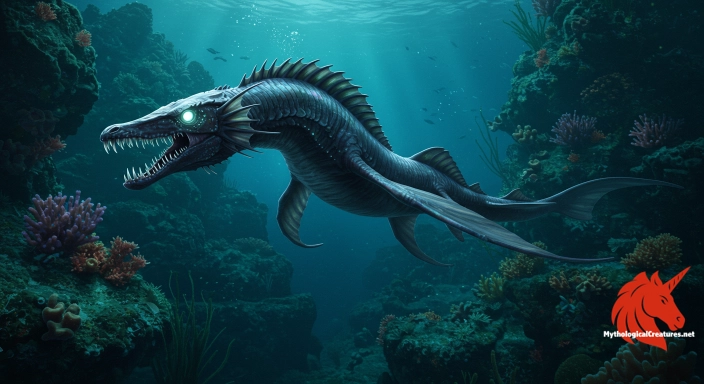
Dare to Meet the Bathysphaera....
Curated by the Mythological Creatures Team
Series editor: Mythological Creatures Directory
Primary desk: Hellenic & Ancient Mediterranean Desk
(rev. November 2025)