
Bathysphaera: Bathysphaera intacta, known as the giant dragonfish, is a hypothetical deep-sea fish first described by William Beebe in 1932 near Bermuda.
Bathysphaera
Bathysphaera - Bathysphaera intacta symbolizes the mysteries of the deep ocean, blurring the lines between scientific discovery and myth.
the legend in five swipes.
the legend in five swipes.
Bathysphaera Origins: The Earliest Accounts
Bathysphaera intacta, often known as the giant dragonfish, burst onto the scientific scene following its remarkable sighting by the renowned naturalist William Beebe in 1932 off the coast of Bermuda. The creature’s initial appearance during a deep-sea descent at 640 metres captured the imagination of both scientists and the public, hinting at the vast unknowns lurking beneath the ocean’s surface. Its description, though brief, set the stage for decades of speculation regarding deep-sea marvels and the possibility of undiscovered life forms. The early report emerged during a period when marine exploration was rapidly evolving, and every new observation was imbued with a sense of wonder and mystery. Bathysphaera intacta quickly became enveloped in a rich tapestry of deep-sea lore, blurring the lines between cryptozoology and conventional marine biology. As one of the earliest documented encounters with such an enigmatic deep-dweller, it has maintained a lasting allure over the years. Observers and enthusiasts alike have often linked its elusive nature with the broader mythos of sea dragons and other fantastic ocean entities. Its legacy as a symbol of the ocean’s hidden depths continues to inspire ongoing debates and imaginative retellings in both scientific and popular circles.
Bathysphaera: From Oral Tale to Written Record
The primary account of Bathysphaera intacta originates from William Beebe’s detailed expedition notes during his historic 1932 descent. His meticulous observations provided the first—and for many years, the only—tangible reference to this deep-sea creature. Over time, subsequent deep-sea reports and expedition logs have occasionally alluded to sightings that bear resemblance to Beebe’s original description, though none have been as definitive. Aside from the original technical narrative found in early marine biology publications, lore from various maritime records has contributed to a wider narrative. Excerpts in expedition diaries and even some early natural history texts have served as informal sources that embellish the creature’s mysterious profile. While no additional scientific texts have offered conclusive evidence, minor variations in the storytelling have merged anecdotal and technical elements. These scattered references have helped create a patchwork of accounts that fuel both academic curiosity and cryptozoological speculation. In effect, the original observation by Beebe remains the cornerstone for all subsequent narrative variants, continually inviting deeper exploration into the unknown realms of the ocean.
Bathysphaera: Size, Shape and Strange Features
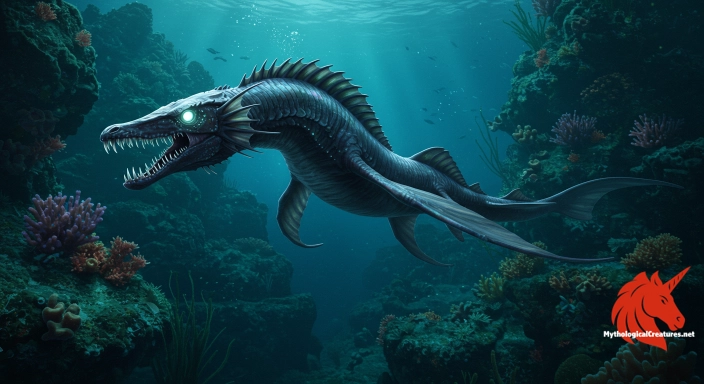
Bathysphaera intacta is portrayed as a creature of formidable stature, its elongated body evoking the imagery of mythical dragons of the deep. The original description hints at a streamlined form, adapted for the crushing pressures and perpetual darkness of the deep ocean. Its skin is imagined to be a shimmering, almost iridescent slate that might reflect the scarce light in its environment, while accentuating its otherworldly presence. Features such as bioluminescent patches along its flanks could serve not only for prey attraction but also as signals to potential mates in the abyss. The head is thought to be adorned with fang-like teeth, reminiscent of ancient predatory species, and equipped with eyes that seem designed to capture the faintest glimmers of light. Fins, robust yet elegantly contoured, would allow it to navigate through turbulent underwater landscapes with a stealthy grace. Some descriptions suggest that its overall size may have reached impressive lengths, contributing to its ‘giant’ epithet in common parlance. The mixture of piscine and draconic elements lends Bathysphaera intacta a fantastical air, blurring the lines between known biological adaptations and legendary myth.
Bathysphaera: Regional Differences in the Legend
Although the sole verified encounter with Bathysphaera intacta was recorded off Bermuda, the creature has been embraced by various maritime traditions across different regions. Coastal communities and seafarers from the wider Atlantic have woven their own interpretations of a mysterious deep-sea draconic fish. In some Caribbean tales, sightings of similar creatures evoke images of supernatural guardians of the ocean’s underbelly. Even in regions far removed from Bermuda, such as the North Atlantic fringes of Europe, narratives have emerged that echo the creature’s eerie allure and formidable presence. In East Asian maritime folklore, legends of otherworldly sea dragons bear a striking resemblance to the characteristics attributed to Bathysphaera intacta. Local adaptations of the myth often incorporate cultural symbols unique to each region, enhancing the creature’s mystique in the collective imagination. Inspired by regional environmental conditions, these variations sometimes attribute features like additional bioluminescent markings or alternative body proportions. The diversity of these cultural retellings underscores how one remarkable observation can ripple through multiple narratives, adapting its form to fit local myth and lore.
Bathysphaera: Echoes in Other Mythologies
Bathysphaera intacta shares several intriguing parallels with other mythological sea creatures, forging a fascinating bridge between science and folklore. Modern tales of elusive deep-sea dwellers often compare it to the viperfish and other bioluminescent predators that inhabit the ocean’s darkest realms. Like the famed Loch Ness Monster or the elusive Kraken, its very existence straddles the boundary between scientific curiosity and folkloric legend. Elements such as its dark, gleaming appearance and presumed predatory nature resonate with universally shared themes of nature’s hidden terrors. Both eastern and western mythologies recount stories of dragon-like beings in the deep, suggesting a common cultural fascination with the unknown. The creature’s legendary status has led to comparisons with ancient symbols of chaos and the mysterious power of the sea. These cross-cultural references have fertilised a rich ground for artistic re-imaginings, where Bathysphaera intacta becomes a metaphor for humanity’s perennial confrontation with the abyss. By aligning its characteristics with those of other well-known cryptids, it forms part of a greater narrative that celebrates the ocean’s capacity to inspire both awe and caution.
Bathysphaera in Books, Film and Games
From its initial observation in the early 20th century, Bathysphaera intacta has transformed from an isolated scientific account into a potent emblem of the ocean’s hidden mysteries. Subsequent deep-sea explorations and the advent of more sophisticated submersible technologies have only amplified its legendary status. The creature’s image has found fertile ground in the realms of art, literature, and even modern film, where it is often depicted as an enigmatic sentinel of the abyss. Its evolution from a mere curiosity in a scientific journal to a celebrated icon in popular culture reflects wider shifts in our understanding of the deep sea. Modern cryptozoologists and marine enthusiasts continue to reference its tale when discussing the potential for undiscovered species in the vast ocean depths. This enduring legacy is further enriched by science fiction narratives that merge speculative biology with ancient myth. Over the decades, Bathysphaera intacta has become a symbol of humankind’s relentless search for knowledge in the face of overwhelming natural mystery. Its story, rooted in a single historical expedition, persists as a reminder of the deep sea’s ability to continuously challenge and inspire our perceptions of the natural world.
Interesting Fact
The initial discovery of Bathysphaera intacta by William Beebe not only advanced our understanding of deep-sea life but also sparked the imagination, linking scientific observation with mythological intrigue.
Mythological Treasures
Greek Myths: A field guide to the monsters of ancient Greece
Every monster here earned its place in legend, and each gets a full page of artwork and the story behind it.
Chinese Beasts: A field guide to the dragons and demon kings of Chinese myth
From river dragons to demon kings, with the legends that shaped five thousand years of storytelling.
Japanese Yokai: A field guide to the spirits and demons of Japanese folklore
Fifteen spirits, with the signs to watch for and what the old tales say to do if you meet one.
the legend in five swipes.
For publishers and studios
Your next readers are already here
Many of our visitors are looking for books, campaigns, and resources that deepen their journey into myth. Position your title or setting here.
Discuss a placementQuick Creature Info
Origin:
Features:
Associations:
Our Mythic Legendary Rating:

Also Sometimes Known As:
Habitat:
Physical Attributes:
Abilities:
Behavior:
Lore:
Related Creatures, Tales or Lore
- VViperfish
- BBarbeled Dragonfish
- BBlack Seadevil
References
Discover Another Mythical Legend You May Not Have Heard Of?
Uncover the mysteries of ancient folklore and expand your knowledge of legendary beings from cultures around the world.
Dare to Meet the Wewe Gombel....

The Mythological Creatures Book Series
Yokai, Greek, Norse, Egyptian & Chinese. Five illustrated field guides to the creatures the old stories either warned or told you about.





Curated by the Mythological Creatures Team
Series editor: Mythological Creatures Directory
Primary desk: Hellenic & Ancient Mediterranean Desk
(rev. November 2025)