
Mae Yanang: Mae Yanang is a revered spirit in Thai, Cambodian, and Laotian cultures that guards boats and various vehicles.
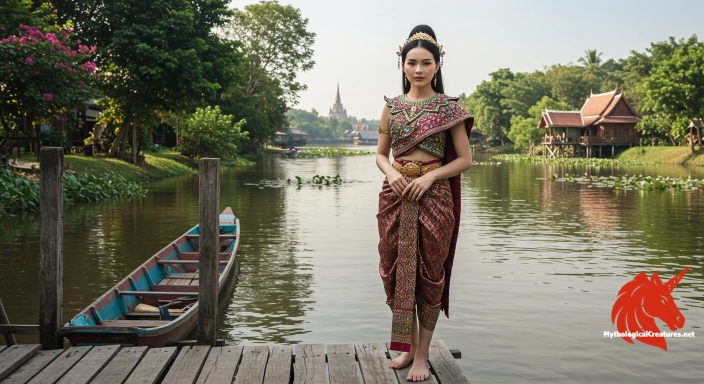
Mae Yanang
Mae Yanang - Mae Yanang is an integral figure in ensuring the protection and safe passage of vessels in regional maritime culture.
Origins & First Encounters
Mae Yanang is a cherished spirit woven into the rich cultural fabric of Thai, Cambodian, and Laotian traditions. She occupies a central role as the guardian of boats and various vehicles, symbolising safety and divine protection during journeys. Rooted in ancient animistic beliefs, her origins are linked to the veneration of local female deities, echoing the revered qualities of figures like Mae Phosop and Nang Kwak. Early attestations of her presence emerge from oral traditions and folk rituals that celebrated nature’s guardianship. The spirit’s identity gradually absorbed elements from Chinese maritime worship, notably through the influence of Mazu. This amalgamation of indigenous and foreign beliefs highlights the syncretic nature of Southeast Asian spirituality. Communities have long looked to Mae Yanang for blessings, believing her to ensure prosperous and secure travels across both water and land. Her enduring legacy is a testament to the intertwined histories of religion, myth, and everyday life in the region.
Source Texts & Tale Variants
Local folklore and ritual recitations form the primary reservoir of accounts concerning Mae Yanang. Her narrative is preserved in temple murals, ceremonial chants, and vividly depicted in traditional folk art. Although there is no single canonical text dedicated to her, numerous regional variants exist that recount her protective attributes and divine origins. Some versions portray her as a benevolent guardian emerging directly from nature, while others suggest a more celestial birth intertwined with ancestral deities. The influence of Chinese maritime traditions is apparent in certain texts, where parallels with the goddess Mazu enrich her story. Manuscripts and ritual scripts, passed down through generations, offer glimpses into her evolving mythos. Festival performances and community ceremonies further echo these stories, ensuring that even lesser-known details of her legend remain in the public consciousness. The multiplicity of sources reflects both the diversity and the resilience of her cult in local popular culture.
Form & Powers
Mae Yanang is typically envisioned as an elegant and ethereal figure, her appearance imbued with the grace and poise of a divine guardian. Artistic depictions often render her with delicate, refined facial features, accentuated by a serene yet purposeful gaze that imparts calm to onlookers. She is traditionally adorned in attire that mirrors the cultural heritage of the region, with elaborate embroideries and intricate patterns that celebrate local craftsmanship. In many representations, her flowing garments and carefully arranged accessories symbolise both abundance and the fluidity of water. Her visage is sometimes highlighted by subtle hints of an otherworldly glow, suggesting an aura that separates her from mortal beings. Variations in her portrayal may include ornate jewellery or culturally specific headdresses that serve as emblems of her protective function. Some traditions even depict her as being slightly taller than ordinary mortals, a visual cue to her elevated spiritual status. The careful detailing in her apparel and features reinforces her role as a mediator between the natural environment and the divine realms, encapsulating the reverence bestowed upon her.
Regional Faces
Across Thailand, Cambodia, and Laos, local artistic and cultural practices have sculpted distinct versions of Mae Yanang that resonate with regional nuances. In Thailand, her image is often imbued with the qualities of agrarian divinity and maritime protection, reflected in rituals aimed at safeguarding rice harvests as well as boat journeys. Cambodian adaptations tend to emphasise her graceful elegance and her role in water rites, with depictions that integrate traditional Khmer textile motifs. In Laos, interpretations of her character often merge animistic elements with a more vibrant celebration of nature’s unpredictable beauty. Each region adapts her iconography to mirror local art styles and ritual practices, creating subtle variations in costume, symbolism, and even narrative embellishments. These regional interpretations highlight the dynamic interplay between a shared mythological heritage and unique cultural expressions. Despite these differences, the common thread of her protective essence endures, uniting disparate communities in their veneration of a benevolent guardian. The evolution of her regional depictions also illustrates the broader patterns of cultural exchange across Southeast Asia.
Cultural Parallels
The function of Mae Yanang in guarding boats and vehicles finds remarkable parallels in other maritime deities across Asia and beyond. Her narrative shares striking similarities with the Chinese goddess Mazu, whose role in protecting seafarers is celebrated in coastal communities. Both figures embody the intrinsic human need for security in the unpredictable realm of water travel, and their stories overlap in themes of divine intervention and protection. Similar protective deities can also be observed in Vietnamese folklore, where local sea spirits mirror the attributes of Mae Yanang. In European traditions, comparable guardian figures appear in the form of boat saints and water nymphs, underscoring a universal impulse to safeguard past the dangers of nature. These cross-cultural connections highlight not only shared existential concerns but also a rich tradition of venerating the elements. Comparative mythology reveals that regardless of regional differences, the act of bestowing divine protection during voyages is a recurring and deeply embedded theme. Such parallels deepen our understanding of Mae Yanang as part of a broader constellation of guardian spirits dedicated to the preservation of life during travel.
Legacy & Modern Evolution
The historical evolution of Mae Yanang mirrors shifts in cultural practices and the changing dynamics of maritime communities in Southeast Asia. In her earliest incarnations, she was revered in intimate, local rituals that emphasised direct appeals to nature’s benevolence. Over time, her narrative absorbed layers from neighbouring cultures, notably incorporating aspects of Chinese folk religion as maritime trade and cultural exchanges flourished. This synthesis has allowed her legend to remain both adaptable and resonant across generations. In modern times, her image is celebrated in festivals, temple ceremonies, and cultural performances that seek to blend traditional heritage with contemporary expressions. Artists and writers continue to reinterpret her story, ensuring that her protective ethos remains relevant in today's rapidly changing world. Moreover, tourism and cultural revival initiatives have cast her into a prominent light, inviting both locals and visitors to engage with her enduring myth. Mae Yanang’s ongoing legacy as a symbol of safety and resilience encapsulates the deep-rooted human aspiration to harness the benevolence of the divine in the face of nature's unpredictable challenges.
Interesting Fact
Mae Yanang showcases the syncretism of Southeast Asian and Chinese spiritual traditions, embodying both cultural identity and practical guardianship over vital maritime routes.
Partner with us
Sponsor this space
Reach thousands of mythology enthusiasts with a curated placement on our creature pages.
Learn about sponsorshipQuick Creature Info
Origin:
Features:
Associations:
Our Mythic Legendary Rating:

Also Sometimes Known As:
Habitat:
Supernatural Powers:
Physical Attributes:
Abilities:
Behavior:
Lore:
Related Creatures, Tales or Lore
- MMae Phosop
- NNang Kwak
- MMazu
References
Discover Another Mythical Legend You May Not Have Heard Of?
Uncover the mysteries of ancient folklore and expand your knowledge of legendary beings from cultures around the world.
Dare to Meet the Boginka....

Curated by the Mythological Creatures Team
Series editor: Mythological Creatures Directory
Primary desk: Asian & Pacific Myth Cycles Desk
(rev. November 2025)