
Mahoraga: Mahoraga are a race of exalted deities in Buddhism and Jainism, depicted as hybrid beings with human upper bodies and reptilian lower halves.
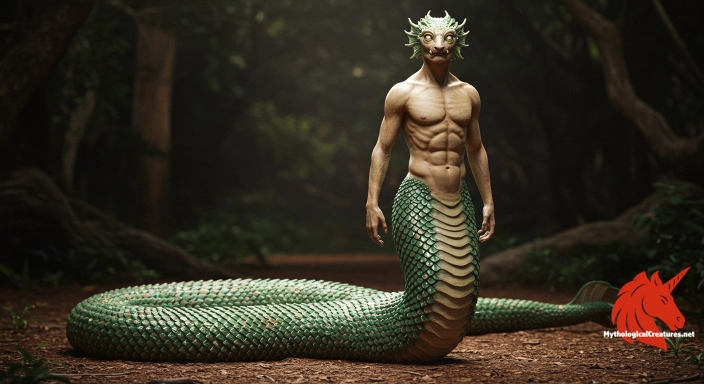
Mahoraga
Mahoraga - Mahoraga are revered as the greater or exalted beings among the primordial Uragas, symbolising the fusion of human and reptilian forms in sacred art.
Origins & First Encounters
The Mahoraga are enigmatic deities originating from early Buddhist and Jain traditions, celebrated for their primordial and reptilian qualities. Their mythic beginnings are intertwined with the ancient lore of Indic spirituality, where they emerged as exalted beings among the Uragas, a race that shares kinship with the nāga. Stories of the Mahoraga first appear in early texts, making them one of the lesser-known yet striking figures of early religious art. They are revered as representatives of both cosmic power and the mystery inherent in nature, bridging human and animal realms. Their very name, meaning 'Greater Reptilians', hints at their dual nature as both formidable and divine. While their role in safeguarding treasures or sacred secrets varies, they continue to evoke a sense of awe and respect within the religious tradition. Many interpretations accentuate their role as both protectors and mediators of cosmic order, emphasising the delicate balance between creation and chaos. The cultural context of the Mahoraga reflects an ancient fascination with the symbolic power of reptiles, mirroring themes of transformation, protection, and mystic wisdom.
Source Texts & Tale Variants
Ancient Buddhist scriptures and Jain manuscripts contain scattered references to the Mahoraga, presenting them as important yet often enigmatic figures. Multiple early texts, including commentaries and iconographical manuals, mention their association with the broader family of serpentine deities such as the nāga. Some sources portray the Mahoraga as fierce guardians of sacred spaces, while other narratives imbue them with a benevolent and wise nature. Variations in their stories are evident in different regional compilations, where some accounts highlight their role in cosmic battles and others celebrate their wisdom. Their mythological presence is further solidified in various folklore traditions that recount encounters with these divine beings in enchanted landscapes. In Southeast Asian interpretations, the Mahoraga are occasionally linked with protective spirits that maintain the sanctity of temple grounds. Chinese Buddhist art occasionally incorporates elements reminiscent of the Mahoraga, albeit under different local names and attributes. Despite differences in detail, the surviving texts converge on the theme of the Mahoraga as a bridge between the earthly and the divine, a motif that has varied yet persisted through the centuries.
Form & Powers
Visual depictions of the Mahoraga reveal an intricate blend of human and reptilian features that vary widely with artistic tradition. Typically, they are portrayed with anthropomorphic upper bodies that exude a subtle human grace, paired with lower halves that are either concentrated with serpentine scales or explicitly rendered as reptilian tails. In some depictions, their entire lower half is shrouded in intricately patterned serpent skin, often interwoven with symbols of divine power. Other artistic renderings grant them a striking fusion, such as a serpent head emerging from a largely human form, emphasising the extraordinary hybrid nature of these deities. Their eyes are sometimes described as luminous or jewel-like, contributing to an overall impression of both mystique and authority. The scale patterns on their bodies can be remarkably detailed, with some traditions depicting elaborate ridge-like formations that suggest both strength and elegance. Size also varies in the narratives, with some traditions ascribing them an imposing stature, symbolic of their elevated role, while others present them as more human-sized and accessible. The detailed artistry reflects a sophisticated attempt to capture the dual essence of the Mahoraga: mortal familiarity combined with the mystique of the divine reptile.
Regional Faces
Regional interpretations of the Mahoraga reveal a dynamic interplay between local folklore and the overarching Indic mythos. In India, where their origins lie, they are often represented with subtle human features, reflecting an intrinsic blend of the earthly and the celestial. Moving eastward to Southeast Asia, particularly in Thai and Indonesian art, the serpent characteristics are frequently accentuated, with vibrant scales and more exaggerated reptilian features. Chinese Buddhist representations sometimes integrate them into a broader iconographic framework of protective spirits, echoing local traditions that glorify dragon-like qualities. In Tibetan artistic traditions, the Mahoraga are occasionally linked to elemental forces, portraying them as guardians of both the physical and spiritual realms. Each region adapts the Mahoraga figure to align with its unique cultural narratives, embedding them within local rituals and temple iconographies. Local artisans infuse additional symbols and motifs that reflect regional mythology, thereby creating a version of the Mahoraga that resonates with local audiences. This adaptability highlights the fluidity of myth, demonstrating how a single entity can encapsulate diverse visual and symbolic interpretations across different geographical landscapes.
Cultural Parallels
The Mahoraga share intriguing similarities with other mythological serpentine beings, most notably the nāga, although they are consistently positioned as an exalted subgroup within their mythic family. Comparable to Chinese dragons, the Mahoraga embody a duality of power and benevolence, serving as guardians of sacred knowledge and cosmic order. European mythologies have long celebrated hybrid creatures that merge human traits with animalistic forms, a theme mirrored by the Mahoraga’s distinctive appearance. Cultural parallels extend to various indigenous traditions where serpents symbolise both protection and transformation. The amalgamation of human and reptilian forms in the Mahoraga resonates with widespread archetypes found across Indo-European and East Asian folklore. In many myths, such beings represent a liminal space bridging the mortal and the divine, much like other chthonic deities. The enduring appeal of these hybrid creatures speaks to a universal fascination with nature’s most mysterious and powerful forces. Comparative analysis thus reveals that the Mahoraga are not isolated entities but part of a broader, cross-cultural dialogue on the symbolic significance of the serpent form.
Legacy & Modern Evolution
Over the centuries, the depiction of the Mahoraga has undergone a remarkable evolution, reflecting shifts in religious, artistic, and cultural paradigms. In early texts, they were often depicted as formidable guardians endowed with raw primal power, emblematic of the mysteries inherent in the natural world. As artistic conventions evolved, their imagery softened and became more integrated into the broader corpus of Buddhist and Jain symbolism, merging awe-inspiring ferocity with gentle wisdom. During periods of cross-cultural exchange, especially along trade routes through Asia, new interpretations infused the Mahoraga with additional layers of meaning and aesthetic refinement. In modern times, these figures have reemerged in contemporary art, literature, and digital media, where they are celebrated for their complex duality and enigmatic allure. They have become potent symbols in discussions about the intersection of nature and spirituality, drawing admiration for their timeless mystique. Modern reinterpretations often emphasise the protective and transformative attributes of the Mahoraga, blending traditional iconography with innovative design. Their enduring legacy is evident in modern cultural references and artistic recreations, which continue to inspire awe and invite reinterpretation in the context of today’s spiritual and aesthetic explorations.
Interesting Fact
An interesting aspect of Mahoraga is their close association with the nāga, which highlights a familial kinship among serpent deities across different mythological traditions.
For indie creators
Give your myth project a permanent home
Indie authors, artists, small studios, and makers can secure an annual, non-intrusive sponsor slot that meets readers where they explore.
Obtain more informationQuick Creature Info
Our Mythic Legendary Rating:

Also Sometimes Known As:
Habitat:
Supernatural Powers:
Physical Attributes:
Abilities:
Behavior:
Lore:
Related Creatures, Tales or Lore
- NNaga
- MMucalinda
- MMakara
References
Discover Another Mythical Legend You May Not Have Heard Of?
Uncover the mysteries of ancient folklore and expand your knowledge of legendary beings from cultures around the world.
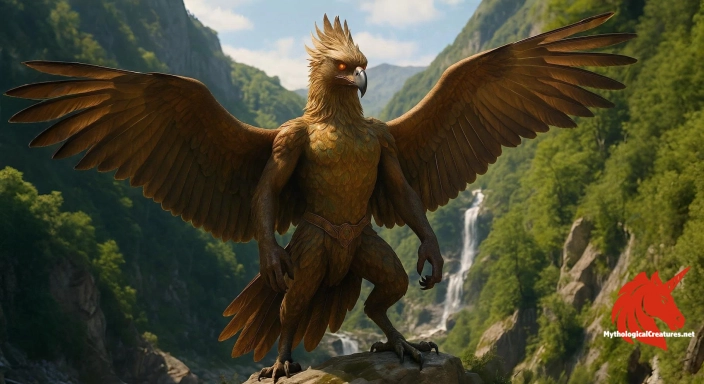
Dare to Meet the Garuda....
Curated by the Mythological Creatures Team
Series editor: Mythological Creatures Directory
Primary desk: Asian & Pacific Myth Cycles Desk
(rev. November 2025)