
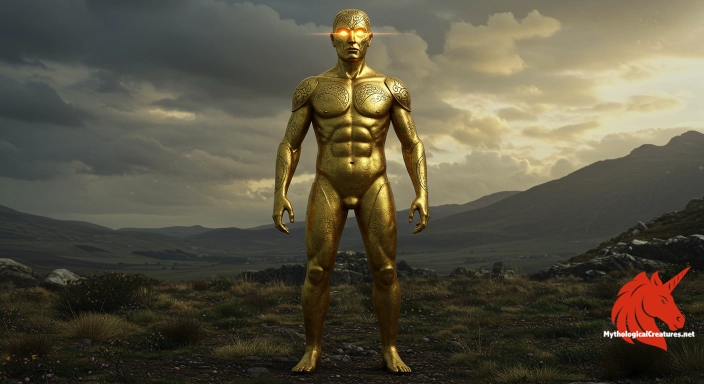
Makemake: Makemake is the creator and fertility god in Rapa Nui mythology, depicted as a stylised face with large eyes and a phallic nose.
-45c03654-a573-4136-ae65-ec5a458d33b0_small.webp "Makemake - Central figure in Rapa Nui culture, symbolizing creation, fertility, and divine authority")
Makemake
Makemake - Central figure in Rapa Nui culture, symbolizing creation, fertility, and divine authority
Origins & First Encounters
Makemake emerges as a central figure in the rich tapestry of Easter Island mythology, where he is revered as the creator of humanity and a potent symbol of fertility. His origins lie deep within the indigenous narratives of Rapa Nui, a culture that celebrated both the mysteries of creation and the sacred cycles of nature. In a society that once revered the monumental Moai, Makemake later became the fulcrum of spiritual life, particularly through his association with the bird-man sect. He is remembered as a god whose presence permeated the rituals and art of the island, embodying both creation and renewal. The early attestations of his myth are found in oral traditions and timeless petroglyphs, preserving a legacy that predates much of recorded history. His unique status as a god without consort further distinguishes him, suggesting an emphasis on solitary creative power. This singular focus on creation and fertility speaks to a broader cultural context in which divine forces were intimately connected to the natural world. The vivid depictions of his face in local art underscore his enduring influence, bridging ancient spiritual practices with the natural phenomena that inspired them. Through generations, the legacy of Makemake has continued to inspire and shape the identity of the Rapa Nui people.
Source Texts & Tale Variants
The primary documentation of Makemake’s myth comes from the indigenous oral traditions and the striking petroglyphs that have endured on Easter Island. These narratives, passed down through countless generations, capture the mystery and grandeur surrounding his divine persona. The scant written records have been supplemented by the careful work of researchers and anthropologists, who have pieced together variant stories from local chants and ritual practices. Many of the surviving accounts emerged during periods of European contact, although these external interpretations often risk oversimplifying the original meanings. The bird-man cult, which succeeded the era of the Moai, provides a rich variant of his myth, emphasising his role as the overseer of fertility and cosmic order. In various communities, subtle differences in his portrayal hint at regional adaptations of the original myth. The interplay between archaeological evidence and the fluidity of oral history has led to multiple interpretations, each adding layers to his enigmatic character. While the precise details can vary, the core elements of Makemake’s narrative consistently highlight themes of life, creation, and transformation. Collectively, these sources form a mosaic of tradition that continues to evolve over time.
Form & Powers
Makemake’s physical representation is both striking and symbolically potent, characterised by a blend of abstract and anthropomorphic elements. Artistic depictions reveal a visage that is often rendered as a face with large, expressive eyes, which convey a sense of both wisdom and intensity. The imagery sometimes mirrors that of a skull with expansive eye sockets, suggesting themes of rebirth and the thin boundary between life and death. A prominent phallic nose is a recurring detail in his iconography, serving as an unmistakable emblem of fertility and creative vigour. This fusion of elements not only captures the imagination but also reflects the dual nature of creation and destruction inherent in his myth. Carvings and petroglyphs, though weathered by time, continue to communicate his formidable presence with a stark clarity. Varying across different sites on the island, these depictions show slight regional nuances in size and stylistic detail, further enriching his mythic persona. The austere yet powerful lines used to portray his features invite viewers to consider the deeper meanings behind his symbolism. Such a complex visual portrayal cements Makemake’s status as a multifaceted deity whose image is as dynamic as his legacy.
Regional Faces
Though Makemake is intrinsically linked to the spiritual landscape of Easter Island, his influence reaches into the broader expanse of Polynesian mythology. His attributes resonate with regional deities, yet his distinct iconography sets him apart from more widely known gods in neighbouring cultures. Within different Polynesian communities, similar creation and fertility motifs can be found, suggesting a shared ancient heritage despite local adaptations. In some traditions, elements of Makemake’s character appear fused with those of deities like Tane, underscoring the interconnected nature of Polynesian religious thought. Artistic and ritualistic practices on Easter Island have maintained a unique interpretation of his persona, while neighbouring islands offer a more varied tapestry of creation myths. The local adaptation of his name and symbols has resulted in subtle variations in his depiction, reflecting the specific cultural and environmental influences of the region. In conversations among experts, these regional differences allow for a deeper appreciation of how isolated communities adapt shared ancestral narratives. The intersection of these diverse local traditions with the broader Polynesian context enriches the overall mythological landscape. Ultimately, Makemake’s regional evolution is a testament to the interplay between local innovation and inherited cultural ideals.
Cultural Parallels
When examined alongside similar deities across various mythological systems, Makemake offers a fascinating study in the archetypes of creation and fertility. His role as the architect of humanity and a guardian of reproductive energies draws compelling parallels to other Polynesian gods, notably Tane, who also embodies life-giving forces through both nature and cosmic creation. In other indigenous traditions worldwide, solitary deities charged with the task of creation similarly symbolise both power and vulnerability. The unusual absence of a consort in his narrative invites comparison with other divine figures who stand as singular forces within their mythos. Across cultures, the motif of a divine visage marked by distinctive and exaggerated features serves as a visual shorthand for otherworldly authority and mystery. Makemake’s representation in art, with its oversized eyes and phallic imagery, mirrors artistic traditions that use bold iconography to signify spiritual power. These comparative elements underscore a universal human fascination with the origins of life and the forces that sustain it. His story, set against a backdrop of isolation and resilience on Easter Island, reinforces the idea that unique cultural expressions can echo across disparate mythologies. In this light, Makemake is not merely a local god, but part of a broader human narrative about the transformative power of creation.
Legacy & Modern Evolution
The historical evolution of Makemake’s image reveals a dynamic interplay between enduring tradition and modern reinterpretation. Over the centuries, his portrayal has shifted from the stark, primal depictions of ancient petroglyphs to more nuanced representations in contemporary art and cultural discourse. This evolution mirrors the broader trajectory of Easter Island’s society, moving from its isolated, ritualistic past to a present where cultural heritage is actively celebrated. Modern reinterpretations have breathed fresh life into his myth, portraying him as both a symbol of ancient wisdom and a beacon of regional identity. Contemporary artists and cultural practitioners have revisited his imagery, fusing traditional motifs with modern aesthetics to create a bridge between past and present. The legacy of Makemake also endures in the revival of bird-man cult rituals, which continue to inspire local festivals and community gatherings. His image has emerged as a powerful emblem in discussions about cultural preservation and the reinterpretation of indigenous spirituality. Today, Makemake stands not only as a reflection of ancient cosmology but also as an enduring icon of resilience, creativity, and the ongoing dialogue between heritage and modernity.
Interesting Fact
Makemake’s unique, almost skeletal depiction in petroglyphs not only distinguishes him visually but also symbolises the deep interweaving of art, divinity, and cultural identity on Easter Island.
Reach myth fans
Connect your myth-driven brand with this audience
Our readers are writers, educators, gamers, and collectors who care about mythology. Enquire about a limited sponsor placement on creature pages.
Enquire about sponsorshipQuick Creature Info
Origin:
Associations:
Our Mythic Legendary Rating:

Also Sometimes Known As:
Habitat:
Supernatural Powers:
Physical Attributes:
Abilities:
Behavior:
Lore:
Related Creatures, Tales or Lore
- TTane
- IIo Matua Kore
- VViracocha
References
Discover Another Mythical Legend You May Not Have Heard Of?
Uncover the mysteries of ancient folklore and expand your knowledge of legendary beings from cultures around the world.
Dare to Meet the Crom Cruach....
Curated by the Mythological Creatures Team
Series editor: Mythological Creatures Directory
Primary desk: Asian & Pacific Myth Cycles Desk
(rev. November 2025)