
Matres and Matronae: Matres and Matronae are a group of female deities venerated in Roman-era Northwestern Europe.
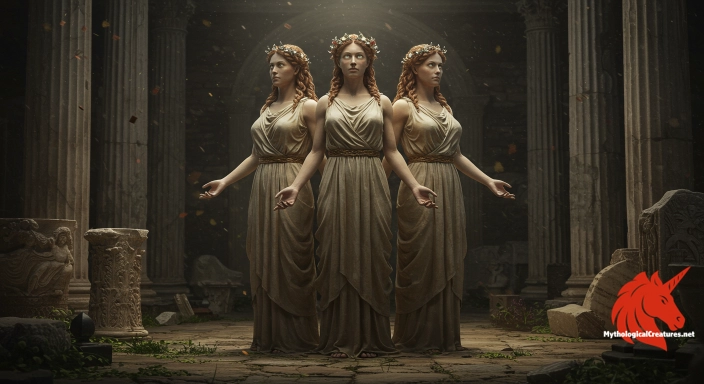
Matres and Matronae
Matres and Matronae - Their cult highlights the importance of maternal figures in ensuring both fertility and communal well-being during periods of change and uncertainty.
Origins & First Encounters
The Matres and Matronae emerge as a distinctive pantheon of female deities celebrated in the far‐flung regions of northwestern Europe during the early centuries of the Common Era. Their early attestations, often carved on votive altars and reliefs, intertwine indigenous traditions with the cultural influences of a sprawling Roman presence. These deities symbolised fertility, protection, and the nurturing strength inherent in both the human and natural worlds. Their worship was deeply embedded in local rites and community life, reflecting an enduring reverence for the maternal archetype. Artistic depictions invariably present them in groups of three, a triadic grouping that suggests balance, completeness, and the multifaceted nature of female power. Inscriptions on these monuments reveal names in both Celtic and Germanic idioms, underscoring a syncretic embrace of diverse cultural traditions. Communities ranging from Germania and Eastern Gaul to Northern Italy lent these goddesses a profound local significance. Their legacy has persisted over the centuries, offering modern scholars and myth enthusiasts a window into ancient religious practices and the timeless symbolism of motherhood and fertility. The enduring imagery of the Matres and Matronae continues to captivate those interested in the interplay of culture, religion, and art.
Source Texts & Tale Variants
Ancient inscriptions, votive altars, and relief monuments provide the primary sources that inform our understanding of the Matres and Matronae. These artefacts, discovered across a wide geographical range, feature consistent representations of the deities in groups of three. The inscriptions themselves alternate between Continental Celtic and Germanic names, mirroring the diverse cultural settings in which they were venerated. Archaeological finds in regions such as Germania, Eastern Gaul, and Northern Italy offer compelling evidence of their widespread appeal. In Spain and Portugal, where local dedications such as Matribus Gallaicis have been recorded, the iconography takes on distinctive regional hues. The relics serve not only as devotional tokens but also as documents of a shared mythic language that extended into the Romano-Celtic culture of Pannonia. The varying epithets captured on these objects hint at a rich variety of story variants that evolved over time. While extended narrative texts are rare, the inscriptions and reliefs collectively suggest themes of fertility, healing, and communal protection. This patchwork of sources invites a dynamic interpretation of their myth, blending historical evidence with the imaginative reconstructions of later scholarship.
Form & Powers
The visual representations of the Matres and Matronae are rich with detail and symbolism, highlighting their role as embodiments of fertility and nurturing strength. Frequently depicted as a trio, each figure is rendered with idealised features that celebrate the maternal form. Their rounded features, gentle expressions, and elaborately styled head-dresses contribute to an unmistakable sense of care and abundance. Artists often incorporate symbolic objects, such as water jars or baskets of fruit, which further underline their connection to life and sustenance. The figures are typically adorned with simple yet gracefully executed attire that hints at both modesty and ritual significance. Variations in the artistic style can be observed, with some regions favouring intricate drapery that echoes Celtic patterns and others using broader, bolder strokes reflecting Germanic influences. Their formation in groups not only reinforces the power of communal identity but also suggests a dynamic interplay among the figures. The consistent theme of maternal vitality is enhanced through subtle details like extended hands or serene, blessing gestures. In sum, these detailed physical portrayals serve as a visual lexicon of life, fertility, and enduring communal strength.
Regional Faces
The portrayal of the Matres and Matronae reveals distinct regional variations that mirror the local cultural landscapes. In Eastern Gaul and Northern Italy, for instance, the deities are depicted with refined, elegant features that blend local artistry with the overarching influence of Roman aesthetics. In Germanic regions, the depictions often take on a more robust and earthy quality, reflecting the raw vitality of local ritual traditions. The adaptations continue in the Iberian Peninsula, where dedications such as Matribus Gallaicis indicate a uniquely local relationship with the divine feminine. In Pannonia, the goddesses sometimes appear under the epithet Nutrices Augustae, emphasising a protective and nurturing aspect tailored to regional spiritual needs. These diverse expressions are not merely artistic but also signify deeper cultural negotiations between indigenous beliefs and external influences. Local artistic customs, utilising particular dress cues, symbols, and poses, allowed communities to attribute specific communal values to these figures. Such regional adaptations underscore the fluidity of myth, where a shared divine archetype is continuously reshaped by the environment and societal context. Overall, the regional variations of their imagery provide a mosaic-like understanding of the Matres and Matronae that transcends mere provincial boundaries.
Cultural Parallels
The Matres and Matronae resonate with a broader spectrum of maternal deities found across various mythological traditions. Their frequent depiction in triads evokes parallels to the triple goddess concepts present in several cultures, where three aspects of the feminine are revered simultaneously. Comparable figures, such as the mother goddesses of ancient Italy or the triple deity motifs in Celtic lore, echo similar themes of fertility, domesticity, and protection. This cross-cultural motif serves as a reminder that the celebration of the nurturing aspect of the feminine is a near-universal human experience. In many respects, these deities share attributes with well-known figures such as Cybele or Demeter, whose roles similarly bridge the divine with the everyday aspects of sustenance and growth. The overlapping symbolism highlights a common understanding of the feminine divine as a source of life and continuity. Such interconnections also suggest that despite geographical and cultural distinctions, ancient societies frequently converged on similar motifs to express concepts of maternal power. Modern interpretations further draw on these parallels to underscore the universal relevance of nurturing figures. In comparative mythology, the Matres and Matronae thus occupy a unique space that is both regionally specific and broadly resonant.
Legacy & Modern Evolution
The historical evolution of the Matres and Matronae reveals a complex interplay between ancient worship and modern cultural perspectives. Initially celebrated through votive offerings and inscribed altars, their iconography began to transform as the Roman world evolved and gave way to new sociocultural paradigms. Although overt worship waned with the advent of emerging religious traditions, echoes of their influence persisted in the artistic and cultural expressions of medieval and early modern Europe. In recent times, these female deities have experienced a revival, particularly among neo-pagan and feminist circles seeking to reclaim symbols of ancient female empowerment. Contemporary art and literature continue to explore and reinterpret their imagery, underscoring themes of nurturing strength and communal resilience. Museums and cultural institutions now display these relics as poignant reminders of a past where the divine feminine played a pivotal role. Modern scholarship also re-evaluates their significance within the broad spectrum of European myth, recognising them as integral to the narrative of cultural syncretism. This enduring legacy highlights how the symbolic power of the Matres and Matronae continues to inspire dialogues on identity, spirituality, and the timeless allure of maternal energy. Their evolution from ancient worship to modern iconography exemplifies the dynamic and reconfigurable nature of myth in response to changing historical landscapes.
Interesting Fact
A notable feature of their cult is the consistent depiction of these goddesses in triads, which may reflect an ancient archetype of divine femininity shared across multiple cultural traditions.
For publishers and studios
Your next readers are already here
Many of our visitors are looking for books, campaigns, and resources that deepen their journey into myth. Position your title or setting here.
Discuss a placementQuick Creature Info
Features:
Associations:
Our Mythic Legendary Rating:

Also Sometimes Known As:
Habitat:
Supernatural Powers:
Physical Attributes:
Abilities:
Behavior:
Lore:
Related Creatures, Tales or Lore
- CCimolian Matres
- MMatres of Aquitaine
- TTriple Goddess archetypes
References
Discover Another Mythical Legend You May Not Have Heard Of?
Uncover the mysteries of ancient folklore and expand your knowledge of legendary beings from cultures around the world.
Dare to Meet the Amphiaraus....
Curated by the Mythological Creatures Team
Series editor: Mythological Creatures Directory
Primary desk: Hellenic & Ancient Mediterranean Desk
(rev. November 2025)