
Melia: Melia is a divine nymph from Greek mythology, celebrated as the consort of Apollo and a pivotal cult figure in Thebes.
-04ba0d5f-0994-4e1f-876c-08fb21dfad04_small.webp "Melia - Melia was an important cult figure in Thebes, representing the union of divine authority and natural water elements.")
Melia
Melia - Melia was an important cult figure in Thebes, representing the union of divine authority and natural water elements.
Origins & First Encounters
Emerging from the depths of ancient myth, Melia embodies a timeless fusion of water’s mystery and divine femininity. Born as a daughter of the Titan Oceanus, her origins echo the primordial energies of the world’s earliest waters. Her union with Apollo infuses her narrative with the light and artistry of the celestial, forging a bond that enriches both the natural and divine realms. In the bustling religious heart of Thebes, her presence was celebrated through ritual and reverence, symbolising the nurturing forces that sustain life. As a consort of the radiant sun god, her myth reflects a harmonious blend of natural abundance and cosmic order. The cultic practices surrounding her often celebrated the sacred spring and river, which were seen as vital sources of both physical and spiritual sustenance. Over time, Melia’s legacy grew to represent fertility, renewal, and the reverence of nature’s cyclical rhythms. Her story resonated with communities who intertwined their local environment with divine myth, making her an enduring figure in ancient tradition. The evolution of her narrative showcases how local deities could bridge the gap between the elemental forces of nature and the soaring heights of celestial influence. In every retelling, Melia remains a beacon of the symbiotic relationship between humankind and the living waters of the earth.
Source Texts & Tale Variants
Ancient literary fragments and local inscriptions provide tantalising glimpses into the mythic fabric surrounding Melia. Scattered mentions in early hymns and ritual texts hint at her role as both a divine progenitor and a guardian of sacred waters. Local Theban sources converge on her importance at the Ismenion, where she was honoured alongside Apollo in a rich tapestry of cult practice. Varied story variants appear in the remnants of poetic works and ephemeral accounts, each emphasising different facets of her identity. Some versions stress her position as the mother of heroic figures, while others underscore her close kinship with other river and water deities. In these sources, the boundaries between biographical myth and ritual practice often blur, lending her tale a layered complexity. Over centuries, minor poets and local bards adapted her story to reflect regional values and natural phenomena. The answer to her myth is pieced together through a mosaic of references that, despite their fragmentary nature, affirm her enduring influence. Each variant of her narrative contributes to a composite picture that bridges canonical tradition and local folklore. As these diverse sources interlace, they underscore the cultural significance of Melia in ancient religious life.
Form & Powers
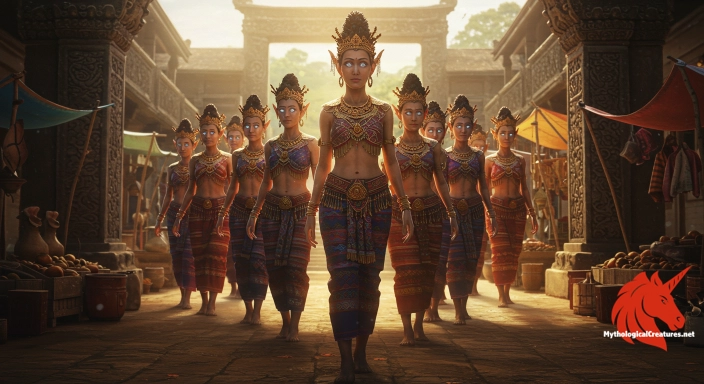
Although detailed physical descriptions of Melia are rare in ancient texts, artistic conventions offer a vivid portrayal of her ethereal beauty. Traditionally, she is depicted with a luminous, almost otherworldly complexion that mirrors the reflective sheen of a tranquil water surface. Her eyes are often imagined as clear and deep, reminiscent of a hidden spring shimmering under the light of day. Flowing, wavy hair cascades around her shoulders, evoking the motion of gentle river currents. In many depictions, soft draperies and fluid garments surround her figure, hinting at her close kinship with the element of water. The grace of her stance and the delicacy of her features suggest a harmonious blend of strength and tenderness. Artists have frequently captured her serene expression, which conveys both wisdom and a subtle, nurturing power. The interplay of light on her visage in sculptures and vase paintings serves to highlight her as a symbol of both renewal and ethereal beauty. Each rendition, though varied in detail, consistently channels the natural elegance and dynamic fluidity inherent to water. Through these visual cues, Melia is portrayed as a timeless embodiment of natural grace and divine allure.
Regional Faces
An exploration of regional traditions reveals that Melia’s myth was not confined solely to Theban narratives but resonated across diverse local cultures. In Thebes, she was venerated as a guardian spirit of the sacred spring and river, her legend interwoven with the city’s religious and environmental identity. Beyond Thebes, neighbouring communities adapted her myth to reflect local geographical markers, often merging her persona with other water nymphs or deities unique to their region. In parts of Asia Minor and the Italian peninsula, parallel figures emerge, suggesting that Melia’s attributes were emblematic of a broader Mediterranean reverence for water and fertility. Local ritual practices and artistic depictions emphasise her role as a mediator between the divine and the earthly, often colouring her image with unique stylistic elements. Variations in her worship practices underscore the interplay between universal myth and regional tradition. Many stories incorporate the local landscape—rivers, springs, and groves—as active participants in her mythos, thereby personalising the divine encounter. Oral traditions have enriched her character with nuances that echo the specific environmental and cultural concerns of each locale. These regional adaptations of her story highlight the dynamic process by which myth evolves to reflect both communal identity and natural heritage. In every variation, Melia’s enduring image as a nurturer and mediator stands as a testament to the adaptability of myth in diverse cultural landscapes.
Cultural Parallels
Melia’s narrative invites a cross-cultural dialogue by aligning her with a host of water deities and nurturing divine figures across ancient mythologies. Her role as a guardian of sacred springs places her in the same liturgical tradition as the Naiads and other minor water nymphs celebrated throughout Greek lore. The union with a solar deity like Apollo finds echoes in various mythic traditions where water and light combine to symbolise the harmonisation of opposing elements. In Roman mythology, figures associated with freshwater and fertility mirror aspects of her character, affirming a timeless reverence for nature’s nurturing gifts. Comparable deities in other cultures often serve as metaphors for renewal and cyclical regeneration, underscoring similar themes that pervade Melia’s myth. This alignment across different traditions illustrates how communities universally embraced the sanctity of natural water sources. Comparative mythology shows that the blending of celestial with chthonic forces is a common cultural motif, further enriched in Melia’s story. Her myth occupies a valuable space in understanding how divine femininity and natural phenomena intertwine across civilizations. These parallels not only illuminate shared human values but also enhance the complexity and resonance of her own narrative. In drawing these connections, Melia stands as a symbol both distinctly local and universally significant in the ancient mythological canon.
Legacy & Modern Evolution
Over the centuries, Melia’s myth has undergone a remarkable evolution, transitioning from a central figure in local cult practices to a symbol of nature’s enduring mystery and bounty. In ancient Thebes, she was worshipped with intense devotion at the Ismenion, where ritual and legend merged to celebrate her divine essence. With the advent of new religious paradigms and the decline of local polytheistic traditions, her worship receded, yet the echoes of her myth persisted in folklore and artistic traditions. The revival of classical studies during the Renaissance brought renewed interest in her image, inspiring artists and writers to reinterpret her qualities through the lens of modern symbolism. In contemporary times, Melia has been recast as an emblem of ecological sensitivity, representing the vital link between humanity and the natural world. Her story is frequently invoked in academic and artistic circles that explore themes of feminine power, environmental renewal, and the sacred aspects of water. Modern reinterpretations often highlight her dual role as both nurturer and mediator between nature and the divine, imbuing her myth with fresh relevance. Neo-pagan and ecological movements sometimes adopt her imagery as a celebration of the cycles of life and nature’s resilience. The historical transformation of her narrative reflects the broader evolution of myth in response to changing cultural and social landscapes. Today, Melia endures as a potent symbol, her legacy a bridge between the revered rituals of the ancient world and the contemporary quest for environmental harmony.
Interesting Fact
Melia's ambiguous familial ties, particularly regarding her relationship with Ismenus, illustrate the intricate and overlapping genealogies prevalent in Greek myth.
For publishers and studios
Your next readers are already here
Many of our visitors are looking for books, campaigns, and resources that deepen their journey into myth. Position your title or setting here.
Discuss a placementQuick Creature Info
Origin:
Associations:
Our Mythic Legendary Rating:

Habitat:
Supernatural Powers:
Physical Attributes:
Abilities:
Behavior:
Lore:
References
Discover Another Mythical Legend You May Not Have Heard Of?
Uncover the mysteries of ancient folklore and expand your knowledge of legendary beings from cultures around the world.
Dare to Meet the Market goddesses....
Curated by the Mythological Creatures Team
Series editor: Mythological Creatures Directory
Primary desk: Hellenic & Ancient Mediterranean Desk
(rev. November 2025)