
Merlion: The Merlion is a mythical creature with the head of a lion and the body of a fish, serving as the official mascot of Singapore.
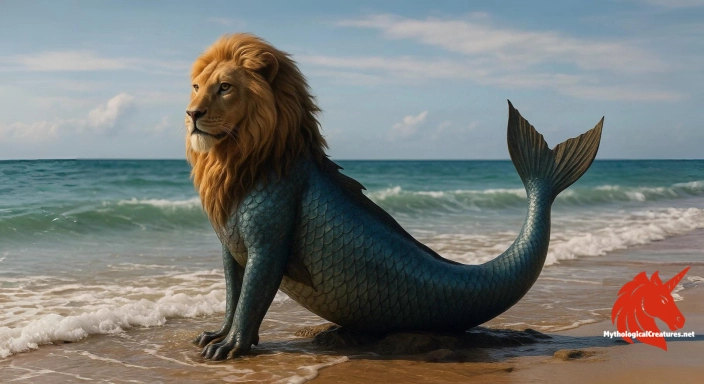
Merlion
Merlion - The Merlion encapsulates Singapore's history as a fishing village and its evolution into a modern metropolis, combining maritime and lion imagery to convey strength and resilience.
Origins & First Encounters
Emerging as one of Singapore’s most celebrated national icons, the Merlion embodies a captivating union of aquatic elegance and regal strength. Born from an innovative effort to capture the spirit of Singapore’s maritime heritage alongside its historic identity as the Lion City, the creature’s origins are uniquely modern yet imbued with a sense of timeless myth. Its design, merging the graceful body of a fish with the dignified head of a lion, symbolises the dual legacy of ancient fishing settlements and royal aspirations. Introduced in the mid-1960s as a tourism emblem, the Merlion quickly grew to represent not only a visual trademark but also a narrative of cultural rebirth. The very name, integrating 'mer' for the sea and 'lion' for the regal beast, elegantly reflects Singapore’s evolution from Temasek to Singapura. It was originally crafted to inspire unity and pride among citizens while inviting visitors to explore a city steeped in history yet charged with modern energy. The icon, through its striking form and symbolic resonance, has since become embedded in the collective imagination of Singaporeans. Over time, the Merlion has transcended its utilitarian roots to emerge as an artistic muse, bridging folklore with national identity. Its enduring appeal lies in its ability to encapsulate both the resilience of a fishing village and the ambition of a global city. Today, it stands as a dynamic testament to Singapore’s journey, inviting continual reinterpretation as the nation itself evolves.
Source Texts & Tale Variants
Although the Merlion is a relatively modern construct, its story is well documented in official records and tourism archives dating back to the 1960s. It was originally conceived by Alec Fraser-Brunner, whose creative vision for the Singapore Tourism Board provided the groundwork for this iconic figure. Early tourism literature and government communications clearly outline the deliberate design that combined elements of both marine and terrestrial lore. Over the decades, official documents have recounted the creature’s genesis while local narratives have expanded its mythic qualities. Different versions of its story often highlight either its role as a symbol of Singapore’s maritime origins or its representation as a guardian of urban pride. Creative retellings in souvenirs and promotional literature add layers of imaginative interpretation to the basic design. Folkloric embellishments have further integrated elements of adventure and mystique into its narrative, even though its early attestations lean heavily on administrative sources. The spread of the Merlion’s image in public art and media has encouraged a diversity of accounts, each contributing to a broader, evolving mythos. Modern storytellers continue to reinterpret its origins, merging official accounts with local creative traditions. Thus, while the primary sources provide a firm foundation, the Merlion’s narrative has grown richer with every retelling.
Form & Powers
The Merlion is instantly recognisable through its remarkable hybrid form, which adeptly marries the features of a majestic lion with the sinuous elegance of a fish. Its lion head, characterised by a stately profile and a flowing mane, suggests both authority and grace. In contrast, the streamlined fish body is rendered with delicate scales and a tail that hints at the vigorous yet fluid nature of water. Artists often focus on the interplay between the textured mane and the shimmering fish scales, crafting details that highlight its dual natures. When depicted in statues and digital media, the creature is frequently portrayed in dynamic poses, as though it is transitioning between land and water with effortless poise. Variations in design sometimes accentuate the lion’s powerful jawline or the graceful curvature of the aquatic tail, depending on the artist’s vision. The fusion of these disparate elements creates a visual narrative of strength and adaptability, resonating with both historic symbolism and modern aesthetics. Every rendition, from classic carvings to contemporary installations, showcases intricate details that evoke both fierceness and fluidity. The attention given to each physical characteristic ensures that the creature remains a compelling figure in Singaporean culture. Ultimately, the Merlion’s form is a deliberate artistic choice that captures the essence of transformation and enduring legacy.
Regional Faces
While the Merlion’s fundamental design remains consistent as a symbol of Singapore, regional artistic expressions have introduced subtle yet meaningful variations. Within Singapore, official portrayals tend to maintain a sleek, modern aesthetic that aligns with the nation’s progressive urban landscape. Touristic merchandise and public installations often adopt vibrant colours and imaginative detailing to make the creature approachable and engaging. In certain local contexts, artists experiment with the balance between the noble lion and the fluid fish elements, sometimes emphasising one aspect to cater to contemporary tastes. This flexibility in design reflects the diverse cultural influences at play in Singapore’s multicultural society. Street art and independent projects may infuse additional decorative patterns or even local motifs, thereby connecting the icon to a broader Southeast Asian context. Exhibitions and public artworks sometimes reimagine the Merlion against different backdrops, whether historical or futuristic, adding layers to its visual narrative. These regional adaptations not only celebrate the icon’s heritage but also invite ongoing reinterpretation by artists across various media. The evolution in stylistic preferences underscores the Merlion’s role as both a historic emblem and a living piece of cultural expression. Thus, its regional variations act as a canvas for local creativity while remaining firmly rooted in its original symbolism.
Cultural Parallels
The Merlion occupies a fascinating niche in the realm of hybrid mythological creatures, inviting comparisons with entities from diverse global traditions. Merging the regal attributes of a lion with the fluid symbolism of a fish, it echoes the thematic duality seen in other legendary hybrids, such as the griffin or the hippocampus. While the griffin is renowned for its juxtaposition of terrestrial power and aerial majesty, the Merlion uniquely binds the fervour of land with the mystique of the sea. This synthesis of attributes finds a distant parallel in maritime myths where aquatic creatures are imbued with supernatural guardianship. Across various cultures, animals that straddle boundaries—whether between domains of water and air or water and land—often come to symbolise transformation and unity. In this respect, the Merlion resonates with other cultural emblems that capture complex identities through hybrid forms. Its design, specifically tailored to convey Singapore’s historical journey, stands apart by encapsulating a very local narrative while still echoing universal themes. Such cross-cultural connections reinforce the notion that hybrids in mythology serve as powerful symbols of transition and resilience. The comparative study of these creatures reveals shared motifs of adaptability and strength across the world’s mythic traditions. In essence, the Merlion contributes to a global dialogue where art, culture, and history converge to create symbols steeped in layered meaning.
Legacy & Modern Evolution
The evolution of the Merlion from a modest tourism logo into a venerated national emblem reflects a dynamic journey of historical and cultural transformation. Initially crafted in the 1960s as a simple symbol to promote Singapore’s maritime heritage, its design has been progressively enriched by layers of meaning over subsequent decades. As Singapore evolved from a small fishing village into a vibrant global city, the Merlion’s image adapted to embody both nostalgia for the past and hopes for the future. Modern renderings frequently incorporate contemporary artistic techniques, contributing fresh interpretations that resonate with a young and diverse audience. Its presence is ubiquitous—from monumental statues in bustling city centres to subtle references in digital media and fashion. The continued use of the Merlion in sports team logos, advertising, and public art highlights its deep-rooted association with national pride and identity. Over time, as technology and artistic innovation have advanced, the creature’s portrayal has embraced sleek, futuristic designs while maintaining its legendary core. This evolution underscores the adaptability of a symbol that is both historic and ever-relevant. The Merlion’s legacy is not just confined to visual representation; it carries with it the rich heritage of Singapore and continues to inspire pride and unity among its people. In this way, the creature stands as a living testament to the nation’s enduring creative spirit and progressive journey.
Interesting Fact
Despite its mythological appearance, the Merlion is a modern creation, born out of a 1964 design, and has since transformed into a beloved national icon and a global symbol of Singapore.
Mythology-aligned partners
Showcase your myth-friendly brand here
Run a store, studio, or platform that lives in the world of myth and folklore? A curated sponsor panel on these pages may fit.
Explore partnership optionsQuick Creature Info
Origin:
Features:
Associations:
Our Mythic Legendary Rating:

Habitat:
Physical Attributes:
Behavior:
Lore:
References
Discover Another Mythical Legend You May Not Have Heard Of?
Uncover the mysteries of ancient folklore and expand your knowledge of legendary beings from cultures around the world.
Dare to Meet the Amanojaku....
Curated by the Mythological Creatures Team
Series editor: Mythological Creatures Directory
Primary desk: Asian & Pacific Myth Cycles Desk
(rev. November 2025)