
Mhachkay: Mhachkay is a vampire-like creature from Turkic and Tatar mythology.
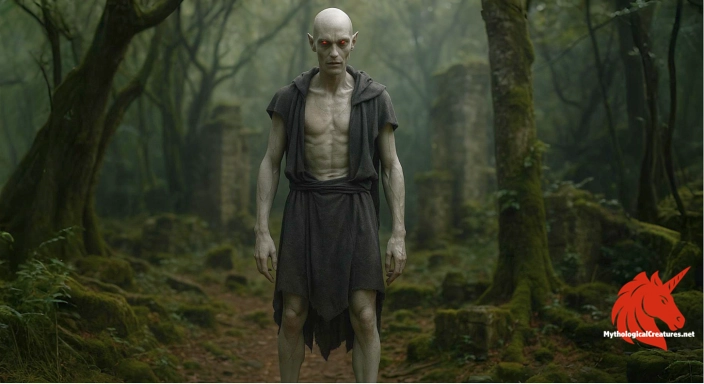
Mhachkay
Mhachkay - Serves as a cautionary symbol of supernatural predation and the dangers lurking within the night in Turkic folklore.
Origins & First Encounters
Emerging from the rich historical landscapes of the Turkic and Tatar peoples, Mhachkay has long been a figure steeped in mystery and cultural resonance. Its origins are rooted in the oral narratives of nomadic tribes who roamed vast steppes under starlit skies, where tales of spectral beings abounded. Over generations, the Mhachkay evolved from a whispered legend to a symbol embodying both dread and the mystical unknown. The creature’s name, rendered in various forms such as Meçkey in Turkish and Məçkəy in Azerbaijani, reflects the diverse cultural exchanges across the region. Its first attestations, though embedded within scattered folklore, hint at a legacy intertwined with life's transience and the perilous nature of the night. In this blend of myth and regional identity, the Mhachkay serves as a bridge between the tangible world and the realm of spirits. The narrative not only entertains but also cautions against unseen dangers that lurk beyond the light. Even today, the enduring myth of the Mhachkay captivates, offering a lens through which to explore the fears and fantasies of ancient communities. Its story is a testament to the power of oral tradition and the ways in which cultural memory transforms with time.
Source Texts & Tale Variants
The primary records of Mhachkay’s legend are found more in the realm of oral tradition than in formal texts, with storytellers and bards preserving its lore through generations. Scattered mentions in medieval manuscripts and local compendia hint at a creature whose enigmatic nature left a deep impression on early Turkic societies. Variants of the tale appear in different regions, each adapting the narrative to mirror local experiences and societal values. In some recensions, Mhachkay appears as a solitary wanderer cursed with an eternal existence, while other versions cast it as a spectral guardian of forbidden spaces. The consistency across these variants, despite their regional peculiarities, reinforces the creature’s potent role in myth. Folk songs, epic ballads, and cautionary tales all serve as conduits for this myth, allowing the Mhachkay to persist in collective memory. Even where written records are sparse, oral transmissions have ensured that every twist in the tradition adds to its allure. These multiple strands of storytelling weave together a complex tapestry that is as varied as it is compelling. The rich, albeit fragmented, evidence of its existence underscores the dynamic interplay between spoken word and cultural identity.
Form & Powers
Descriptions of Mhachkay often evoke a sense of eerie beauty and otherworldly dread, defining it as a creature that straddles the boundary between man and myth. Its form is typically portrayed as gaunt and angular, with skin that appears almost luminescent under the pale light of the moon. Observers speak of deep, penetrating eyes that shimmer with a spectral glow, hinting at the sorrow and eternal night within. Tales relay that its features are both striking and unsettling, combining elements that are recognisably human with those that seem distinctly inhuman. The creature is often depicted with elongated limbs and a fluid, almost ghostlike movement that renders its presence both graceful and menacing. Some traditions liken its dental structure to that of a vampire, with subtly refined fangs capable of a deadly bite. A shadowy aura is said to cling to Mhachkay, giving it a mutable outline that can merge with the night. Variations of the myth describe shifts in its appearance depending on the observer’s state of mind or the prevailing mood of the night. This constellation of physical traits has inspired vivid interpretations in regional art and folklore, reinforcing its role as an enduring emblem of nocturnal mystique. Over time, the amalgamation of these details has created an image that is as much symbolic as it is literal.
Regional Faces
As Mhachkay’s legend spread across diverse Turkic territories, each region imbued it with nuances reflective of local cultural landscapes. In Tatar folklore, the creature is often portrayed as a solitary, tormented spirit whose wandering reminds communities of the consequences of breaking sacred taboos. Turkish renditions, where it is known as Meçkey, stress a more enigmatic presence intertwined with histories of honour and betrayal. In Azerbaijani lore, Mhachkay acquires an air of cunning mystery, sometimes even assuming the role of a reluctant harbinger tasked with delivering ominous omens. In regions influenced by Russian narratives, the myth is further complicated by the integration of Slavic supernatural elements, emphasising its role as a liminal figure between different worlds. Local artistic expressions, from intricate tapestries to haunting oral recitations, often highlight subtle variations in its physical makeup and spiritual predispositions. The differences in portrayal underscore how regional traditions rework a common myth to address local social and moral dilemmas. Community festivals and seasonal rituals sometimes invoke Mhachkay in symbolic re-enactments, further realigning its character with contemporary cultural concerns. These adaptations reveal the fluidity of myth, where each retelling reinforces a specific regional identity while contributing to a broader, interconnected tapestry of folklore.
Cultural Parallels
Encountering Mhachkay inevitably draws comparisons to other legendary entities that haunt the twilight between life and death. In many respects, its attributes mirror those of Western vampires, yet its origins are deeply embedded in the Turkic and Tatar experiences of the natural world. Unlike the aristocratic seduction of the classic vampire, Mhachkay embodies a sense of rugged, unrefined inevitability that is reflective of nomadic survival and the stark realities of life on the steppes. There is a clear thematic resonance with similar figures found in Slavic lore, where the boundary between the cursed and the supernatural is equally blurred. The creature’s role as both a forewarning and a tragic figure demonstrates an intriguing parallel with global mythic archetypes concerned with the disruption of natural order. Such comparative studies reveal that while many cultures share a fascination with beings of the night, the contextualisation of Mhachkay is uniquely informed by its cultural and geographical milieu. It exists not merely as a monster, but as a complex symbol straddling the lines of retribution, loss, and the eternal search for redemption. The synthesis of these characteristics offers a rich, layered narrative that helps explain both the universal and the particular aspects of vampiric lore. In comparing Mhachkay with its global counterparts, one witnesses the diversity of myth-making processes that transform regional fears into timeless legends.
Legacy & Modern Evolution
The historical evolution of Mhachkay’s myth reflects a continuous dialogue between ancient tradition and modern reinterpretation. Emerging from oral histories as a manifestation of natural and supernatural fears, the creature’s legend has been reshaped over centuries to adapt to shifting cultural landscapes. In earlier eras, Mhachkay’s role was closely tied to moral and social orders, serving as an ever-present warning against transgression and the disruption of communal harmony. As literary and artistic forms evolved in the region, so too did the portrayal of the creature, shifting from a purely fearsome spectre to a more complex figure imbued with both tragedy and allure. Modern adaptations have seen Mhachkay transcend its original narrative, appearing in films, novels, and visual arts where it is reimagined to comment on contemporary societal anxieties. The renewed interest in folklore in academic and cultural circles has sparked detailed reinterpretations that blend historical fact with mythological creativity. This evolving legacy not only testifies to the enduring power of the myth but also mirrors broader cultural shifts, allowing old stories to speak to new generations. Numerous modern festivals and creative projects reassert the Mhachkay as a potent symbol of the mysteries that still haunt the human soul. As a living myth, it continues to stimulate discussions about heritage, the nature of evil, and the perennial allure of legends that refuse to fade away.
Interesting Fact
Despite sharing characteristics with the classic vampire, Mhachkay is uniquely embedded in Turkic mythology, highlighting regional variations in supernatural lore.
For publishers and studios
Your next readers are already here
Many of our visitors are looking for books, campaigns, and resources that deepen their journey into myth. Position your title or setting here.
Discuss a placementQuick Creature Info
Origin:
Associations:
Our Mythic Legendary Rating:

Also Sometimes Known As:
Habitat:
Supernatural Powers:
Physical Attributes:
Abilities:
Behavior:
Weaknesses:
Lore:
References
Discover Another Mythical Legend You May Not Have Heard Of?
Uncover the mysteries of ancient folklore and expand your knowledge of legendary beings from cultures around the world.
Dare to Meet the Eucrante....
-62f0ff5b-54a3-40cb-b98e-8d42382fb134_small.webp "Depiction of Eucrante")
Curated by the Mythological Creatures Team
Series editor: Mythological Creatures Directory
Primary desk: Asian & Pacific Myth Cycles Desk
(rev. November 2025)