
Minokawa: Minokawa is a colossal, mythological bird from Philippine folklore known for its dragon-like features and celestial devouring capabilities.
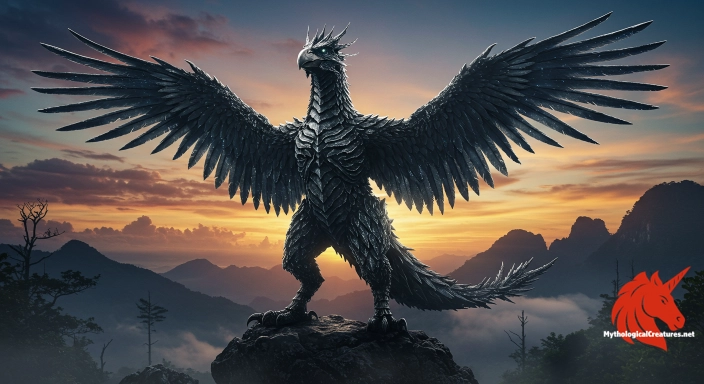
Minokawa
Minokawa - Serves as a mythological explanation for eclipses and represents the formidable power of the cosmos in Philippine folklore.
Origins & First Encounters
Minokawa stands out in Philippine mythology as a colossal, dragon-like bird whose immense presence has long been intertwined with cosmic mysteries. Its legendary size served as an early explanation for celestial events, particularly during the dramatic spectacle of solar eclipses. The creature is fabled to possess the power to swallow or blanket the sun, a notion that evoked both fear and wonder among ancient peoples. Rooted in pre-colonial traditions, its myth first appeared in the oral narratives of indigenous groups, echoing early attempts to make sense of the natural world. The depiction of Minokawa weaves together elements of avian grace and draconic ferocity, symbolising a seamless bridge between the earthly and the divine. Over generations, storytellers have enriched its lore, blending astronomical phenomena with morally charged allegories about the balance of nature. The tales surrounding this mighty bird reflect the deep cultural connection to the cosmos found across various Philippine communities. Its narrative not only explains the sudden darkening of the sun but also underscores the timeless human fascination with the mysteries of the heavens. The enduring allure of Minokawa lies in its ability to encapsulate both awe-inspiring beauty and overwhelming power. Even in modern times, the myth continues to captivate, resonating with the universal themes of nature’s unpredictability and cosmic order.
Source Texts & Tale Variants
Ancient accounts of Minokawa have been carefully preserved through a rich tapestry of oral traditions and early folkloric records. One of the most memorable versions is found in a Bagobo tale, where the bird is described as being as large as an island, its features imbued with supernatural might. Such narratives vividly recount its sword-like feathers, mirror-reflecting eyes, and metallic beak and legs, which collectively contribute to its awe-inspiring presence. Other traditions, particularly among the Visayans, introduce a celestial dimension by situating the bird near a mysterious cave known as calulundan. Early written compilations and later anthropological studies have captured these variations, though they often reflect the storyteller's own cultural lens. The multiplicity of versions underlines the dynamic and adaptive nature of myth, with each variant emphasising aspects that resonate with local beliefs. These sources not only document the creature’s intimidating physical attributes but also frame it as a pivotal figure in explaining phenomena such as eclipses. Over the centuries, the fluidity of these narratives has allowed the myth of Minokawa to thrive, transforming with the changing cosmic and cultural landscapes. Each retelling adds another layer of complexity, ensuring its place as a central character in the Philippine mythological canon.
Form & Powers
Minokawa is depicted with a series of dramatic features that combine the elegance of a bird with the imposing strength of a dragon. Its wings, often described as vast and commanding, are said to stretch across distances that defy mortal comprehension. The bird’s feathers are not merely ornamental but are portrayed as sharp, sword-like structures that glisten with a metallic luster. Its eyes are likened to polished mirrors, catching and reflecting the light of the cosmos in a manner that is both eerie and enchanting. The beak and legs are compared to steel, reinforcing the image of a creature forged from both natural force and otherworldly power. Every physical detail, from the intricate pattern of its plumage to the sturdy construction of its limbs, contributes to the mythos surrounding its celestial might. In some accounts, its size is so prodigious that it mirrors the very scale of an island, further blurring the lines between the mythical and the natural. The physical portrayal of Minokawa highlights a deliberate contrast between delicate beauty and formidable strength, inviting awe from all who hear its tale. Such vivid descriptions not only serve to terrify but also to enchant, creating a memorable symbol of cosmic grandeur. Through these meticulously detailed attributes, the creature emerges as a timeless emblem of nature’s untamable spirit.
Regional Faces
Across the archipelago, local interpretations of Minokawa have infused its legend with distinctive regional flavours. Among the Bagobo people, the myth positions the bird at the very edge of the sky, with its size equated to that of an island, an image that speaks to the boundless nature of the cosmos. In contrast, Visayan traditions are marked by the intriguing inclusion of a cave called calulundan, which is said to exist above the sky and adds a mysterious layer to the bird’s celestial abode. Regional narratives vary in their emphasis, with some communities focusing on the bird’s role in momentarily devouring the sun, while others detail its broader impact on the cosmic order. The different portrayals across regions underscore the versatility of the myth and reflect the varying cultural priorities of each community. Local storytellers have adapted the creature’s narrative to address specific environmental, astronomical, and spiritual concerns relevant to their surroundings. This divergence in regional lore enriches the myth, as each variation contributes new interpretations and symbolic meanings. Despite these differences, a common thread remains: the depiction of Minokawa as an awe-inspiring being whose power transcends the limits of everyday life. Each regional version complements the others, producing a vibrant mosaic of myth that is unique to the Philippine cultural landscape. In this way, the regional variations of Minokawa exemplify how folklore adapts to and integrates with local identity and environment.
Cultural Parallels
The myth of Minokawa resonates with similar legendary creatures found across the globe, inviting a rich comparative analysis with its counterparts. For instance, the Native American Thunderbird shares with Minokawa the role of a mighty sky dweller capable of influencing weather and celestial phenomena. Similarly, the roc from Arabian legends mirrors the sheer size and awe-inspiring presence attributed to this Philippine giant. These parallels extend to the symbolic function of these myths, where colossal birds serve as both agents of cosmic disruption and embodiments of natural order. Cross-cultural narratives often use such creatures to bridge the gap between the known and the mysterious, much as Minokawa does by explaining phenomena like eclipses. Like Chinese dragons that seamlessly blend from earthly might to heavenly magic, Minokawa inhabits a liminal space between physical might and otherworldly mystique. These shared themes across different cultures underscore a universal human impulse to personify nature’s grandeur in the form of majestic, almost deific, beings. The recurring motif of a colossal bird in diverse mythologies speaks to common existential questions about power, fate, and the unknown. In comparing these legends, one can appreciate how Filipino tradition not only aligns with but also enriches a global mythological narrative. Ultimately, Minokawa stands as a profound symbol, echoing the creative and interpretive capacities inherent in mythmaking throughout the world.
Legacy & Modern Evolution
The myth of Minokawa has undergone a significant evolution, transitioning from its roots in ancient folklore to a symbol reinterpreted by modern culture. Early narratives cast it in a purely cosmic role, explaining the darkening of the sun during eclipses and representing the unbridled forces of the universe. Over time, these traditional stories have been adapted and revitalised, finding new expressions in literature, art, and contemporary media. Modern reinterpretations often cast Minokawa as both a cautionary emblem of nature’s unpredictable power and a majestic force that bridges the gap between myth and reality. This evolution reflects a broader trend in which indigenous legends are re-examined in light of current environmental and existential concerns. The creature’s image has also been embraced as part of a cultural renaissance, celebrating the rich heritage of pre-colonial Philippine belief systems. Artistic renditions now blend classical myth with modern aesthetics, thereby ensuring that Minokawa remains a vivid and relevant symbol. Academic and popular discussions alike continue to explore its narrative as reflective of both historical cosmology and modern environmental allegory. The enduring legacy of Minokawa underscores the dynamic nature of myth—constantly evolving to illuminate contemporary truths while remaining anchored in ancient wisdom. In this fusion of past and present, the creature’s myth persists as a testament to the timeless human quest to understand the mysteries of the cosmos.
Interesting Fact
Minokawa not only serves as a mythical explanation for astronomical phenomena but also reflects the rich and imaginative narrative traditions of the Philippines.
Reach myth fans
Connect your myth-driven brand with this audience
Our readers are writers, educators, gamers, and collectors who care about mythology. Enquire about a limited sponsor placement on creature pages.
Enquire about sponsorshipQuick Creature Info
Origin:
Associations:
Our Mythic Legendary Rating:

Habitat:
Supernatural Powers:
Physical Attributes:
Abilities:
Behavior:
Lore:
References
Discover Another Mythical Legend You May Not Have Heard Of?
Uncover the mysteries of ancient folklore and expand your knowledge of legendary beings from cultures around the world.
Dare to Meet the Firefox....
-904977e6-226f-412f-8274-ee53e9c9b91c_small.webp "Depiction of Firefox")
Curated by the Mythological Creatures Team
Series editor: Mythological Creatures Directory
Primary desk: Asian & Pacific Myth Cycles Desk
(rev. November 2025)