
Minthe: Minthe is an Underworld Naiad from ancient Greek mythology, once a beautiful nymph beloved by Hades.

Minthe
Minthe - Minthe's myth explains the origin of the mint plant and reflects themes of love, jealousy, and divine retribution in the Greek Underworld.
the legend in five swipes.
the legend in five swipes.
Minthe: Origins and First Sightings
Minthe emerges in ancient Greek myth as a bewitching naiad whose origins lie in the shadowed corridors of the Underworld. She is intricately connected with the river Cocytus, a spectral waterway that underpins her enigmatic allure. Her tale unfolds in a cultural milieu where divine passions and mortal frailties interplay, leaving an indelible mark on myth and ritual. From her very inception, Minthe’s narrative has been entwined with that of Hades, the stern yet fascinating sovereign of the nether regions. The ancient storytellers wove her story to reflect themes of desire, transformation, and the bittersweet nature of divine love. In early attestations, her beauty and tragic destiny resonated with audiences, becoming a cautionary symbol of the unpredictable forces of the gods. Her myth not only celebrated the ephemeral charm of youthful beauty but also served as a metaphor for the inevitable transformations wrought by time and power. The legacy of Minthe’s story illustrates a profound connection between nature and the divine, anchoring her place in the broader tapestry of Greek mythology and religious practice.
How many versions of the Minthe story are there?
The earliest accounts of Minthe can be traced through a mosaic of ancient literary references and oral transmissions that have survived in fragmentary form. Various classical texts hint at her association with the Underworld, often recounting her liaison with Hades and the subsequent metamorphosis she underwent. Some narratives recount her tragic end as a consequence of jealousy, while others imbue her transformation with a sense of inevitable natural evolution. Several sources from antiquity mention her as a minor yet poignant figure whose myth was passed down through generations of poets and storytellers. Her story, though not as elaborated as those of other major deities, nevertheless provides crucial insights into the interplay between character and nature in Greek myth. The variability in the retellings has led to multiple interpretations, each emphasising different facets of her character and fate. Oral traditions, in particular, enriched her narrative by allowing for regional embellishments and alternative endings. This multiplicity in the sources has contributed to ongoing scholarly debates and imaginative reinterpretations, ensuring that Minthe remains a figure of enduring mythological intrigue.
Minthe: Size, Shape and Strange Features
Minthe is typically envisioned as the epitome of ethereal beauty, embodying the delicate grace of a water spirit amid the solemnity of the Underworld. Art from antiquity often portrays her with flowing, lustrous hair that captures the shimmering essence of a cascading stream. Her form is lean and elegant, with gentle features that radiate a subtle, otherworldly charm. In many artistic depictions, hints of verdant green and silver are interwoven into her appearance, symbolically prefiguring the mint plant into which she was transformed. This visual iconography not only reflects her aquatic origins but also subtly underscores her tragic metamorphosis. The delicate expressions and soft contours of her depiction invite viewers to contemplate the delicate balance between beauty, life, and decay. While some images focus on her allure as a naiad, others incorporate motifs of botanical transformation, fusing human form and nature in a single frame. Each portrayal, whether rendered in sculpture or painted on ancient vases, conveys a poignant fusion of vitality and melancholy, capturing the transient nature of both her physical form and her mythic destiny.
Minthe: One Legend, Many Local Versions
Across the varied landscapes of the ancient Mediterranean, the myth of Minthe found unique expressions that reflected local traditions and natural surroundings. In regions of Greece, particularly those near sacred water sites, her association with the river Cocytus was accentuated to underscore the life-giving yet mysterious qualities of water. Local adaptations often reinterpreted her tragic transformation as symbolic of the cyclical rhythms in nature, marking transitions between seasons and states of being. In some locales, Minthe’s name was preserved in the vernacular as a term for the mint plant, reinforcing the tangible connection between myth and the everyday world of horticulture. The Roman and later Mediterranean reinterpretations broadened her narrative, viewing her metamorphosis both as an emblem of natural evolution and as a cautionary tale of divine retribution. Variants of the myth sometimes integrated indigenous water deities or local spirits, thereby enriching the legend with culturally specific motifs. These regional stories, adapted through oral transmission, allowed communities to imbue her tale with meanings reflective of their own environmental and social landscapes. Ultimately, the adaptability of Minthe’s myth across different regions highlights its universal themes, while each local twist adds a layer of complexity to her enduring legacy.
Do other traditions know Minthe by another name?
The myth of Minthe finds intriguing parallels in a number of global traditions where transformation and the interplay between divine and mundane are central themes. Like the tale of Hyacinthus, her story explores the profound intertwining of beauty and sorrow, with nature’s metamorphosis serving as both a memorial and a marker of loss. Similar motifs of transformation appear in myths surrounding other nymphs, such as Daphne, whose own narrative of fleeing divine pursuit resulted in her becoming a laurel tree. Although distinct in her association with the Underworld, Minthe shares with these figures the universal motif of metamorphosis—a concept that transcends cultures and epochs. Her story also resonates with later traditions where characters undergo dramatic changes that symbolise both the endurance and fragility of life. In folklore beyond Greece, parallels emerge in narratives where human passion intertwines with the natural world, resulting in transformations that preserve legacy in flora or fauna. The enduring presence of such themes in myth underlines a common human impulse to explain the natural world through stories of love, loss, and rebirth. Thus, Minthe's legend contributes to a rich, cross-cultural dialogue on the nature of transformation, bridging diverse mythologies through shared symbolic language.
Minthe: Then and Now
Throughout the centuries, Minthe’s myth has evolved from a relatively obscure narrative into a symbolic touchstone for themes of transformation and ephemeral beauty. Early artistic representations in vase painting and sculpture set the stage for her portrayal as a tragic figure whose fate was inexorably linked to the natural world. As antiquity gave way to the Renaissance and subsequent eras, her image was often reimagined to reflect contemporary attitudes toward nature, desire, and metamorphosis. Modern literary and artistic reinterpretations frequently cast her in new roles—a muse for environmental reflection or a personification of the bittersweet nature of human passion. The mint plant, blossoming in gardens and kitchens, serves as a living reminder of her story, its fragrance evoking both remembrance and metamorphosis. In today's visual arts and popular culture, echoes of her narrative are evident in works that explore the interplay between decay and regeneration. Her myth has also found resonance in academic and cultural discussions on the symbolic significance of botanical transformations in mythology. By merging the ancient with the modern, Minthe continues to inspire creative reinterpretations that celebrate the enduring complexity of myth and the natural world.
Interesting Fact
Minthe’s legend is one of the earliest myths explaining the origin of the mint plant, and it influenced the cultural symbolism of mint in the Mediterranean, representing both allure and the bittersweet nature of divine retribution.
Mythological Treasures
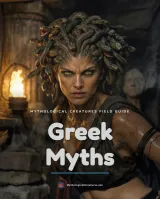
Greek Myths: A field guide to the monsters of ancient Greece
Every monster here earned its place in legend, and each gets a full page of artwork and the story behind it.
Egyptian Legends: A field guide to the gods and monsters of ancient Egypt
Guardians of the living and devourers of the dead, with the role each played in judgement.
Chinese Beasts: A field guide to the dragons and demon kings of Chinese myth
From river dragons to demon kings, with the legends that shaped five thousand years of storytelling.
the legend in five swipes.
Advertising opportunity
Showcase your mythology project
We offer limited sponsor placements for books, courses, games, and creators aligned with our audience.
View partnership optionsQuick Creature Info
Origin:
Features:
Associations:
Our Mythic Legendary Rating:

Also Sometimes Known As:
Habitat:
Supernatural Powers:
Physical Attributes:
Abilities:
Behavior:
Weaknesses:
Lore:
References
Discover Another Mythical Legend You May Not Have Heard Of?
Uncover the mysteries of ancient folklore and expand your knowledge of legendary beings from cultures around the world.
Dare to Meet the Nelisa....

The Mythological Creatures Book Series
Yokai, Greek, Norse, Egyptian & Chinese. Five illustrated field guides to the creatures the old stories either warned or told you about.




Curated by the Mythological Creatures Team
Series editor: Mythological Creatures Directory
Primary desk: Hellenic & Ancient Mediterranean Desk
(rev. November 2025)