
Mintuci: Mintuci is an aquatic supernatural creature from Ainu mythology, depicted as a half-man-half-beast water sprite.
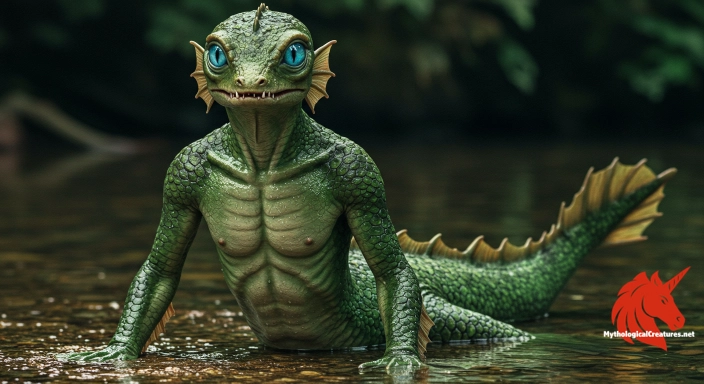
Mintuci
Mintuci - Mintuci embody the mysterious aquatic forces in Ainu belief systems and are considered variants of the kappa, linking indigenous Ainu traditions with broader Japanese yokai lore.
the legend in five swipes.
the legend in five swipes.
Mintuci: Origins and First Sightings
Mintuci, a spirited water sprite from Ainu tradition, captivates audiences with its mystique and dual nature. Born from the intertwining of human and beastly traits, it has long been considered a living emblem of nature’s unpredictable forces. Its origins are deeply embedded in ancient Ainu spiritual practices where water bodies are revered, mirroring the balance between human endeavour and the wild unknown. Early attestations of Mintuci emerge from a rich legacy of oral storytelling, where each narrative weaves subtle yet profound lessons about respect for the natural world. The creature occupies a unique space in folklore, challenging boundaries by embodying both benevolence and mischievous intent. Tales portray it as capable of impacting the fortunes of those who interact with it, reminding communities of the power inherent in natural elements. Although it shares similarities with other water spirits, the Mintuci retains a distinct identity tied to Ainu cultural and mythological frameworks. Its enduring legend is a testament to the dynamic interplay between humanity and the watery realms it venerates. Over the years, its portrayal has adapted to reflect evolving cultural sensibilities while still echoing its ancient origins.
Which versions of the Mintuci story survive?
The primary sources of Mintuci lore are found in the treasure trove of Ainu oral traditions passed down across generations. Many local narratives, preserved through storytelling, detail encounters with this half-man, half-beast entity that inhabits freshwater domains. Traditional accounts, sometimes referring to it as Mintuci Kamuy, underscore its supernatural origins and the reverence with which it was once regarded. Ethnographic studies from the Edo and early Meiji periods document these tales in recordings that capture a uniquely indigenous perspective. Diverse manuscripts and field notes reveal that storytellers often tailored their depictions to the local environment and cultural attitudes. Variants of these legends illustrate a spectrum of interpretations, some emphasising its benevolence while others highlight a more capricious nature. In some collections, the Mintuci is presented as a moral arbiter whose actions serve as allegories for natural laws and human responsibility. Recent compilations and reinterpretations have further enriched the narrative, blending scholarly research with contemporary folklore. This layered documentation ensures that each retelling contributes to the evolving mosaic of Mintuci mythology.
Mintuci: What the Legends Describe
Mintuci are typically depicted as a striking amalgamation of human and aquatic features that evoke both familiarity and the uncanny. Their bodies blend a human-like structure with distinctive traits akin to those of aquatic creatures, such as a smooth, scaled complexion that shimmers like water under the light. It is common to encounter descriptions of webbed extremities—hands and feet that hint at their inherent connection to water. Many accounts describe a subtle, dish-like feature on their head, a characteristic reminiscent of water bowls found in portrayals of similar creatures, which adds an element of functional mysticism. Their eyes, often large and luminous, are portrayed as windows to the deep mysteries of river and lake domains. Variations in their size are noted across different tales, with some depicting them as diminutive beings and others as nearly matching human stature. Additional details, like elongated ears or delicate fins along their limbs, further accentuate their hybrid nature. Every element of their appearance is carefully crafted to reflect the seamless integration of flora, fauna, and spiritual otherness. These physical descriptions reinforce the Mintuci’s role as both a guardian and a trickster of its watery realm.
Mintuci: Regional Versions and Local Names
Although the Mintuci is firmly rooted in Ainu mythology, its portrayal exhibits fascinating regional variations across northern Japan. In several Ainu communities, the creature is venerated as a benevolent guardian of lakes and rivers, a spirit whose presence ensures the natural order is maintained. In areas where Japanese cultural influences mingle with native traditions, descriptions of the Mintuci often borrow elements from the folklore surrounding similar water spirits like the kappa. Such adaptations highlight a mutable character that is as likely to be portrayed as a benign protector as it is to be depicted as a capricious trickster. Local storytellers have sometimes emphasised the creature’s ability to change its disposition according to the temperament of its watery habitat. These regional differences reflect the interplay between environmental pressures and differing cultural values that shape mythological narratives. The fluidity of its depiction serves as a reminder of how local experiences with nature can alter the symbolic essence of mythic beings. Through these regional lenses, the Mintuci emerges as a multifaceted character whose identity is continually redefined by the communities that cherish its legend. This dynamic evolution underscores the enduring power of local lore in reimagining ancient symbols.
Mintuci: Counterparts Around the World
A comparative exploration reveals that the Mintuci shares several compelling features with other aquatic beings found in East Asian folklore. Its hybrid form and ambiguous morality draw notable parallels with the Japanese kappa, yet it remains distinct due to its deep ties to the Ainu spiritual worldview. Both creatures exhibit the classic duality of being both beneficent and mischievous, embodying nature’s capacity to nurture as well as to punish. Similar traits can be observed in European water sprites and Celtic lore, where water entities often encapsulate the delicate balance between life’s sustenance and potential peril. These cross-cultural connections highlight a universal tendency to invoke water—as a life-giving and formidable force—in myth. While the kappa have become emblematic of cautionary tales in mainstream Japan, the Mintuci’s narrative is imbued with the ancestral wisdom of an indigenous community. This nuanced representation reflects a richer cosmology where every natural phenomenon is intertwined with spiritual significance. By comparing these myths, one can appreciate how different cultures articulate similar natural phenomena through various mythological archetypes. Ultimately, such analysis deepens our understanding of how humanity personifies nature’s dual character across diverse traditions.
Mintuci: The Legend's Second Life
The evolution of the Mintuci’s depiction mirrors the broader shifts in cultural and societal attitudes toward myth and nature over time. As traditional oral traditions were eventually committed to writing, the creature’s image was solidified yet simultaneously opened to reinterpretation. In modern narratives, the Mintuci has transcended its role as a mere local water sprite, emerging as a dynamic symbol of environmental and cultural identity. Contemporary media, including literature, film, and digital art, often reimagine the creature with a blend of ancient mystique and modern sensibilities. This transformation aligns with a broader trend that revitalises indigenous stories, allowing for a dialogue between the old and the new. The recontextualisation of the Mintuci highlights its inherent adaptability, as each generation casts its own light on the timeless themes embedded in the myth. Today, scholars and artists alike explore its symbolism, using it to address pressing concerns about nature, cultural preservation, and the human condition. The continual reinvention of the Mintuci serves as a testament to the enduring power of myth to inspire and educate. It remains a vibrant link between ancestral wisdom and modern creative expression, ensuring that the spirit of this water sprite endures in a rapidly changing world.
Interesting Fact
An intriguing aspect of Mintuci is its dual identity as both a creature of nature and a participant in trickster traditions, blurring the lines between benevolence and malevolence in myth.
Mythological Treasures
Japanese Yokai: A field guide to the spirits and demons of Japanese folklore
Fifteen spirits, with the signs to watch for and what the old tales say to do if you meet one.
Greek Myths: A field guide to the monsters of ancient Greece
Every monster here earned its place in legend, and each gets a full page of artwork and the story behind it.
Norse Sagas: A field guide to the beasts of the Viking world
Drawn from the saga accounts themselves, with the powers, weaknesses and doom of each being set out.
the legend in five swipes.
Support the directory
Promote your myth project and fund more research
Sponsor placements help keep this directory growing and free to use while giving your work a focused, relevant audience.
Learn how sponsorship worksQuick Creature Info
Features:
Associations:
Our Mythic Legendary Rating:

Also Sometimes Known As:
Habitat:
Supernatural Powers:
Physical Attributes:
Abilities:
Behavior:
Lore:
References
Discover Another Mythical Legend You May Not Have Heard Of?
Uncover the mysteries of ancient folklore and expand your knowledge of legendary beings from cultures around the world.
Dare to Meet the Chazaqiel....

The Mythological Creatures Book Series
Yokai, Greek, Norse, Egyptian & Chinese. Five illustrated field guides to the creatures the old stories either warned or told you about.

Curated by the Mythological Creatures Team
Series editor: Mythological Creatures Directory
Primary desk: Asian & Pacific Myth Cycles Desk
(rev. November 2025)