
Moroi: The moroi are vampiric entities from Romanian folklore known for their ghostly appearances and energy-draining habits.
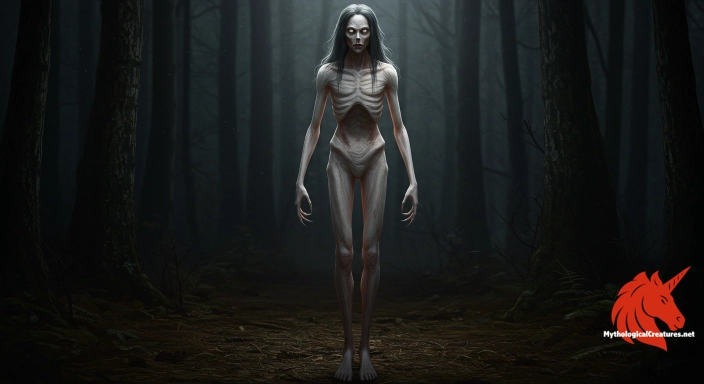
Moroi
Moroi - Moroi occupy a unique place in Romanian mythology, embodying the fears of death and the supernatural while highlighting the blurred lines between life and death.
Origins & First Encounters
Moroi are among the most enigmatic entities in Romanian folklore, embodying both the mystique of vampirism and the uncertainty of ghostly apparitions. Their early accounts emerge from rural communities steeped in local superstition, where the boundaries between life and death were ever fluid. Initially, they were depicted as spectral beings that could traverse the night, a phenomenon both feared and revered by villagers. Over time, these accounts evolved, intertwining the creature's nature with themes of forbidden vitality and eerie immortality. Ancient narratives suggest that moroi could be the restless spirit of an unbaptised infant or the cursed offspring of a vampiric union. Their legend also hints at a connection to nocturnal terrors, as their very name may have roots in the Old Slavonic word for nightmare. The cultural context surrounding the moroi underscores a society grappling with the unknown, where spiritual impurity and supernatural intervention were intimately linked. Integrating elements of both physical curse and metaphysical presence, the moroi have come to symbolise the visceral fears of life’s impermanence and the blurring of mortal boundaries. Their legacy remains interwoven into the fabric of Eastern European folklore, continuously inspiring both dread and fascination.
Source Texts & Tale Variants
The tale of the moroi is preserved in a diverse range of folkloric sources, with regional variations enriching its narrative over many generations. Early oral traditions paint them as wandering phantoms whose existence is a bridge between life and death, often depicted in whispered lore around flickering campfires. Some narrative accounts reveal them as cursed beings born of unnatural unions or as unbaptised infants whose souls never found rest. In certain versions, the moroi emerge as a product of a woman’s encounter with a nosferat, an incubus-like vampire, thereby infusing the myth with elements of forbidden creation. Chroniclers and folklorists have noted that these creatures are often mentioned alongside other infamous figures such as the strigoi and vâlcolac, creating a rich tapestry of nocturnal lore. Diverse retellings serve to highlight variations in their behaviour, origin, and purpose rather than offering a canonical description. As folklore evolved, literary adaptations have taken these fragmented traditions and reassembled them into a more cohesive mythos. Contemporary sources continue to debate the precise nature of the moroi, suggesting a dynamic interplay between legend and cultural memory. Each manuscript and oral recounting contributes to an enduring dialogue between the past and the present, ensuring that the moroi remain a subject of both academic and popular intrigue. This multiplicity of sources collectively affirms the moroi’s role as a profound symbol of the liminal space between the natural and the supernatural.
Form & Powers
The physical depiction of the moroi is as ambiguous as it is compelling, often blending human fragility with supernatural perversion. Traditional beliefs describe them as bearing a pallid complexion that hints at an unearthly existence, with features that may shift from haunting beauty to stark grotesqueness. Some legends focus on the moroi’s unsettling eyes, which are said to gleam with an eerie luminescence, reflective of a soul trapped between dimensions. There are accounts where the moroi appear as infants born under cursed circumstances, marked by an unusual abundance of thick hair and a likeness to a malformed figure early in life. This duality in physical representation captures their nature as both a once-living being and a spectral anomaly. Variations in size and figure are noted in different regions, with some portrayals depicting them as slender, ethereal entities while others render them as more corpulent and imposing. Local artistic interpretations often underscore this fluidity, portraying the moroi as shape-shifting figures whose silhouettes merge with the night itself. The detailed observations of their physicality serve as a visual metaphor for the ambiguity that defines their nature. The moroi’s appearance, whether repulsive or strangely alluring, continues to serve as a potent reminder of the fragility that separates human life from the realm of the supernatural. In essence, the physical traits of the moroi amplify the enduring tension between beauty and horror inherent in their legend.
Regional Faces
Although the moroi legend is predominantly rooted in Romanian folklore, its features have been adapted and transformed throughout various regions of Eastern Europe. In the Carpathian regions, the moroi are frequently interwoven with local mythologies, often sharing characteristics with other spectral figures like the strigoi and vâlcolac. Here, the moroi are sometimes considered as omens of misfortune, their presence linked to the natural rhythms of seasonal change and the cyclical nature of life and death. Meanwhile, in communities closer to the Black Sea or the Balkans, their portrayal often shifts toward a more ghostlike existence with an emphasis on the spirit’s unrest. Local practices and superstitions have led to unique protective rituals designed specifically to ward off the moroi, imbuing the myth with a personalised regional flavour. In some parts, the creature’s story is intermingled with local legends of mysterious revenants and ancient curses, further diversifying its portrayal. The regional adaptations often highlight distinct physical or behavioural traits, allowing the moroi mythos to resonate with local audiences. Despite these variations, the core elements—an ambiguous existence between life and death, and a role as a bearer of supernatural dread—remain consistent. The cultural interplay across regions has enriched the legacy of the moroi, making it a living myth that adapts to the ever-changing landscape of local belief. Both fear and fascination continue to define regional interpretations, ensuring that the term moroi is as multifaceted as the communities that recount their story.
Cultural Parallels
The moroi share an intriguing compositional similarity with other mythological creatures, highlighting cross-cultural comparisons in the realm of the supernatural. Their ambiguous nature, straddling the line between an unquiet ghost and a traditional vampire, invites comparisons with figures such as the Slavic upiór or the Greek vrykolakas. Much like these other entities, the moroi exist as a testament to society’s deep-seated fears surrounding the disruption of natural death and the unknown that lies beyond. While the strigoi are often seen as the more overtly malevolent brothers within Romanian lore, the moroi retain an enigmatic quality that blurs conventional categories of undead entities. Their dual nature is reflected in similar supernatural figures across Europe, where the interplay between ghostly presence and vampiric appetite is a recurring theme. Comparative studies reveal that although the specifics of their power and appearance vary, all these legends encapsulate the timeless human struggle with mortality. The moroi thus serve as a cultural bridge, connecting regional folklore with a broader European tradition of undead legends. This cross-mythological dialogue emphasises common motifs of corruption, transformation, and the eternal conflict between light and darkness. As modern reinterpretations continue to draw from this rich comparative framework, the moroi remain emblematic of a universal narrative that transcends geographical boundaries. Their enduring presence in diverse mythologies underscores the shared human fascination with life, death, and what lies beyond.
Legacy & Modern Evolution
The moroi legend has transcended its folkloric origins to establish a prominent place in modern horror literature and popular culture. Initially rooted in the superstitions of rural Romanian society, the mutable character of the moroi has adapted seamlessly to modern narratives exploring themes of eternal life and existential dread. Contemporary depictions often blend traditional characteristics with modern horror aesthetics, creating a creature that resonates with today’s audiences while still retaining its archaic allure. The evolution of this myth reflects shifting societal anxieties about life, death, and the essence of what it means to be human. In films, books, and television adaptations, the moroi are frequently reimagined as complex antiheroes or tragic figures, embodying the duality of attraction and repulsion. Such modern reinterpretations enable a deeper exploration of identity, morality, and the nature of cosmic justice. As digital media and global interconnectedness expand the reach of these ancient tales, the moroi continue to inspire creative adaptations that blend horror, romance, and philosophical inquiry. Their enduring legacy is a cue to the timelessness of folklore and its ability to evolve with changing cultural contexts. The moroi, therefore, remain a potent symbol of the mysterious and often unsettling aspects of the human condition. Ultimately, their myth serves as a bridge between the past and present, ensuring that traditional fears continue to be reimagined in innovative and thought-provoking ways.
Interesting Fact
The term 'moroi' is believed to derive from the Old Slavonic word 'mora', meaning 'nightmare', and its formation using the same augmentative suffix as 'strigoi' suggests a shared mythological framework in Romanian folklore.
Limited sponsor opportunity
One slot, carefully chosen partners
We only feature a small number of relevant sponsors at any time. If you create serious myth content, we would like to hear from you.
Partner with usQuick Creature Info
Features:
Associations:
Our Mythic Legendary Rating:

Also Sometimes Known As:
Habitat:
Supernatural Powers:
Physical Attributes:
Abilities:
Behavior:
Lore:
Related Creatures, Tales or Lore
- SStrigoi
- NNosferatu
- VVrykolakas
References
Discover Another Mythical Legend You May Not Have Heard Of?
Uncover the mysteries of ancient folklore and expand your knowledge of legendary beings from cultures around the world.
Dare to Meet the Žaltys....
Curated by the Mythological Creatures Team
Series editor: Mythological Creatures Directory
Primary desk: Hellenic & Ancient Mediterranean Desk
(rev. November 2025)